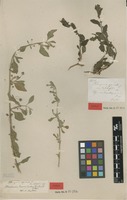
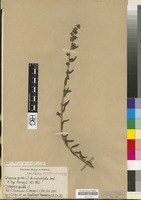
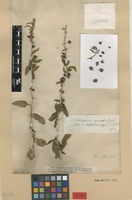
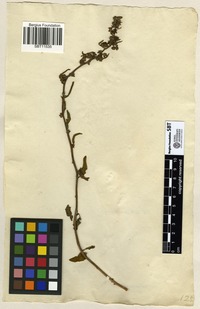
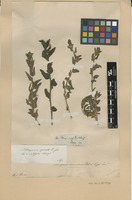
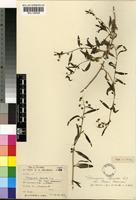
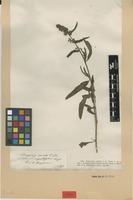
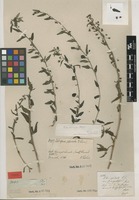
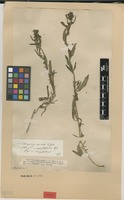
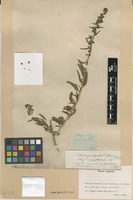
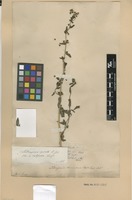
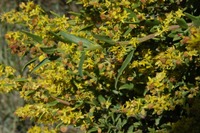
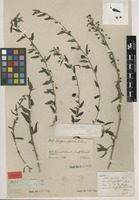
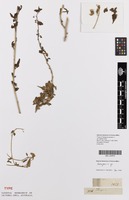
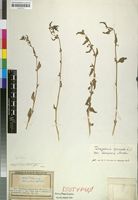
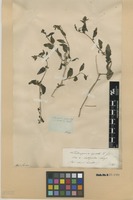
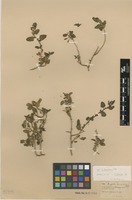
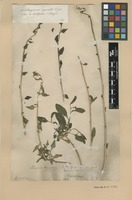
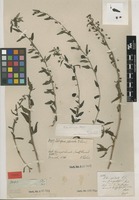
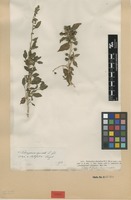
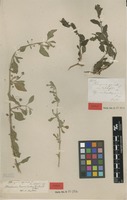
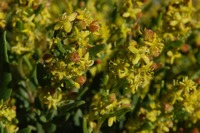
suffruticose, branched at the decumbent base; branches ascendent or erect, virgate, papulose, glabrous or puberous; leaves pruinose, petiolate, ovate, oblong or lanceolate, obtuse, acute or acuminate, rotundate or rhomboid at the base, flat, upper ones subsessile, linear with revolute margins; flowers axillary, 3–7 aggregated, at length longish-pedicellate, disposed in a very long, interrupted, leafy raceme; lobes of calyx ovate, acutish; fruit 4-winged, turbinate, broader than long, retuse at the apex, acutely keeled between the smooth wings. A very polymorphous species—the var. α. nearly allied to T. decumbens, var. β. to T. fruticosa. It differs from the first by a more shrubby habit, ovate or ovate-oblong, small petiolate leaves; from T. fruticosa by the abrupt petiolate leaves, with rotundate base, and by the twice smaller fruit. Primary flowering branches 3–12 inches long. Larger leaves 1–2 inches long, 4–9 lines wide. The fascicles of flowers often somewhat compound. Flowers very often hermaphrodite-monœcious, pedicels of the sterile flowers 2–3 lines, of the fertile flowers 4–7 lines long, as well as the calyx often densely papulose-puberulous. Stamens very numerous. Styles 2–4, in the sterile flower mostly 1. Fruit 3–5 lines long, 4–6 lines wide.