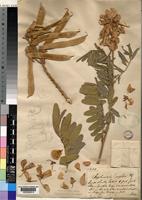
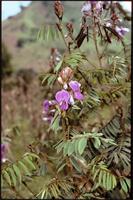
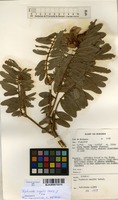
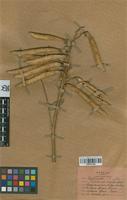
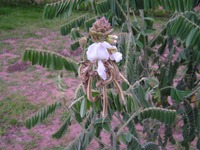
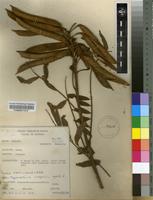
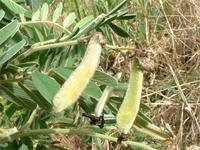
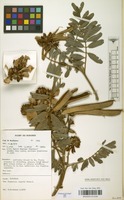
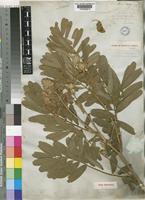
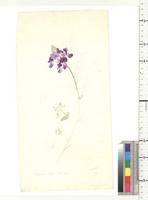
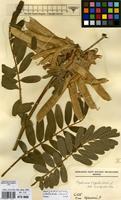
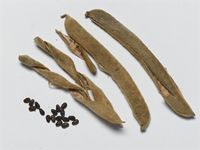
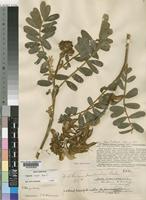
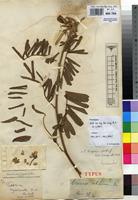
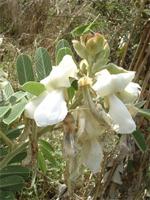
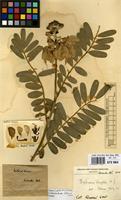
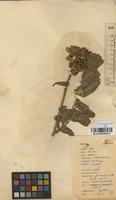
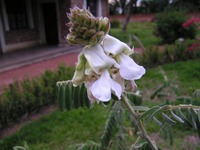
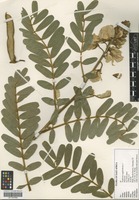
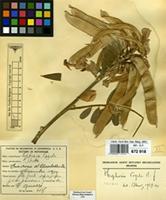
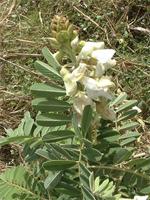
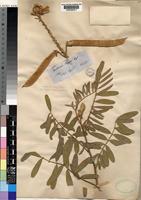
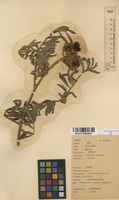
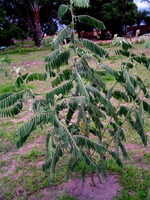
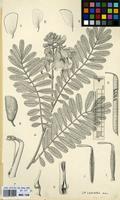
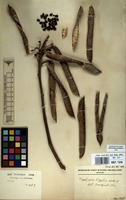
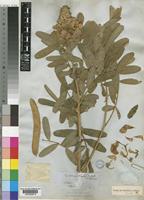
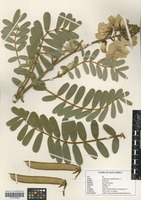
A softly woody branching herb 1–4 m. tall; stem tomentose with both short and long white or fulvous hairs. Leaf-rhachis 10–25 cm. long, including a petiole of 1–3 cm., prolonged 2–7 mm. beyond lateral leaflets; stipules tomentose, very caducous, lanceolate, 1–2 cm. long; leaflets 13–29, elliptic-oblong or elliptic-oblanceolate, up to 5 by 2 cm., silky tomentose above and more densely so beneath, the nerves very obscure above. Flowers white or, less often, violet in dense terminal or sometimes axillary rusty tomentose pseudoracemes; peduncles stout, at least 2.5 mm. in diameter, ± as long as pseudoraceme; bracts caducous, ovate-acuminate, up to 12 by 9 mm.; pedicels up to 23 mm. long. Calyx brown tomentose; tube ± 4 mm. long; 2 upper lobes oblong, united almost to tip, rounded at apex, ± 6 mm. long; lateral lobes oblong, rounded at tip, ± 7 by 4 mm.; lower lobe narrow, boat-shaped, acute, ± 10 mm. long. Standard white silky, ± 23 mm. long by 25 mm. wide; keel pubescent at the margins. Upper filament lightly attached, strongly dilated ± 2 mm. above the base; filament-sheath ±19 mm., free parts 4–8 mm., anthers 1.7 mm. long. Style bent through ± 70° 2 mm. above the base, in all ± 10 mm. long, shortly pubescent on both sides, incurved at the tip. Pod straight, horizontal, densely white or, especially at the sutures, rusty tomentose, ± 110 by 13 by 4 mm., beak straight or slightly down-curved. Seeds 12–16, black, smooth, oval, obliquely transverse, ± 7 by 4.5 by 3 mm.; hilum at side of narrower end, with a well-marked annular aril.