JSTOR Global Plants Home
  • Home
  • Browse
  • About
  • Access
  • Account
    • Saved Items
    • Profile
  • Log in

Global Plants

Skip to Main Content
  • JSTOR Global Plants Home
  • Global Plants

    • Browse
    • About
    • Access
    • Account
      • Saved Items
      • Profile
Log in
  • Browse
  • About
  • Access
  • Account
    • Saved Items
    • Profile
Advanced Search

Compilation
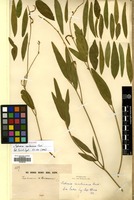
Tephrosia sambesiaca

5 Images see all

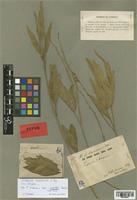
Tephrosia sambesiaca Taub. [family FABACEAE]
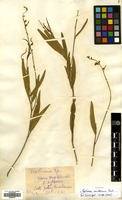
Syntype of Tephrosia sambesiaca Taub. [family LEGUMINOSAE]
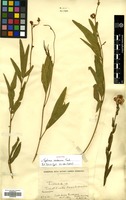
Type of Tephrosia sambesiaca Taub. [family LEGUMINOSAE]
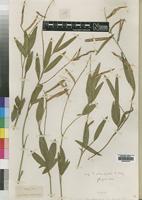
Syntype of Tephrosia sambesiaca Taub. [family LEGUMINOSAE]
Previous
Next

Name

Identification
Tephrosia sambesiaca Taub. [family LEGUMINOSAE ] Tephrosia elongata E.Mey. [family LEGUMINOSAE ] (stored under name);
Related name
  • Tephrosia sambesiaca
  • Tephrosia elongata

Flora

Entry for TEPHROSIA elongata E. Mey. [family LEGUMINOSAE-PAPILIONOIDEAE]
Herbarium
Royal Botanic Gardens, Kew (K)
Collection
Flora of Tropical East Africa
Resource Type
Reference Sources
Entry From
Flora of Tropical East Africa, page 1, (1971) Author: J. B. GILLETT, R. M. POLHILL & B. VERDCOURT
Names
TEPHROSIA elongata E. Mey. [family LEGUMINOSAE-PAPILIONOIDEAE], Comm. Pl. Afr. Austr.: 111 (1836); H. M. Forbes in Bothalia 4: 977 (1948); Brummitt in Bol. Soc. Brot., sér. 2, 41: 268 (1968). Type: South Africa, Natal, Clydesdale, Drège (LUB, holo. †)
TEPHROSIA sambesiaca Taub. [family LEGUMINOSAE-PAPILIONOIDEAE], in E.J. 23: 183 (1896). Types: Malawi, Zomba Mt., Buchanan (1885) 213 (B, †, K, iso!) & (1891) 609 (B, †, BM, K, iso!)
TEPHROSIA dissitiflora Bak. [family LEGUMINOSAE-PAPILIONOIDEAE], in K.B. 1897: 257 (1897). Type: Malawi, Zomba and Malosa Mts., Whyte (K, holo. !)
Information
Perennial herb with a woody rootstock, up to 0.5 m. tall. Stems appressed strigulose. Leaf-rhachis up to 5 cm. long, including a petiole of up to 3 cm., prolonged up to 2 cm. beyond lateral leaflets; stipules sublinear, up to 8 mm. long; leaflets 3–5, lanceolate, up to 8 cm. long and 1.5 cm. wide, coriaceous, acute, with a dense network of veins prominent on both surfaces, glabrous above (in Flora area), appressed strigulose beneath. Flowers yellow and red in lax terminal pseudoracemes, sometimes a few in the upper leaf-axils; bracts sublinear, persistent, up to 6 mm. long; pedicels 4–5 mm. long. Calyx brownish pubescent; tube ± 2 mm. long; teeth triangular, ± 3 mm. long, except the lowest which is 4 mm., the upper pair united almost to the tip. Standard brownish pubescent outside, emarginate, ± 11 mm. long; wings ± 11 mm. long, with a claw of 3–5 mm.; keel glabrous, ± 7 mm. long. Upper filament lightly attached, widened but not callous 1 mm. above the base; filament-sheath ± 7 mm., free parts ± 2 mm. long. Style glabrous, bent through 90° near the base, then straight, linear; stigma with a few short hairs, not penicillate. Pod appressed strigulose, ± 6 cm. long by 4 mm. wide. Seed ± 14, oblong-ellipsoid, longitudinal; hilum one-third along the side, hardly arillate.
Range
DISTR. T5 or 6
Altitude range
in Malawi grassland with Pteridium on poor bauxite soil at 1800 m.
Distribution
TANGANYIKA Probably from highlands near the Mpwapwa/Kilosa District boundary, ± 6°20′S, 1886, W. E. Taylor (BM !)
Distribution (external)
; Malawi
Rhodesia
South Africa (Transvaal, Natal)
Notes
Readily confused with T. longipes var. lurida from which it may be distinguished by the calyx and, especially, the style. The single known specimen from the Flora area belongs to the typical form of the species which has a strikingly disjunct distribution, being otherwise known, north of the Transvaal, only from the Zomba plateau in Malawi. W. E. Taylor’s specimen was collected “between Zanzibar and Uyui”, i.e. on the old route linking Anglican mission stations which passed through Mamboya and Mpwapwa. The rarely visited highlands between these places would seem to be the only area on this route with suitable conditions for the plant.

Related Materials

  • Terms and Conditions
  • Privacy Policy
  • Cookie Policy
  • Cookie Settings
  • Accessibility
  • Help
  • Contact Us
  • Facebook
  • Twitter
ITHAKA

JSTOR is part of ITHAKA, a not-for-profit organization helping the academic community use digital technologies to preserve the scholarly record and to advance research and teaching in sustainable ways.

©2000-2026 ITHAKA. All Rights Reserved. JSTOR®, the JSTOR logo, JPASS®, Aluka®, and ITHAKA® are registered trademarks of ITHAKA.

╳