JSTOR Global Plants Home
  • Home
  • Browse
  • About
  • Access
  • Account
    • Saved Items
    • Profile
  • Log in

Global Plants

Skip to Main Content
  • JSTOR Global Plants Home
  • Global Plants

    • Browse
    • About
    • Access
    • Account
      • Saved Items
      • Profile
Log in
  • Browse
  • About
  • Access
  • Account
    • Saved Items
    • Profile
Advanced Search

Compilation
Tephrosia muenzneri

4 Images see all

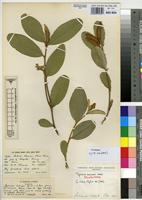
Isoneotype of Tephrosia muenzneri Harms [family FABACEAE]
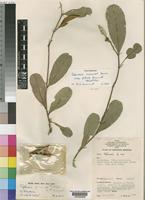
Holotype of Tephrosia muenzneri Harms subsp. pedalis Brummitt [family LEGUMINOSAE-PAPILIONOIDEAE]
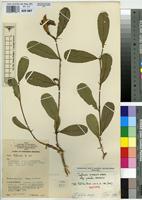
Isotype of Tephrosia muenzneri Harms subsp. pedalis Brummitt [family FABACEAE]
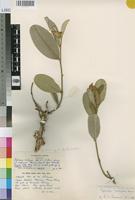
Isoneotype of Tephrosia muenzneri Harms [family LEGUMINOSAE-PAP]
Previous
Next

Name

Identification
Tephrosia muenzneri Harms [family FABACEAE ] (stored under name); Verified by Not on sheet,
Related name
  • Tephrosia muenzneri

Flora

Entry for TEPHROSIA muenzneri Harms [family LEGUMINOSAE-PAPILIONOIDEAE]
Herbarium
Royal Botanic Gardens, Kew (K)
Collection
Flora of Tropical East Africa
Resource Type
Reference Sources
Entry From
Flora of Tropical East Africa, page 1, (1971) Author: J. B. GILLETT, R. M. POLHILL & B. VERDCOURT
Names
TEPHROSIA muenzneri Harms [family LEGUMINOSAE-PAPILIONOIDEAE], in E.J. 45: 310 (1910); Brummitt in Bol. Soc. Brot., sér. 2, 41: 381 (1968). Type: Tanganyika, Ufipa District, Msambia [Msamwia], Muenzner 197 (B, holo. †); Chapota, Richards 13368A (K, neo.!, EA, iso. !)
Information
Resembles T. dasyphylla subsp. amplissima but the petiole as distinct from the 1–3 mm. long basal pulvinus is absent, the unifoliolate leaves are up to 10 cm. long and 5 cm. wide, the calyx-teeth hardly longer than the tube and the young pods are definitely downwards curved.
Range
DISTR. T4
Altitude range
1500–1800 m.
Distribution
TANGANYIKA Ufipa District new Sumbawanga–Mbala [Abercorn] road, Chapota turn-off, 19 Oct. 1959, Richards 11509 ! & 22 Oct. 1960, Richards 13368A !
Distribution (external)
; Zambia

Related Materials

  • Terms and Conditions
  • Privacy Policy
  • Cookie Policy
  • Cookie Settings
  • Accessibility
  • Help
  • Contact Us
  • Facebook
  • Twitter
ITHAKA

JSTOR is part of ITHAKA, a not-for-profit organization helping the academic community use digital technologies to preserve the scholarly record and to advance research and teaching in sustainable ways.

©2000-2026 ITHAKA. All Rights Reserved. JSTOR®, the JSTOR logo, JPASS®, Aluka®, and ITHAKA® are registered trademarks of ITHAKA.

╳