JSTOR Global Plants Home
  • Home
  • Browse
  • About
  • Access
  • Account
    • Saved Items
    • Profile
  • Log in

Global Plants

Skip to Main Content
  • JSTOR Global Plants Home
  • Global Plants

    • Browse
    • About
    • Access
    • Account
      • Saved Items
      • Profile
Log in
  • Browse
  • About
  • Access
  • Account
    • Saved Items
    • Profile
Advanced Search

Compilation
Taraxacum pellianum

8 Images see all

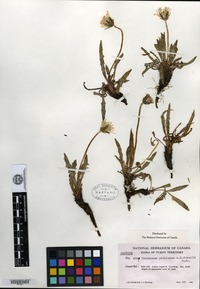
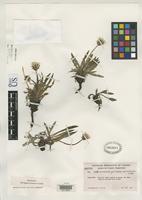
Paratype of Taraxacum pellianum A. E. Porsild & H. Senn [family COMPOSITAE]
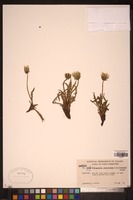
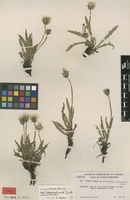
Isotype of Taraxacum pellianum A. E. Porsild [family ASTERACEAE]
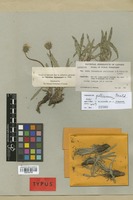
Isotype of Taraxacum pellianum A.E. Porsild [family ASTERACEAE]
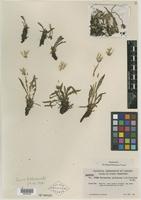
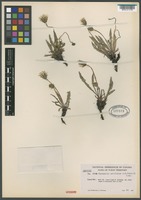
Isotype of Taraxacum pellianum Porsild, A.E. 1950 [family ASTERACEAE]
Isotype of Taraxacum pellianum A.E.Porsild [family ASTERACEAE]
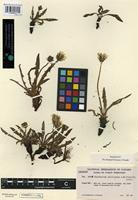
Isotype of Taraxacum pellianum Porsild [family ASTERACEAE]
Isotype of Taraxacum pellianum A. E. Porsild [family ASTERACEAE]
Isotype of Taraxacum pellianum [family ASTERACEAE]
Previous
Next

Name

Identification
Isotype of Taraxacum pellianum A.E. Porsild [family ASTERACEAE ] (stored under name); Verified by Not on Sheet,
Related name
  • Taraxacum pellianum
Common name
  • Horned dandelion, Flora of North America Vol. 19
  • pissenlit tuberculé, Flora of North America Vol. 19

Flora

Entry for Taraxacum ceratophorum (Ledebour) de Candolle [family COMPOSITAE]
Herbarium
Flora of North America (FNA)
Collection
Flora of North America
Resource Type
Reference Sources
Entry From
Flora of North America, Vol 19,
Names
Taraxacum ceratophorum (Ledebour) de Candolle [family COMPOSITAE], in A. P. de Candolle and A. L. P. P. de Candolle, Prodr., 7: 146. 1838
Leontodon ceratophorus Ledebour [family COMPOSITAE], Icon. Pl., 1: 9, plate 34. 1829
Taraxacum ambigens Fernald var. fultius Fernald [family COMPOSITAE]
Taraxacum angulatum G. E. Haglund [family COMPOSITAE]
Taraxacum arctogenum Dahlstedt [family COMPOSITAE]
Taraxacum brachyceras Dahlstedt [family COMPOSITAE]
Taraxacum carthamopsis A. E. Porsild [family COMPOSITAE]
Taraxacum coverum R. Doll [family COMPOSITAE]
Taraxacum dumetorum Greene [family COMPOSITAE]
Taraxacum eriophorum Rydberg [family COMPOSITAE]
Taraxacum eurylepium Dahlstedt [family COMPOSITAE]
Taraxacum groenlandicum Dahlstedt [family COMPOSITAE]
Taraxacum hyperboreum Dahlstedt [family COMPOSITAE]
Taraxacum integratiforme R. Doll [family COMPOSITAE]
Taraxacum integratum G. E. Haglund [family COMPOSITAE]
Taraxacum lacerum Greene [family COMPOSITAE]
Taraxacum lateritium Dahlstedt [family COMPOSITAE]
Taraxacum longii Fernald [family COMPOSITAE]
Taraxacum mackenziense A. E. Porsild [family COMPOSITAE]
Taraxacum malteanum Dahlstedt ex G. E. Haglund [family COMPOSITAE]
Taraxacum maurolepium G. E. Haglund [family COMPOSITAE]
Taraxacum microcerum R. Doll [family COMPOSITAE]
Taraxacum ovinum Greene [family COMPOSITAE]
Taraxacum pellianum A. E. Porsild [family COMPOSITAE]
Taraxacum pseudonorvegicum Dahlstedt ex G. E. Haglund [family COMPOSITAE]
Taraxacum umbriniforme R. Doll [family COMPOSITAE]
Taraxacum umbrinum Dahlstedt ex G. E. Haglund [family COMPOSITAE]
Treatment Author(s)
Luc Brouillet
Information
Plants (1–)6–50 cm; taproots branched. Stems 1–10+, ascending to erect, ± purplish (at least proximally), densely villous (young) becoming glabrescent, sparsely villous to glabrate or glabrous proximally, ± densely villous distally. Leaves ± 10, horizontal to patent, sometimes erect; sessile or petioles ± broadly winged (bases barely narrowed compared to blades); blades narrowly oblanceolate to linear-oblanceolate or linear-oblong (often ± runcinate), 4–30 × (0.4–)0.5–5 cm, bases cuneate to attenuate, margins lobed ± deeply to lacerate, irregularly to regularly, often toothed, merely denticulate, or subentire, lobes retrorse, straight or antrorse, deltate to triangular, acute to acuminate, teeth 0–1 on lobes, often more or mostly in sinuses, apices obtuse to sometimes acute, sometimes mucronate, faces glabrous or glabrate to very sparsely villous. Calyculi of 12–16(–20), appressed to spreading, pale, ovate to elliptic or lance-ovate to lanceolate (sometimes thin) bractlets in 2–3 series, 5–12 × (0.9–)1.5–5 mm, margins hyaline, white or purplish, scarious, apices caudate to acuminate, ± strongly horned, callous, or occasionally some (rarely all) hornless, tips obtuse to rounded, scarious, erose. Involucres dark green, sometimes ± glaucous, campanulate to ± hemispheric, (5–)8–19(–21) mm. Phyllaries (10–)12–14(–17) in 2 series, lanceolate to ovate-lanceolate (inner), 1.5–4.5 mm wide, margins scarious or not (outer), inner broadly scarious in proximal 1/2, apices usually horned, occasionally hornless, horns sometimes exceeding apices, tips white to purplish, scarious, erose. Florets 40–85+; corollas yellow, drying cream to whitish (outer abaxially gray or purple-striped on drying), 10–22 × 1–2.8 mm. Cypselae olivaceous to olive brown, tan to olivaceous tan, brown to reddish brown, grayish brown or straw-colored, bodies oblanceoloid to obovoid, 2.5–4(–5) mm wide, cones conic or narrowly conic to broadly terete, 0.5–0.9 mm, beaks slender, 4.5–14 mm, ribs 5, large (bearing 10–15 narrower ones), faces proximally tuberculate or sometimes nearly smooth (usually with at least some tubercules) to muricate in distal 1/3–1/2, sometimes wholly muricate; pappi white to cream, 5–7.5(–8) mm. 2n = 16, [24], 32, 40, 48.
Phenology
mar-may (spring), jun-aug (summer)
Altitude range
0–3000 m;
Distribution
GreenlandEurasia.USA AlaskaUSA Calif.USA Colo.USA Mont.USA Nev.USA N.Mex.USA Oreg.USA UtahUSA Wash.USA Wyo.Canada Alta.Canada B.C.Canada ManCanada Nfld. and Labr.Canada N.W.T.Canada NunavutCanada Ont.Canada Que.Canada Sask.Canada Yukon
Discussion
Taraxacum ceratophorum is the most widespread native dandelion in North America, ranging from the low Arctic and boreal zone to the western Cordilleras, in the montane and alpine zones.
This complex has been subdivided into many microspecies in North America, most of which appear unworthy of recognition. In the Quebec-Labrador Peninsula, Taraxacum ceratophorum grades continuously into what has been called T. hyperboreum. Inclusion of T. hyperboreum bridges the gap between typical T. ceratophorum and T. lacerum. Taraxacum lacerum stands out by its very lacerate leaves, but intermediates exist and it is impossible to draw a firm boundary. The lacerate Newfoundland form, T. longii, may be a spontaneous mutation within the range of T. ceratophorum. If T. lacerum were recognized, we would have to place T. longii within the former based on leaf morphology, though leaf orientation would be odd there (T. lacerum tends to have ascending leaves, and T. longii leaves that are flatter on the substrate). A more thorough morphometric and biosystematic study of this complex is warranted. Nonetheless, I have recognized two segregates (T. laurentianum, T. trigonolobum) that stand out from the continuum otherwise observed in the complex.

Related Materials

  • Terms and Conditions
  • Privacy Policy
  • Cookie Policy
  • Cookie Settings
  • Accessibility
  • Help
  • Contact Us
  • Facebook
  • Twitter
ITHAKA

JSTOR is part of ITHAKA, a not-for-profit organization helping the academic community use digital technologies to preserve the scholarly record and to advance research and teaching in sustainable ways.

©2000-2026 ITHAKA. All Rights Reserved. JSTOR®, the JSTOR logo, JPASS®, Aluka®, and ITHAKA® are registered trademarks of ITHAKA.

╳