JSTOR Global Plants Home
  • Home
  • Browse
  • About
  • Access
  • Account
    • Saved Items
    • Profile
  • Log in

Global Plants

Skip to Main Content
  • JSTOR Global Plants Home
  • Global Plants

    • Browse
    • About
    • Access
    • Account
      • Saved Items
      • Profile
Log in
  • Browse
  • About
  • Access
  • Account
    • Saved Items
    • Profile
Advanced Search

Compilation
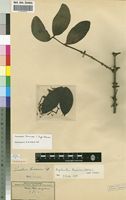
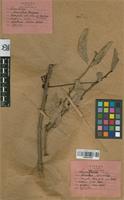
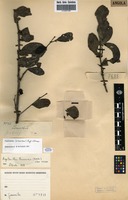
Tapinanthus brunneus

3 Images see all

Isotype of Loranthus brunneus Engl. [family LORANTHACEAE]
Filed as Tapinanthus brunneus (Engl.) Danser [family LORANTHACEAE]
Previous
Next

Name

Identification
Tapinanthus brunneus (Engl.) Danser [family LORANTHACEAE ] (stored under name); Verified by Polhill, R. M., 1987 Isotype of Loranthus brunneus Engl. [family LORANTHACEAE ] Verified by Engler, A., Agelanthus brunneus Tiegh. [family LORANTHACEAE ] Verified by Balle, S., 1958
Related name
  • Tapinanthus brunneus
  • Loranthus brunneus
  • Agelanthus brunneus

Flora

Entry for Agelanthus brunneus (Engl.) Balle & Hallé [family LORANTHACEAE]
Herbarium
Royal Botanic Gardens, Kew (K)
Collection
Flora of Tropical East Africa
Resource Type
Reference Sources
Entry From
Flora of Tropical East Africa, page 1, (1999) Author: POLHILL & D. WIENS
Names
Agelanthus brunneus (Engl.) Balle & Hallé [family LORANTHACEAE], in Adansonia, sér. 2, 1: 233 (1962), pro parte; Tiegh. in Bull. Soc. Bot. Fr. 42: 246, 738 (1895), nom. invalid .; Balle in F.W.T.A., ed. 2, 1: 660 (1958), nom. invalid .; Balle in Bol. Soc. Brot., sér. 2, 38: 54, t. 1/5, 4/2 (1964); Berhaut, Fl. Ill. Sénégal 6: 59, fig. on 58 (1979); Polh. & Wiens, Mistletoes Afr.: 156, photo. 57 (1998). Type: Angola, Pungo Andongo, Pedras de Guinga and Mutollo, Welwitsch 4850 (B!, holo., COI!, G!, K!, LISU!, P!, iso.)
Loranthus brunneus Engl. [family LORANTHACEAE], in E.J. 20: 88 (1894); Hiern, Cat. Afr. Pl. Welw. 1: 931 (1900); Sprague in F.T.A. 6(1): 325 (1910); Balle in F.C.B. 1: 331 (1948); F.P.N.A. 1: 103 (1948)
Tapinanthus brunneus (Engl.) Danser [family LORANTHACEAE], in Verh. K. Akad. Wet., sect. 2, 29(6): 109 (1933); Balle in Fl. Cameroun 23: 64 (1982), pro parte; Troupin, Fl. Pl. Lign. Rwanda: 378 (1982), pro parte
Information
Stems to 1 m. or so; plants glabrous except sometimes slightly farinose around axils; branchlets angled. Leaves alternate to opposite and ternate; petiole 0–2 mm. long, the lamina expanding on the attenuate part at the base so the leaves become more sessile with age; lamina coriaceous, light to dark green or yellow-green, elliptic to oblanceolate or obovate, 2.5–13 cm. long, 1.5–8 cm. wide, varying considerably in size even on same plant, obtuse or rounded at the apex, cuneate and decurrent to base, oldest occasionally rounded, 3(–5)-nerved from base. Flowers few–numerous, crowded in axils and at older nodes; pedicels 0–1.5 mm. long; bract cupular to tubular, umbonate, with a very small limb, 1.5–3 mm. long. Receptacle 1.5–2 mm. long; calyx tubular, (2–)2.5–3 mm. long, ciliolate. Corolla 3.2–4 cm. long, pink or occasionally greenish white, with several coloured bands near the base of the lobes, the tips red, elsewhere corolla-tube sometimes yellow to orange; tube narrowed over filaments in bud, only slightly expanded over the anthers; basal swelling usually conspicuous from inception or at least from fairly young bud-stage, obovoid, attenuate to base, not splitting the calyx, 5–6 mm. long, 2–3 mm. in diameter, tube narrowly constricted for several mm. above; tube ± papillate only along sutures inside; lobes erect, 8–9 mm. long, upper part linear-elliptic, 5–6 mm. long, 0.6–0.8 mm. wide. Filaments red, incoiled once, flattened, tapered, corrugated with the last 0.5 mm. hardened; anthers 1.5–2 mm. long. Style green to red, slightly angled, scarcely swollen opposite the filaments, tapered above; stigma capitate, 0.6–0.7 mm. across. Berry obovoid to urceolate, 7–8 mm. long, 4.5–5 mm. in diameter, crowned by the calyx, smooth.
Range
DISTR. U 1, 2, 4; K 5; T 1 westwards to Senegal and Angola
Altitude range
1000–1800 m.
Distribution
UGANDA W. Nile District Okollo, Bula Forest, Mar. 1935, Eggeling 1946!;KENYA N. Kavirondo District S. Elgon, Sosian R., Sept. 1951, Tweedie 925! & near Kakamega, Rondo, 27 Aug. 1975, G.C. van Someren 131!;TANZANIA Bukoba District Minziro Forest, Mar. 1991, Kielland 11! & 12! & 14 & 15!UGANDA Kigezi District Impenetrable Forest, 30 Sep. 1970, Katende 570!;UGANDA Mengo District Mulange, Oct. 1919, Dummer 4337!KENYA Kericho District SW. Mau Forest, Sambret Catchment, 16 July 1962, Kerfoot 4056!
Notes
A. brunneus and its relatives are fairly easily recognised in East Africa. The flowers are consistently pink and white, providing an easy separation from the montane species A. krausei and A. pennatulus, but in central Africa A. brunneus is much more variable, sometimes with yellow flowers as well. In bud, before the basal swelling of the buds develop, A. brunneus may be confused with A. djurensis, but in general has blunt leaves broadest above the middle rather than acuminate leaves broadest about the middle or below, the flowers are not in obvious umbels and never pedunculate, the bract is cupular to tubular, rather than ovate-triangular from a shallow base (but A. toroensis does have a cupular bract), the calyx is also more tubular, the corolla is generally smaller and not so dark in colour.

Related Materials

  • Terms and Conditions
  • Privacy Policy
  • Cookie Policy
  • Cookie Settings
  • Accessibility
  • Help
  • Contact Us
  • Facebook
  • Twitter
ITHAKA

JSTOR is part of ITHAKA, a not-for-profit organization helping the academic community use digital technologies to preserve the scholarly record and to advance research and teaching in sustainable ways.

©2000-2026 ITHAKA. All Rights Reserved. JSTOR®, the JSTOR logo, JPASS®, Aluka®, and ITHAKA® are registered trademarks of ITHAKA.

╳