JSTOR Global Plants Home
  • Home
  • Browse
  • About
  • Access
  • Account
    • Saved Items
    • Profile
  • Log in

Global Plants

Skip to Main Content
  • JSTOR Global Plants Home
  • Global Plants

    • Browse
    • About
    • Access
    • Account
      • Saved Items
      • Profile
Log in
  • Browse
  • About
  • Access
  • Account
    • Saved Items
    • Profile
Advanced Search

Compilation
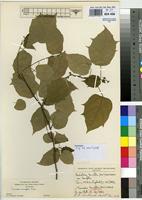
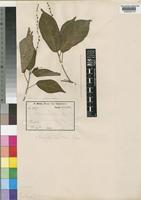
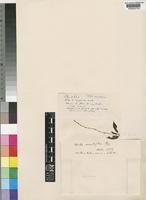
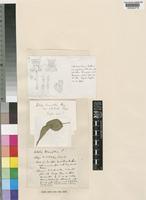
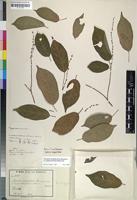
Tannodia tenuifolia

5 Images see all

Isoneotype of Holstia tenuifolia Pax [family EUPHORBIACEAE]
Tannodia tenuifolia (Pax) Prain var. glabarata Prain [family EUPHORBIACEAE]
Isotype of Holstia sessiliflora Pax [family EUPHORBIACEAE]
Previous
Next

Name

Identification
Holstia tenuifolia Pax [family EUPHORBIACEAE ] Verified by Not on sheet, Tannodia tenuifolia (Pax) Prain [family EUPHORBIACEAE ] (stored under name); Verified by Not on sheet,
Related name
  • Holstia tenuifolia
  • Tannodia unrecorded
  • Tannodia sessiliflora
  • Mallotus oppositifolius
  • Holstia sessilifolia
  • Tannodia tenuifolia
  • Holstia sessiliflora

Flora

Entry for TANNODIA tenuifolia Prain [family EUPHORBIACEAE]
Herbarium
Royal Botanic Gardens, Kew (K)
Collection
Flora of Tropical Africa
Resource Type
Reference Sources
Entry From
Flora of Tropical Africa, Vol 6, Part 1, page 441, (1913) Author: (By J. G. Baker, with additions by C. H. Wright.)
Names
TANNODIA tenuifolia Prain [family EUPHORBIACEAE], in Journ. Bot. 1912, 128.
Holstia tenuifolia Pax [family EUPHORBIACEAE], in Engl. Jahrb. xliii. 220.
Information
A shrub, 7–10 ft. high, wood soft, twigs pubescent. Leaves distinctly petioled, membranous, ovate, shortly and abruptly acuminate, base rounded, margin entire or casually unequally 3-lobed, 2 1/2–3 in. long, 1 1/4–2 in. wide; nerves 3–4 on each side, the lowest pair quite basal, dark green above, paler beneath, sparingly pubescent above, more densely pubescent, sometimes almost velvety, especially on the nerves beneath; petiole pubescent, 1/2–1 1/4 in. long; stipules caducous. Flowers in subspicate racemes, 2–2 1/2 in. long, terminating the leafy twigs; males in pairs or solitary, females solitary; male pedicel 1–1 1/2 lin. long, female pedicel 2 1/2 lin. long; bracts lanceolate, membranous, very small; bracteoles minute. Male: Calyx ovoid, obtuse, closed in bud, splitting into 2–5 valvate segments, pubescent outside with spreading hairs. Petals 5, less often 4, orbicular, shortly clawed, much shorter than the calyx-segments, pubescent on the inner face with long viscid hairs. Stamens 8–12, outer 5, less often 4, surrounded by a ring of glands alternating with the petals and filaments of the outer series; filaments considerably longer than anthers, clothed in the lower half with long viscid hairs. Female calyx ovoid, much larger than the male; lobes divided nearly to the base, subspathulate, 3 larger than the remaining 2, pubescent externally. Petals much shorter than the calyx-lobes. Ovary sparingly setose. Capsule 3-coccous.
Distribution
German East Africa Mozamb. Dist. Lofia River. 2000 ft., Goetze, 442!Portuguese East Africa Mozamb. Dist. Boruma, Menyharth, 794!Nyasaland Mozamb. Dist. Shire Highlands; Ruo, Scott-Elliot, 8664!

Related Materials

  • Terms and Conditions
  • Privacy Policy
  • Cookie Policy
  • Cookie Settings
  • Accessibility
  • Help
  • Contact Us
  • Facebook
  • Twitter
ITHAKA

JSTOR is part of ITHAKA, a not-for-profit organization helping the academic community use digital technologies to preserve the scholarly record and to advance research and teaching in sustainable ways.

©2000-2026 ITHAKA. All Rights Reserved. JSTOR®, the JSTOR logo, JPASS®, Aluka®, and ITHAKA® are registered trademarks of ITHAKA.

╳