JSTOR Global Plants Home
  • Home
  • Browse
  • About
  • Access
  • Account
    • Saved Items
    • Profile
  • Log in

Global Plants

Skip to Main Content
  • JSTOR Global Plants Home
  • Global Plants

    • Browse
    • About
    • Access
    • Account
      • Saved Items
      • Profile
Log in
  • Browse
  • About
  • Access
  • Account
    • Saved Items
    • Profile
Advanced Search

Compilation
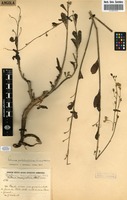
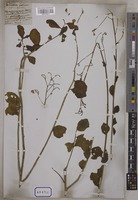
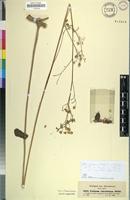
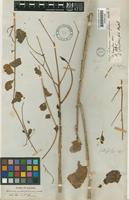
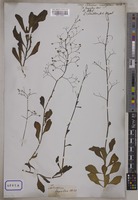
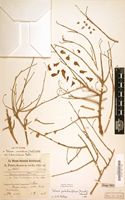
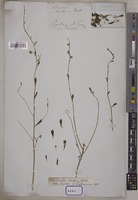
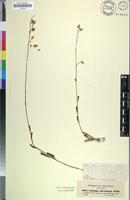
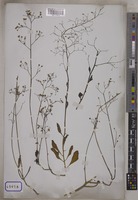
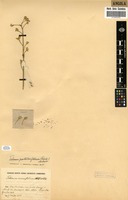
Talinum cuneifolium

10 Images see all

Filed as Talinum portulacifolium (Forssk.) Asch. ex Schweinf. [family PORTULACACEAE]
Talinum cuneifolium Willd. [family PORTULACACEAE]
Filed as Talinum cuneifolium Willd. [family PORTULACACEAE]
Talinum cuneifolium Willd. [family PORTULACACEAE]
Lectotype of Talinum cuneifolium var. tuberculatum Poelln. [family PORTULACACEAE]
Talinum cuneifolium Willd. [family PORTULACACEAE]
Filed as Talinum cuneifolium Willd. [family PORTULACACEAE]
Talinum cuneifolium Willd. [family PORTULACACEAE]
Filed as Talinum portulacifolium (Forssk.) Asch. ex Schweinf. [family PORTULACACEAE]
Previous
Next

Name

Identification
Talinum cuneifolium Not on sheet. [family PORTULACACEAE ] Verified by Phillips, S.M., Talinum portulacifolium Asch. ex Schweinf. [family PORTULACACEAE ] (stored under name); Verified by Not on sheet.,
Related name
  • Talinum indicum
  • Talinum portulacifolium
  • Talinum cuneifolium

Flora

Entry for TALINUM portulacifolium (Forssk.) Schweinf. [family PORTULACACEAE]
Herbarium
Royal Botanic Gardens, Kew (K)
Collection
Flora of Tropical East Africa
Resource Type
Reference Sources
Entry From
Flora of Tropical East Africa, page 1, (2002) Author: SYLVIA M. PHILLIPS
Names
TALINUM portulacifolium (Forssk.) Schweinf. [family PORTULACACEAE], in Bull. Herb. Boiss. 4, App. 2: 172 (1896); Hauman in F.C.B. 2: 119 (1951); F.P.S. 1: 100, t. 64 (1951); Wild in F.Z. 1: 372, t. 71d (1961); F.P.U.: 104 (1962); Blundell in Wild Flow. E. Africa: 38, t. 641 (1987); M.G. Gilbert in Fl. Somalia 1: 120, t. 2d (1993); U.K.W.F., ed. 2: 65, t. 11 (1994). Type: Yemen, Wadi Surdud, Al Hadiyah [Hadie], Forsskål (no type specimen located)
Orygia portulacifolia Forssk. [family MOLLUGINACEAE], Fl. Aegypt.-Arab.: 103 (1775)
Portulaca cuneifolia Vahl [family PORTULACACEAE], Symb. Bot. 1: 33 (1790), nom. illegit. superfl.
Talinum cuneifolium (Vahl) Willd. [family PORTULACACEAE], Sp. Pl. 2: 864 (1800); Oliv. in F.T.A. 1: 150 (1868); Poelln. in F.R. 35: 14 (1934); F.D.-O.A.: 264 (1938); Poelln. in F.R. 48: 192 (1940), nom. illegit. superfl.
Talinum cuneifolium Poelln. var. tuberculatum [family PORTULACACEAE], in F.R. 48: 193 (1940); T.T.C.L.: 459 (1949). Type: Tanzania, Pare District, N of Buiko, Pangani R., Peter 10603 (B!, lecto., K!, photo.)
Information
Perennial herb, occasionally softly woody, smooth, grey stems sprawling from the thickened root, flowering stems succulent, stiffly ascending to 1 m, or sometimes semi-scandent to 2 m through other vegetation. Leaves slightly fleshy, broadly obovate to obovate-oblong, 2–8 cm long, 1–3.5 cm wide, cuneate to a short petiole, apex broadly rounded, apiculate. Inflorescence a terminal thyrsiform panicle, or appearing racemose, the flowers in lateral cymes on a central axis 7–30 cm long, individual cymes 1–several-flowered, subsessile or stiffly pedunculate; pedicels 1–2 cm long, recurving in fruit. Flowers 2–2.5 cm wide, opening towards evening; sepals broadly ovate, concave, thinly membranous, 4–5.5 mm long, apiculate; petals obovate, usually magenta, sometimes crimson, pink or rarely white; stamens ± 25, filaments magenta, anthers yellow; ovary green. Capsule globose, dull yellowish, 6–7 mm high; seeds lenticular, subreniform, ± 1 mm in diameter, black, glossy, testa cells in concentric rings, smooth or sparsely to prominently dotted, a single peg-like papilla in the centre of some (rarely all) testa cells, especially on the flanks.
Range
DISTR. U 1–4; K 1–7; T 1–3, 5–7 Nigeria to Ethiopia and Eritrea, southwards to northern South Africa; also in SW Arabia
Altitude range
0–2150 m
Distribution
KENYA Northern Frontier District Lopet Plateau, 65 km N of Maralal on Baragoi road, 1°37' N 36°44' E, 16 Nov. 1977, Carter & Stannard 443!;KENYA Machakos District Tsavo National Park, Mtito Andei entrance, 17 Jan. 1961, Greenway 9763!KENYA Tana River District Garsen to Malindi road, 1.5 km beyond Oda turnoff, July 1974, R.B. & A.J. Faden 74/1195!TANZANIA Masai District 40 km from Arusha on Dodoma road, 13 May 1965, Leippert 5764!;TANZANIA Lushoto District Muheza to Amani, 16 Apr. 1968, Renvoize & Abdallah 1528!;TANZANIA Iringa District Lukose R. thicket, 10 km from base of Kitonga gorge, 1 Feb. 1987, Lovett & Congdon 1407!UGANDA Karamoja District Kokumongole [Kakumongole], 5 Jan. 1937, Thomas 2181!;UGANDA Toro District Queen Elizabeth National Park, Katwe, Dec. 1954, Lind 517!;UGANDA Mengo District Kyagwe [Kiagwe], Namanve, May 1932, Eggeling 703!
Notes
The leaves are sometimes eaten as a vegetable.Seed surface structure shows clinal variation through Africa. Plants from Arabia, Ethiopia, Uganda and Congo (Kinshasa) have mostly smooth seeds, whereas in southern tropical Africa the seeds are at least partially papillose. In Kenya and Tanzania seeds may be smooth or papillose. Close inspection of apparently smooth seeds will often reveal small papillae near the base or spreading up over the flanks. In extreme cases the whole seed is covered in obvious pegs, one in each cell (e.g. Gillett 18153, Carter & Stannard 443). T. portulacifolium is sometimes confused with T. triangulare (Jacq.) Willd., a pink-flowered species native in America but now a pantropical weed. It occurs widely in Africa, although it has not yet been found in the Flora area. It is easily distinguished by its corymboid inflorescence with sharply triangular branches, prominently 3-nerved sepals, and seeds with broad tubercles around the edge.

Related Materials

  • Terms and Conditions
  • Privacy Policy
  • Cookie Policy
  • Cookie Settings
  • Accessibility
  • Help
  • Contact Us
  • Facebook
  • Twitter
ITHAKA

JSTOR is part of ITHAKA, a not-for-profit organization helping the academic community use digital technologies to preserve the scholarly record and to advance research and teaching in sustainable ways.

©2000-2026 ITHAKA. All Rights Reserved. JSTOR®, the JSTOR logo, JPASS®, Aluka®, and ITHAKA® are registered trademarks of ITHAKA.

╳