JSTOR Global Plants Home
  • Home
  • Browse
  • About
  • Access
  • Account
    • Saved Items
    • Profile
  • Log in

Global Plants

Skip to Main Content
  • JSTOR Global Plants Home
  • Global Plants

    • Browse
    • About
    • Access
    • Account
      • Saved Items
      • Profile
Log in
  • Browse
  • About
  • Access
  • Account
    • Saved Items
    • Profile
Advanced Search

Compilation
Tacazzea rosmarinifolia

7 Images see all

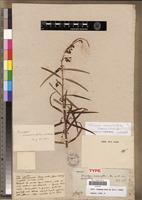
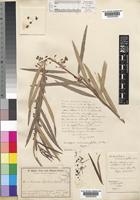
Holotype of Aechmolepis rosmarinifolia Decne [family ASCLEPIADACEAE]
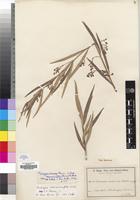
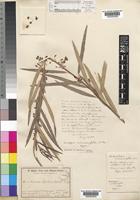
Type of Tacazzea salicina Schltr. [family APOCYNACEAE]
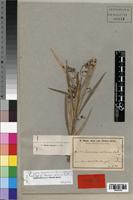
Lectotype of Tacazzea salicina Schltr. [family ASCLEPIADACEAE]
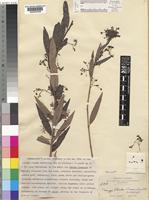
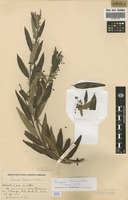
Type of Tacazzea oleander S.Moore [family ASCLEPIADACEAE]
Tacazzea rosmarinifolia (Decne.) N.E.Br. [family ASCLEPIADACEAE]
Type of Tacazzea rosmarinifolia (Decne.) N.E.Br. [family ASCLEPIADACEAE]
Filed as Tacazzea rosmarinifolia N.E.Br. [family ASCLEPIADACEAE]
Previous
Next

Name

Identification
Tacazzea salicina Schltr. [family APOCYNACEAE ] Verified by Not on sheet, Tacazzea rosmarinifolia N. E. Br. [family APOCYNACEAE ] Verified by Brown, N. E., Tacazzea venosa Decne. [family APOCYNACEAE ] (stored under name); Verified by A.A. Bullock,
Related name
  • Tacazzea rosmarinifolia
  • Tacazzea venosa
  • Aechmolepis rosmarinifolia
  • Tacazzea salicina
  • Tacazzea oleander

Flora

Entry for TACAZZEA rosmarinifolia N. E. Br. [family ASCLEPIADACEAE]
Herbarium
Royal Botanic Gardens, Kew (K)
Collection
Flora of Tropical Africa
Resource Type
Reference Sources
Entry From
Flora of Tropical Africa, Vol 4, Part 1, page 231, (1904) Author: (By N. E. Brown.)
Names
TACAZZEA rosmarinifolia N. E. Br. [family ASCLEPIADACEAE]
Æchmolepis rosmarinifolia Decne. [family ], in DC. Prod. viii. 493; K. Schum. Engl. & Prantl, Pflanzenfam. iv. ii. 220.
TACAZZEA salicina Schlechter [family ASCLEPIADACEAE], in Baum, Kunene-Samb. Exped. 339.
Information
Stem erect, terete, somewhat woody, very minutely puberulous, with a brown bark; internodes 3/4–1 in. long. Leaves in whorls of 3, spreading (or alternate and ascending); petiole 2–2 1/2 lin. long; blade 2 1/3–2 2/3 (3–4 1/4) in. long, 1 1/2–2 (1 1/2–4) lin. broad, linear, very acute and pungent-mucronate at the apex, cuneate or slightly rounded at the base, glabrous, with minute fleshy acute processes scattered along the midrib above, minutely white-tomentose beneath, reticulately veined on both sides, narrowly revolute along the margins. Cymes axillary, usually from 2 axils of each whorl, ascending, puberulous, trichotomously branched, 11–15 flowered; peduncle 1/3–1 in. long, slender; branches 3–5 lin. long; bracts 1/2–1 lin. long, lanceolate, acute; pedicels 2–4 lin. long. Sepals 3/4–1 lin. long, 1/2– 2/3 lin. broad, ovate, acute, puberulous. Corolla lobed to 1/2 lin. above its base, quite glabrous; lobes 2 lin. long, 3/4 lin. broad, oblong, subobtuse. Coronal-lobes about 1/2 lin. long, stoutly subulate, acute or obtuse, very thick and fleshy, incurved, inserted with the stamens at the middle of the very short corolla-tube, but adnate up to the sinuses of the latter; at their base are 2 small obtuse lobules embracing the staminal filaments. Staminal-column about 2/3 lin. long; anthers connivent over the apex of the style, connate at their tips, glabrous.
Distribution
Angola Lower Guinea Amboella; at the Nambali (Kubango) River, 4000 ft., Baum, 245! and without precise locality, Newton!, without indication of the collector, in Herb. Museum d'Histoire Naturelle, Paris!
Notes
The above description, with the exception of the few words and figures in brackets, is made from the type specimen of Æchmolepis rosmarinifolia, Decne., kindly lent by the Director of the Museum d'Histoire Naturelle, Paris. The few words and figures in brackets are added from Baum's specimen, which only differs in having alternate and rather larger leaves, a similar difference occurs in T. Welwitschii, Baill. Decaisne has erroneously described the coronal-lobes as sagittate, I find them as described above.

Related Materials

  • Terms and Conditions
  • Privacy Policy
  • Cookie Policy
  • Cookie Settings
  • Accessibility
  • Help
  • Contact Us
  • Facebook
  • Twitter
ITHAKA

JSTOR is part of ITHAKA, a not-for-profit organization helping the academic community use digital technologies to preserve the scholarly record and to advance research and teaching in sustainable ways.

©2000-2026 ITHAKA. All Rights Reserved. JSTOR®, the JSTOR logo, JPASS®, Aluka®, and ITHAKA® are registered trademarks of ITHAKA.

╳