JSTOR Global Plants Home
  • Home
  • Browse
  • About
  • Access
  • Account
    • Saved Items
    • Profile
  • Log in

Global Plants

Skip to Main Content
  • JSTOR Global Plants Home
  • Global Plants

    • Browse
    • About
    • Access
    • Account
      • Saved Items
      • Profile
Log in
  • Browse
  • About
  • Access
  • Account
    • Saved Items
    • Profile
Advanced Search

Compilation
Tephrosia argyrolampra

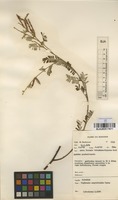
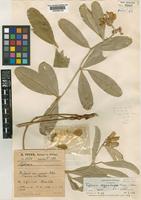
2 Images see all

Filed as Tephrosia argyrolampra Harms [family FABACEAE]
Neotype of Tephrosia argyrolampra Harms [family LEGUMINOSAE-PAPILIONOIDEAE]
Previous
Next

Name

Identification
Tephrosia argyrolampra Harms [family LEGUMINOSAE-PAPILIONOIDEAE ] (stored under name);
Related name
  • Tephrosia argyrolampra

Flora

Entry for TEPHROSIA argyrolampra Harms [family LEGUMINOSAE-PAPILIONOIDEAE]
Herbarium
Royal Botanic Gardens, Kew (K)
Collection
Flora of Tropical East Africa
Resource Type
Reference Sources
Entry From
Flora of Tropical East Africa, page 1, (1971) Author: J. B. GILLETT, R. M. POLHILL & B. VERDCOURT
Names
TEPHROSIA argyrolampra Harms [family LEGUMINOSAE-PAPILIONOIDEAE], in E.J. 51: 226 (1914); Brummitt in Bol. Soc. Brot., sér. 2, 41: 382 (1968). Type: NE. Burundi, N. Uga, Meyer 1092 (B, holo. †); Tanganyika, Nisusi–Mbirira, Peter 38511 (K, neo.!)
TEPHROSIA dasyphylla [family LEGUMINOSAE-PAPILIONOIDEAE], [sensu Cronquist in F.C.B. 5: 104 (1954), pro parte, non Bak.]
Information
Closely related to T. dasyphylla and T. muenzneri. Leaves 3–5-foliolate; petiole very short (up to 2 mm.), much shorter than the rest of the rhachis which is up to 13 mm. long; stipules silvery, up to 5 mm. long; leaflets up to 10 cm. long and 4 cm. wide, densely appressed silvery beneath. Bracts about half as long as the pedicel. Upper calyx-teeth ± 1 mm. long, lowest ± 3 mm. long. Ovules 7–8. Pod unknown.
Range
DISTR. T4
Altitude range
1260–1400 m.
Distribution
TANGANYIKA Buha District Nisusi–Mbirira [Birira], 10 Mar. 1926, Peter 38511 !
Distribution (external)
; Burundi

Related Materials

  • Terms and Conditions
  • Privacy Policy
  • Cookie Policy
  • Cookie Settings
  • Accessibility
  • Help
  • Contact Us
  • Facebook
  • Twitter
ITHAKA

JSTOR is part of ITHAKA, a not-for-profit organization helping the academic community use digital technologies to preserve the scholarly record and to advance research and teaching in sustainable ways.

©2000-2026 ITHAKA. All Rights Reserved. JSTOR®, the JSTOR logo, JPASS®, Aluka®, and ITHAKA® are registered trademarks of ITHAKA.

╳