JSTOR Global Plants Home
  • Home
  • Browse
  • About
  • Access
  • Account
    • Saved Items
    • Profile
  • Log in

Global Plants

Skip to Main Content
  • JSTOR Global Plants Home
  • Global Plants

    • Browse
    • About
    • Access
    • Account
      • Saved Items
      • Profile
Log in
  • Browse
  • About
  • Access
  • Account
    • Saved Items
    • Profile
Advanced Search

Compilation
Syndesmanthus gracilis

5 Images see all

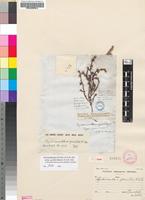
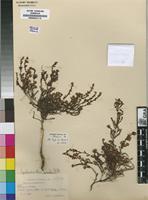
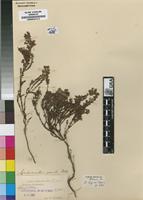
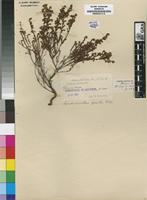
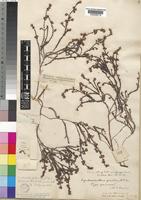
Type of Syndesmanthus gracilis (Benth.) N.E.Br. [family ERICACEAE]
Isotype of Syndesmanthus gracilis (Benth.) N.E.Br. [family ERICACEAE]
Type of Syndesmanthus gracilis (Benth.) N.E.Br. [family ERICACEAE]
Previous
Next

Name

Identification
Syndesmanthus gracilis (Benth.) N.E.Br. [family ERICACEAE ] Verified by Not on sheet, Erica globiceps (N.E.Br.) E.G.H.Oliv. [family ERICACEAE ] (stored under name); Verified by Not on sheet,
Related name
  • Syndesmanthus gracilis
  • Erica globiceps
  • Blaeria gracilis
  • Syndesmanthus scaber

Flora

Entry for SYNDESMANTHUS gracilis N. E. Br. [family ERICACEAE]
Herbarium
Royal Botanic Gardens, Kew (K)
Collection
Flora Capensis
Resource Type
Reference Sources
Entry From
Flora Capensis, Vol 4, page 2, (1909) Author: By H. BOLUS, F. GUTHRIE, and N. E. BROWN.
Names
SYNDESMANTHUS gracilis N. E. Br. [family ERICACEAE]
SYNDESMANTHUS scaber Benth. var. gracilis [family ERICACEAE], in DC. Prodr. vii. 707.
Information
apparently about 4–9 in. high, laxly or compactly branched; branchlets puberulous to softly pubescent, reddish-brown; leaves usually 4-nate, but sometimes 3-nate on the same plant, erect to slightly spreading, imbricate to 1/4 as long as the internodes, 2/3–1 1/2 lin. long, linear or lanceolate, obtuse to acute, pubescent with spreading hairs to nearly glabrous, usually ciliate, and often with a tuft of 2–8 long hairs at the apex when young, often rugulose; flowers subsessile or minutely pedicellate, in globose terminal heads 2–2 1/2 lin. in diam.; bracts 0; calyx 1/2– 2/3 lin. long, narrowly obconic-oblong to obovoid-obconic, acutely 3–4-angled, 3–4-toothed, thin, ciliate with long white spreading hairs on the teeth and angles of the tube or the tube glabrous; teeth alternating with the angles, erect, 1/2– 2/3 as long as the tube, deltoid or deltoid-ovate to sublanceolate, acute or subobtuse; corolla 1–1 1/3 lin. long, the exserted part as long as or rather longer than the calyx, funnel-shaped at the upper 1/3– 1/2, then abruptly narrowed into a very slender (filiform) tube; lobes erect, broader than long, rounded when flattened out, but often with incurved margins and appearing deltoid-ovate and subacute; anthers exserted, basifixed, 1/4– 1/3 lin. long, narrowly oblong or slightly narrowed downwards, spurless; ovary glabrous; stigma simple. null
Distribution
COAST REGION Caledon Div.; mountains near Genadendal, Burchell, 7797! Schlechter, 10312! 10316! on the Zwart Berg, near Caledon, 2600 ft., Bolus, 5415! and in Herb. Norm. Austr.-Afr., 1200! and near Sandfontein, 1000 ft., Schlechter, 10354! hill near Ganze Kraal, Burchell, 7558!

Related Materials

  • Terms and Conditions
  • Privacy Policy
  • Cookie Policy
  • Cookie Settings
  • Accessibility
  • Help
  • Contact Us
  • Facebook
  • Twitter
ITHAKA

JSTOR is part of ITHAKA, a not-for-profit organization helping the academic community use digital technologies to preserve the scholarly record and to advance research and teaching in sustainable ways.

©2000-2026 ITHAKA. All Rights Reserved. JSTOR®, the JSTOR logo, JPASS®, Aluka®, and ITHAKA® are registered trademarks of ITHAKA.

╳