JSTOR Global Plants Home
  • Home
  • Browse
  • About
  • Access
  • Account
    • Saved Items
    • Profile
  • Log in

Global Plants

Skip to Main Content
  • JSTOR Global Plants Home
  • Global Plants

    • Browse
    • About
    • Access
    • Account
      • Saved Items
      • Profile
Log in
  • Browse
  • About
  • Access
  • Account
    • Saved Items
    • Profile
Advanced Search

Compilation
Sympieza vestita

13 Images see all

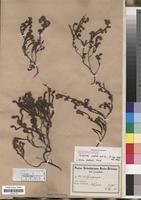
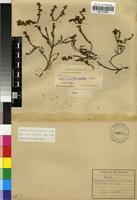
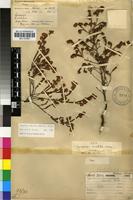
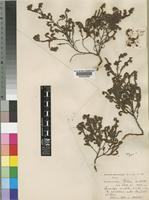
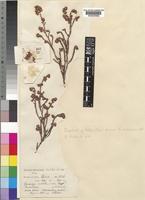
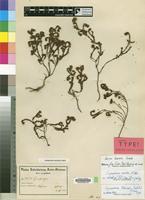
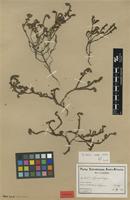
Isosyntype of Sympieza vestita N.E. Br. [family ERICACEAE]
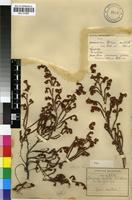
Type of Sympieza vestita N.E.Br. [family ERICACEAE]
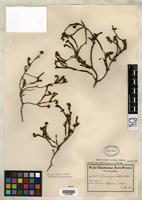
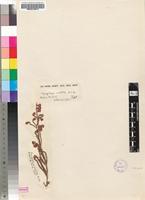
Isosyntype of Sympieza vestita Brown, N.E. 1906 [family ERICACEAE]
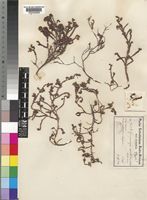
Type of Sympieza vestita N.E.Br. [family ERICACEAE]
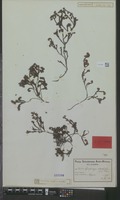
Isosyntype of Sympieza vestita N.E.Br. [family ERICACEAE]
Isotype of Sympieza vestita N.E.Br. [family ERICACEAE]
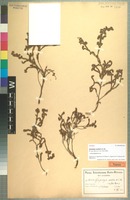
Isosyntype of Sympieza vestita N.E.Br. [family ERICACEAE]
Type of Sympieza vestita N.E.Br. [family ERICACEAE]
Syntype of Sympieza vestita N. E. Br. [family ERICACEAE]
Syntype of Sympieza vestita N.E.Br. [family ERICACEAE]
Previous
Next

Name

Identification
Sympieza vestita N.E.Br. [family ERICACEAE ] Verified by Not on sheet, Erica labialis Salisb. [family ERICACEAE ] (stored under name); Verified by Not on sheet,
Related name
  • Erica labialis
  • Sympieza not on sheet
  • Sympieza vestita

Flora

Entry for SYMPIEZA vestita N. E. Br. [family ERICACEAE]
Herbarium
Royal Botanic Gardens, Kew (K)
Collection
Flora Capensis
Resource Type
Reference Sources
Entry From
Flora Capensis, Vol 4, page 2, (1909) Author: By H. BOLUS, F. GUTHRIE, and N. E. BROWN.
Names
SYMPIEZA vestita N. E. Br. [family ERICACEAE]
Information
apparently about 6–8 in. high, rather loosely branched; branchlets divergent or ascending, usually much recurved at the tips, puberulous, pale brown; leaves 3-nate, imbricate or shorter than the internodes, erect or ascending, 2/3–1 1/2 lin. long, ovate or lanceolate, acute, glabrous, ciliate with hairs and minute glands on the acute cartilaginous margins, usually with or sometimes without a tuft of 3–6 longer and stouter hairs at the apex of the younger leaves, the internal cavity in transverse section rather large, without a lining of hairs; flower-heads numerous, very nodding, subglobose, about 1/4 in. in diam.; calyx of the lower or of all the flowers 3/4 lin. long, 2/3 to nearly 1 lin. broad, orbicular, somewhat rhomboid-orbicular or broadly obovate, concave on the side next the axis, ciliate with rather long hairs on the broadly rounded lobes, otherwise glabrous or obscurely and minutely puberulous; corolla 1 1/4–1 3/4 lin. long, 2/3–1 lin. broad across the very gaping lobes, narrowly to broadly funnel-shaped at the upper half, rapidly or suddenly narrowed into a slender tube at the lower half, red or pink; lobes broadly rounded; anthers 1/2 lin. long, glabrous or minutely scabrid along the back of the cells; stigma simple. null
Distribution
COAST REGION Bredasdorp Div.; mountains between Fairfield and Elim, Bolus, 8515! hills near Elim, Bolus, 8516! Napier, Schlechter, 9654!
Notes
In all the allied species with which this can be confused, the internal cavity of the leaves as seen in transverse section is smaller than in S. vestita and more or less densely lined with very minute hairs.

Related Materials

  • Terms and Conditions
  • Privacy Policy
  • Cookie Policy
  • Cookie Settings
  • Accessibility
  • Help
  • Contact Us
  • Facebook
  • Twitter
ITHAKA

JSTOR is part of ITHAKA, a not-for-profit organization helping the academic community use digital technologies to preserve the scholarly record and to advance research and teaching in sustainable ways.

©2000-2026 ITHAKA. All Rights Reserved. JSTOR®, the JSTOR logo, JPASS®, Aluka®, and ITHAKA® are registered trademarks of ITHAKA.

╳