JSTOR Global Plants Home
  • Home
  • Browse
  • About
  • Access
  • Account
    • Saved Items
    • Profile
  • Log in

Global Plants

Skip to Main Content
  • JSTOR Global Plants Home
  • Global Plants

    • Browse
    • About
    • Access
    • Account
      • Saved Items
      • Profile
Log in
  • Browse
  • About
  • Access
  • Account
    • Saved Items
    • Profile
Advanced Search

Compilation
Sycomorus vogeliana

4 Images see all

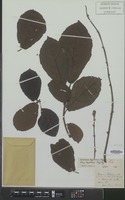
Isotype of Sycomorus vogeliana Miq. [family MORACEAE]
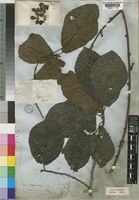
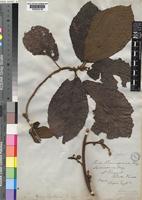
Type of Sycomorus vogeliana Miq. [family MORACEAE]
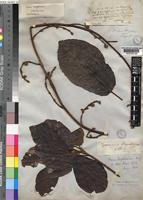
Ficus vogeliana (Miq.) Miq. [family MORACEAE]
Previous
Next

Name

Identification
Sycomorus vogeliana Miq. [family MORACEAE ] Ficus vogeliana (Miq.) Miq. [family MORACEAE ] (stored under name);
Related name
  • Ficus vogeliana
  • Sycomorus vogeliana

Flora

Entry for Ficus vogeliana Miq. [family MORACEAE]
Herbarium
Royal Botanic Gardens, Kew (K)
Collection
Flora of Tropical Africa
Resource Type
Reference Sources
Entry From
Flora of Tropical Africa, Vol 6, Part 2, page 17, (1916) Author: (By J. HUTCHINSON AND A. B. Rendle)
Names
Ficus vogeliana Miq. [family MORACEAE], in Ann. Mus. Lugd.-Bat. iii. 295. —Mildbr. & Burret in Engl. Jahrb. xlvi. 193.
Ficus stellulata Warb. [family MORACEAE], in Engl. Jahrb. xx. 152.
Sycomorus vogeliana Miq. [family MORACEAE], Afr. Vijge-Boom. 13 and in Hook. Niger Fl. 522.
Information
A tree 30–50 ft. high; young branchlets leafy towards the apex, strigose-hirsute. Leaves obovate or obovate-elliptic, shortly and subacutely acuminate, rounded or slightly cordate at the base, 4–8 in. long, 1 3/4–5 in. broad, rather coarsely undulate-dentate, thinly chartaceous or almost membranous, glabrous above except for a few hairs sometimes on the midrib, long-pilose with rust-coloured hairs chiefly on the midrib and lateral nerves beneath; midrib slightly raised above, prominent below, scarcely 3/4 lin. broad at the base; lateral nerves 6–7 on each side of the midrib, the basal pair opposite, the others subopposite to alternate, diverging from the midrib at an angle of 45°, slightly arcuate, looped close to the margin, distinct above, prominent below; tertiary nerves subparallel, 2–3 lin. apart, linking the lateral nerves at right angles, prominent below; veins rather close but rather indistinct below; petiole 3/4–2 3/4 in. long, at first pubescent, at length glabrous or nearly so; stipules subpersistent, lanceolate or ovate-lanceolate, acutely acuminate, about 1/2 in. long, submembranous, glabrous. Receptacles paniculate, mostly at the base of the trunk (Vogel); panicles long and slender, leafless, up to 2 ft. long; lateral branches up to 2 1/2 in. long, glabrous or slightly pubescent. Receptacles somewhat obovoid, a little more than 1/2 in. in diam., setose-pilose with yellowish hairs. Basal bracts 2, slightly connate at the base, ovate, about 1 3/4 lin. long and broad, pilose. Ostiole prominent; bracts spreading horizontally across the ostiole, rounded, membranous, glabrous, the innermost ones descending into the receptacle, linear. Male flowers sessile, near the ostiole; perianth-segments unequal, membranous, enclosing the pair of stamens like a cloak. Female flowers subsessile with long slender styles. Gall flowers pedicellate.
Distribution
Spanish Guinea Lower Guinea on the Abea River and near Uelleburg, Tessmann, 11! 392!Ivory Coast Upper Guinea between Kassigne and Atteou, Chevalier, 17087!Nigeria Upper Guinea River Niger, Vogel ! Oban, Talbot, 89!Cameroons Upper Guinea Ambas Bay, Mann, 702! Bipinde, Zenker, 1704! Barombi, Preuss, 550! Victoria, Preuss, 1323! Neu Tegel, Winkler, 194! near Dipika, Ledermann, 442! Batanga, Dinklage, 381!Fernando Po Upper Guinea San Carlos, Mildbraed, 6794! Bokoko, Mildbraed, 6967! and without precise locality, Vogel, 179!

Related Materials

  • Terms and Conditions
  • Privacy Policy
  • Cookie Policy
  • Cookie Settings
  • Accessibility
  • Help
  • Contact Us
  • Facebook
  • Twitter
ITHAKA

JSTOR is part of ITHAKA, a not-for-profit organization helping the academic community use digital technologies to preserve the scholarly record and to advance research and teaching in sustainable ways.

©2000-2026 ITHAKA. All Rights Reserved. JSTOR®, the JSTOR logo, JPASS®, Aluka®, and ITHAKA® are registered trademarks of ITHAKA.

╳