JSTOR Global Plants Home
  • Home
  • Browse
  • About
  • Access
  • Account
    • Saved Items
    • Profile
  • Log in

Global Plants

Skip to Main Content
  • JSTOR Global Plants Home
  • Global Plants

    • Browse
    • About
    • Access
    • Account
      • Saved Items
      • Profile
Log in
  • Browse
  • About
  • Access
  • Account
    • Saved Items
    • Profile
Advanced Search

Compilation
Sutera serrata

14 Images see all

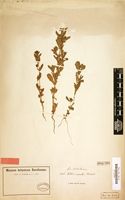
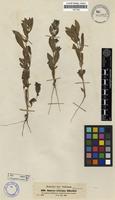
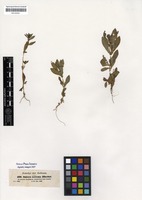
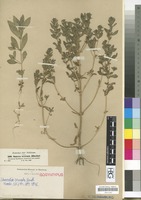
Type of Sutera serrata Hochst. [family SCROPHULARIACEAE]
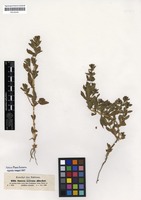
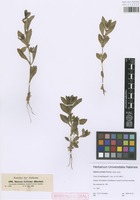
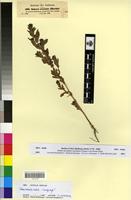
Isosyntype of Sutera serrata Hochst. ex Benth.; nom. inval. [family SCROPHULARIACEAE]
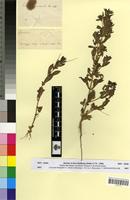
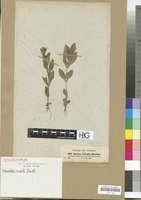
Type? of Sutera serrata Hochst. [family SCROPHULARIACEAE]
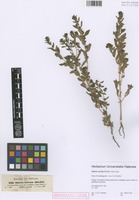
Original material of Sutera serrata Hochst. [family SCROPHULARIACEAE]
Filed as Sutera serrata Hochst. [family SCROPHULARIACEAE]
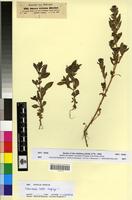
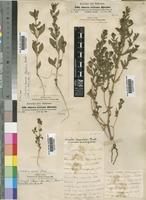
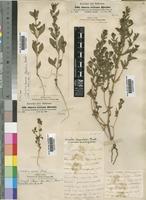
Isosyntype of Stemodia serrata Benth. [family SCROPHULARIACEAE]
Type? of Sutera serrata Hochst. [family SCROPHULARIACEAE]
Syntype of Stemodia serrata Benth. [family PLANTAGINACEAE]
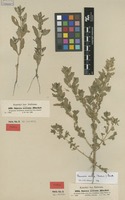
Isosyntype of Sutera serrata Hochst. ex Benth.; nom. inval. [family SCROPHULARIACEAE]
Original material of Sutera serrata Hochst. [family SCROPHULARIACEAE]
Stemodia serrata Benth. [family SCROPHULARIACEAE]
Isosyntype of Stemodia serrata Benth. [family SCROPHULARIACEAE]
Type? of Sutera serrata Hochst. [family SCROPHULARIACEAE]
Previous
Next

Name

Identification
Sutera serrata Hochst. [family SCROPHULARIACEAE ] (stored under name); Verified by Not on sheet.,
Related name
  • Gratiola
  • Sutera serrata
  • Stemodia serrata

Flora

Entry for Stemodia serrata Benth. [family SCROPHULARIACEAE]
Herbarium
Royal Botanic Gardens, Kew (K)
Collection
Flora of Tropical East Africa
Resource Type
Reference Sources
Entry From
Flora of Tropical East Africa, page 1, (2008) Author: S.A. GHAZANFAR, F.N. HEPPER & D. PHILCOX
Names
Stemodia serrata Benth. [family SCROPHULARIACEAE], in DC., Prodr. 10: 381 (1846); Hemsley & Skan in F.T.A. 4(2): 314 (1906); Hepper in F.W.T.A. ed. 2, 2: 357 (1963); Fischer, F.A.C. Scrophulariaceae: 66, pl. 24 (1999) & in Fl. Ethiop. & Eritr. 5: 260 (2006). Types: Senegal [Senegambia], 1828, Leprieur, s.n.; Perrottet, 447, 448 & 575 (G, syn.)
Sutera serrata Hochst. [family SCROPHULARIACEAE], in Flora, 24, t. intell. 43 (1841), nomen
Information
Erect simple or usually much-branched herb, 12–32(–37) cm high; branches ± erect, 4-angled, glandular-pubescent, viscid with a foetid scent. Leaves narrowly elliptic or lanceolate, 0.5–5 cm long, 3–15 mm wide, narrowed to base or amplexicaul, acute at apex, margins serrate from the middle to the apex, finely glandular-pubescent. Flowers solitary in axils forming a leafy spike-like raceme; pedicels 1–3 mm long; bracteoles 2 at the base of the calyx, narrowly linear, ± 3 mm long, ciliate. Calyx ± 5 mm long in fruit, shorter in flower, lobes subulate-linear, acuminate, finely glandular-pubescent. Corolla white, ± 6 mm long, upper lip emarginate, lower lip broadly and shortly 3-lobed. Capsule 5–6 mm, narrow, acuminate, almost as long as the calyx, glabrous. Fig 14, p. 37.
Range
DISTR. K 7; T 5, 6, 8 widely distributed but probably overlooked in our area
Altitude range
50–1100 m
Distribution
KENYA Tana River District Tana R. National Primate Reserve, 17 Mar. 1990, Luke et al. 562!TANZANIA Dodoma District Great North Road, 26 km N of Dodoma, Apr. 1962, Polhill & Paulo 2112!TANZANIA Uzaramo District Dar es Salaam, Nov. 1975, Mwasumbi 11353!TANZANIA Kilwa District Selous Game Reserve, July 1975, Vollesen 2535!
Distribution (external)
Senegal
Mali
Ghana
Chad
Cameroon
Sudan
Ethiopia
Zambia
Malawi
Madagascar
India
Notes
USES. None recorded on specimens from our area. CONSERVATION Least Concern (LC). This and other species of Stemodia are often mistaken for members of the Labiatae with which they have a superficial resemblance; the bilocular ovary is distinctive. In East Africa only S. serrata Benth. has been reported, yet S. verticillata (Mill.) Boldingh (syn. S. parviflora Ait.), an American species with blue flowers and globose capsules occurs as a creeping weed in West Africa, Mauritius and Java, and it may well be found in our region.

Related Materials

  • Terms and Conditions
  • Privacy Policy
  • Cookie Policy
  • Cookie Settings
  • Accessibility
  • Help
  • Contact Us
  • Facebook
  • Twitter
ITHAKA

JSTOR is part of ITHAKA, a not-for-profit organization helping the academic community use digital technologies to preserve the scholarly record and to advance research and teaching in sustainable ways.

©2000-2026 ITHAKA. All Rights Reserved. JSTOR®, the JSTOR logo, JPASS®, Aluka®, and ITHAKA® are registered trademarks of ITHAKA.

╳