JSTOR Global Plants Home
  • Home
  • Browse
  • About
  • Access
  • Account
    • Saved Items
    • Profile
  • Log in

Global Plants

Skip to Main Content
  • JSTOR Global Plants Home
  • Global Plants

    • Browse
    • About
    • Access
    • Account
      • Saved Items
      • Profile
Log in
  • Browse
  • About
  • Access
  • Account
    • Saved Items
    • Profile
Advanced Search

Compilation
Strychnos mellodora

7 Images see all

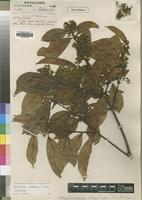
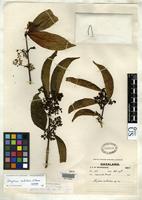
Holotype of Strychnos mellodora S.Moore [family LOGANIACEAE]
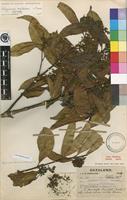
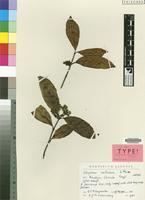
Isotype of Strychnos mellodora S.Moore [family STRYCHNACEAE]
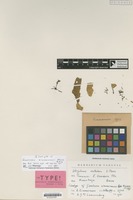
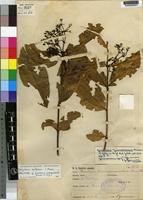
Isotype of Gaertnera zimmermannii Krause & Gilg [family RUBIACEAE]
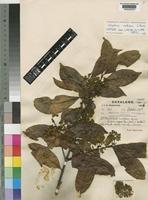
Isotype of Strychnos mellodora S.Moore [family LOGANIACEAE]
Isotype of Strychnos mellodora Moore, S.L.M. 1911 [family LOGANIACEAE]
Isotype of Strychnos mellodora S.Moore [family LOGANIACEAE]
Holotype of Strychnos mellodora S. More [family LOGANIACEAE]
Previous
Next

Name

Identification
Strychnos mellodora S.Moore [family LOGANIACEAE ] (stored under name); Verified by Leeuwenberg,A.J.M.,
Related name
  • Strychnos mellodora

Flora

Entry for Strychnos mellodora S. Moore [family LOGANIACEAE]
Herbarium
Royal Botanic Gardens, Kew (K)
Collection
Flora Zambesiaca
Resource Type
Reference Sources
Entry From
FZ, Vol 7, Part 1, page 327, (1983) Author: A. J. M. Leeuwenberg
Names
Strychnos mellodora S. Moore [family LOGANIACEAE], in Journ. — Leeuwenberg in Meded Landb. Wag. 69–1: 180, fig. 26, map 29 (1969). Linn. Soc. 40: 147 (1911). — Bruce & Lewis in F.T.E.A., Loganiaceae: 23 (1960). Type from Zimbabwe: Chirinda Forest, Swynnerton 101 (BM, holotype; K; NBG; SRGH; US; Z, isotypes).
Information
Tree, 20–35 m. high. Trunk c. 45 cm. in diam. Bark thin. Branches not or obscurely lenticellate, medium to dark brown and not sulcate when dry; branchlets glabrous, usually slightly sulcate when dry, mostly darker than in S. mitis. Leaves with glabrous, 3–8 mm. long petioles, those of a pair joined at the base by a distinct stipular line; lamina dull, drying pale greenish–brown with dark brown, paler beneath, coriaceous, elliptic or narrowly elliptic, 2–3·5 times as long as wide, 5–12 x 2–5 cm., acuminate at the apex, cuneate at the base, glabrous on both sides; secondary veins 5–8 on each side; tertiary venation not very conspicuous, slightly prominent on both sides. Inflorescence axillary, usually also in the axils of the apical leaves and therefore seemingly terminal, lax, many–flowered, shorter or longer than the leaves, 3–11 x 2·5–8 cm., 3–4 times branched. Flowers 4–merous. Sepals free, equal, broadly ovate, about 1–1·5 times as long as wide, 0·7–1·2 x 0·7–1 mm., rounded at the apex, ciliate, outside glabrous or nearly so, inside glabrous, without colleters. Corolla in the mature bud 2·5–4·5 x as long as the calyx 2·5–3 mm. long, and rounded at the apex, white, outside glabrous, inside densely pilose on the lobes (of which the apex sometimes glabrous); tube very short, 0·5–0·7 x as long as the calyx, 0·5–0·7 mm. long; lobes oblong, 4–5 x as long as the tube, 1·7–2 x as long as wide, 2–2·5 x 1·1–1·5 mm., acute, spreading. Stamens exserted; filaments about 1–1·5 x as long as the anthers, inserted at the mouth of the corolla tube; anthers orbicular or nearly so, 0·5–0·6 x 0·5 mm., glabrous. Pistil glabrous, 1–1–1–2 mm. long; ovary depressed–globose or–ovoid, 0·7 x 0·7 mm., 1–celled; style short, 0–4–0–5 mm. long; stigma capitate. One basal placenta with 2–9 ovules. Fruit small, globose or nearly so, 12 x 10–18 x 18 mm., one–seeded. Wall thin. Seed flattened, ellipsoid, 8–9 x 6–7 x 3 mm., pubescent (?). Testa thin sticking to the pulp.
Habitat
Montane rain forests
Altitude range
alt. 800–1200 m
1200
800
Distribution
Mozambique MS Chimoio, Garuso, xi, Simaõ 637 (LISC).Zimbabwe E Chirinda Forest, x, Swynnerton 101 (BM; K; NBG; SRGH; US; Z, type).
Distribution (external)
Tanzania

Related Materials

  • Terms and Conditions
  • Privacy Policy
  • Cookie Policy
  • Cookie Settings
  • Accessibility
  • Help
  • Contact Us
  • Facebook
  • Twitter
ITHAKA

JSTOR is part of ITHAKA, a not-for-profit organization helping the academic community use digital technologies to preserve the scholarly record and to advance research and teaching in sustainable ways.

©2000-2026 ITHAKA. All Rights Reserved. JSTOR®, the JSTOR logo, JPASS®, Aluka®, and ITHAKA® are registered trademarks of ITHAKA.

╳