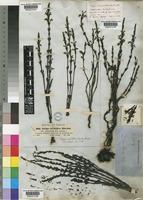
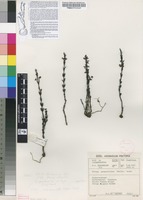
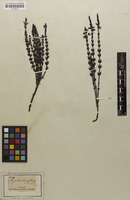
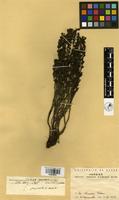
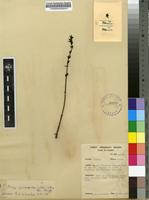
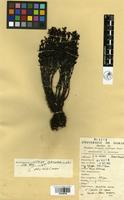
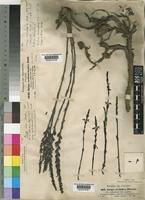
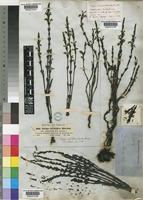
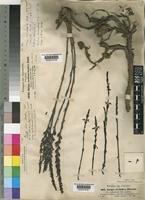
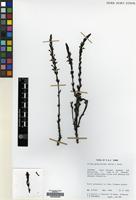
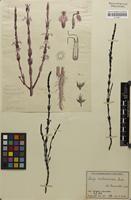
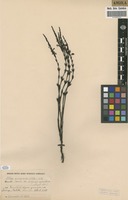
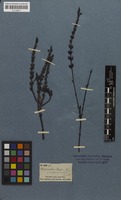
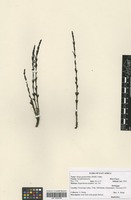
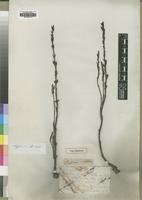
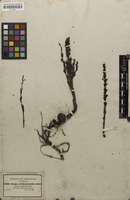
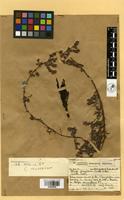
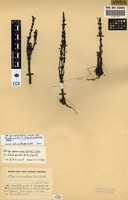
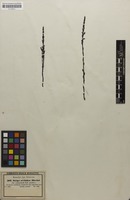
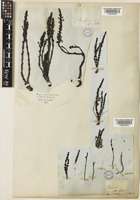
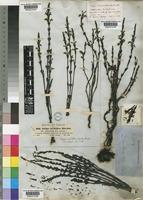
a parasitical herb, finely pilose or very nearly glabrous, 3–12 in. high, turning dusky in drying; stem simple or branched, sulcate, purplish in the living state; leaves all scale-like, small, opposite or the upper scattered, numerous, oval, ovate or lanceolate, obtuse or the upper acute, sessile, entire, concave adpressed, the floral about 1/4 in. long by 1/8 in. broad, the lower smaller; flowers about 3/8 in. long, numerous, spicate, pink, purple or red; spikes terminal, elongated, dense above, interrupted below; pedicels very short, opposite or the upper subopposite or alternate; bracteoles lanceolate, ciliate, hispidulous, subacute, adpressed to the calyx, about 1/8– 1/6 in. long; calyx 1/5– 1/4 in. long, 5-ribbed, hispidulous, 5-cleft; lobes lanceolate, acuminate, about 1/8 in. long; corolla-tube slender, strongly bent near the apex; limb about 1/4– 1/3 in. in diam.; lobes 5, glabrous, 1/12– 1/6 in. long, lowest one the largest, two lateral obovate and slightly retuse, two upper recurved, smaller than the others, oblong, obtuse; stamens all glabrous and perfect; style slender, somewhat shorter than the corolla-tube, persistent; stigma thickened, entire; capsule oval-oblong, about 1/5 in. long; seeds minute, slightly pitted. null