JSTOR Global Plants Home
  • Home
  • Browse
  • About
  • Access
  • Account
    • Saved Items
    • Profile
  • Log in

Global Plants

Skip to Main Content
  • JSTOR Global Plants Home
  • Global Plants

    • Browse
    • About
    • Access
    • Account
      • Saved Items
      • Profile
Log in
  • Browse
  • About
  • Access
  • Account
    • Saved Items
    • Profile
Advanced Search

Compilation
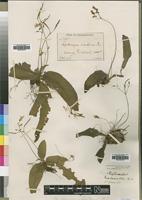
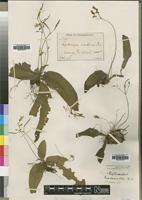
Streptocarpus montanus

6 Images see all

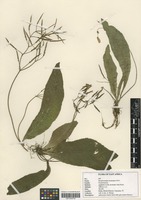
Filed as Streptocarpus montanus Oliv. [family GESNERIACEAE]
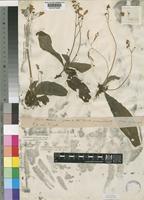
Holotype of Streptocarpus montanus Oliv. [family GESNERIACEAE]
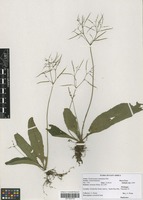
Filed as Streptocarpus montanus Oliv. [family GESNERIACEAE]
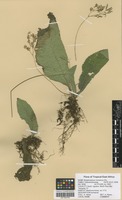
Type of Streptocarpus montanus Oliv. [family GESNERIACEAE]
Previous
Next

Name

Identification
Streptocarpus montanus Oliv. [family GESNERIACEAE ] (stored under name);
Related name
  • Streptocarpus montanus

Flora

Entry for Streptocarpus montanus Oliv. [family GESNERIACEAE]
Herbarium
Royal Botanic Gardens, Kew (K)
Collection
Flora of Tropical East Africa
Resource Type
Reference Sources
Entry From
Flora of Tropical East Africa, page 1, (2006) Author: IAIN DARBYSHIRE
Names
Streptocarpus montanus Oliv. [family GESNERIACEAE], in Trans. Linn. Soc. Bot. 3: 344 (1887); Baker & C.B. Clarke in F.T.A. 4(2): 507 (1906) as S. montana; Hilliard & B.L. Burtt, Streptocarpus: 216, fig. 37 (1971); Iversen in Symb. Bot. Upsal. 28: 238 (1988); Agnew, U.K.W.F. ed. 2: 264 (1994). Type: Tanzania, Kilimanjaro, H.H. Johnston 157 (K!, holo.; BM!, iso.)
Information
Acaulescent perennial herb. Rhizome creeping, stout, to 4(–6) mm thick, softly pubescent, with prominent leaf scars. Leaves tending to cluster towards rhizome apex, usually rosulate though occasionally solitary; blade narrowly oblong-elliptic or oblong-lanceolate, size variable, 7–36 cm long, 1.5–17.5 cm wide, base ± asymmetric, cuneate to acute, margin coarsely dentate, apex subacuminate or acute, often withered, densely pubescent particularly on the upper surface and nerves beneath; lateral nerves 19–35 pairs, parallel, spreading; petiole 0.5–2(–4) cm long. Inflorescences apparently axillary, solitary to several arising from the leaf axis, somewhat lax and spreading, 8–many-flowered; peduncles 4–29 cm long; pedicels 7–17(–28) mm long, glandular- and eglandular-pubescent; bracts linear, 2–4.5 mm long, pubescent. Calyx lobes lanceolate, 1.5–3.5 mm long, glandular- and eglandular-pubescent. Corolla pale- or less commonly medium-violet, rarely whitish, with violet stripes on the floor of the tube, 11.5–19 mm long, scattered glandular-pubescent outside; tube obliquely cylindric with a declinate floor, 7–11 mm long, 5–7.5 mm deep, mouth open; limb bilabiate; upper lip of two suberect, rounded lobes, 2.5–3 mm long, ± 2.5 mm wide; lower lip of three spreading, oblong-rounded lobes, 4–4.5 mm long, 2–3.5 mm wide. Stamens arising from near the base of the corolla tube; filaments U-curved, slender, 4–6 mm long, glabrous; anther thecae rounded, 0.7–0.8 mm wide; staminodes minute. Ovary 3–4.5 mm long, glandular-pubescent; style 3–4 mm long; stigma bilobed, 0.35–0.4 mm wide, papillose. Capsule 15–25 mm long, 1–1.5 mm diameter, glandular-pubescent. Seeds 0.5–0.7 mm long, verruculose, slightly ridged longitudinally. Fig. 4, p. 29.
Range
DISTR. K 4, 6, 7; T 2, 3, 6 restricted to the mountains of southern Kenya and eastern Tanzania
Altitude range
(1200–)1500–2400(–2800) m
Distribution
KENYA South Nyeri District Mt Kenya, S side, Kamweti track above Castle Forest Station, Jan. 1971, Faden et al. 71/102!KENYA Masai District Namanga, Ol Donyo Orok, June 1974, Archer 751!KENYA Teita District Vuria Peak, Apr. 1960, Verdcourt & Polhill 2728!TANZANIA Moshi District Kilimanjaro, S slope between Umbwe and Weru Weru R., Aug. 1932, Greenway 3031!TANZANIA Pare District N Pare Mts, Minja Forest Reserve, above Vuchama Ngofi village, Apr. 1990, Pócs 90064/J!TANZANIA Morogoro District S Nguru Mts, Ruhamba Peak, Apr. 1953, Drummond & Hemsley 1981!
Notes
USES. None recorded on herbarium specimens. CONSERVATION Although of restricted range, this species is locally common in several mountain ranges, for example forming large colonies on mountains in the Taita Hills. It is adaptable to a range of niches within its habitat and is tolerant of a range of climatic conditions, as evidenced by its large altitudinal range. Those populations at high altitudes are likely to experience little human disturbance at present. It is therefore assessed as of Least Concern (LC). A specimen cultivated at R.B.G. Edinburgh, labelled “grown from seed collected by Wallace in Tanganyika Territory” (K!) is close to S. montanus but differs in having a larger paniculate inflorescence with up to 80 flowers which are only 8.5–10 mm long and have a proportionally narrower tube than in S. montanus. These characters place it superficially similar to S. umtaliensis B.L.Burtt from the Zimbabwe-Mozambique borderlands but that species has the stamens inserted higher up the corolla tube and largely lacks glandular hairs on the inflorescence. The filaments of the stamens are often almost straight in this specimen, though some display the U-bend typical of S. montanus. The material is incomplete, as the petiolode and rhizome (if present) have not been pressed. It also lacks locality and it cannot even be confirmed that the material originated from Tanzania, although Wallace is known to have collected primarily in the Uluguru Mts (K. Vollesen, pers. comm.). Further material is needed of this taxon which may prove to be either a variant of S. montanus or a closely allied new species.

Related Materials

  • Terms and Conditions
  • Privacy Policy
  • Cookie Policy
  • Cookie Settings
  • Accessibility
  • Help
  • Contact Us
  • Facebook
  • Twitter
ITHAKA

JSTOR is part of ITHAKA, a not-for-profit organization helping the academic community use digital technologies to preserve the scholarly record and to advance research and teaching in sustainable ways.

©2000-2026 ITHAKA. All Rights Reserved. JSTOR®, the JSTOR logo, JPASS®, Aluka®, and ITHAKA® are registered trademarks of ITHAKA.

╳