JSTOR Global Plants Home
  • Home
  • Browse
  • About
  • Access
  • Account
    • Saved Items
    • Profile
  • Log in

Global Plants

Skip to Main Content
  • JSTOR Global Plants Home
  • Global Plants

    • Browse
    • About
    • Access
    • Account
      • Saved Items
      • Profile
Log in
  • Browse
  • About
  • Access
  • Account
    • Saved Items
    • Profile
Advanced Search

Compilation
Streptocarpus michelmorei

6 Images see all

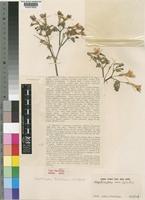
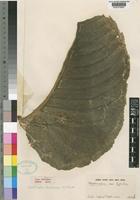
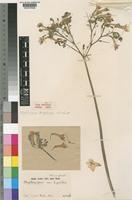
Type of Streptocarpus michelmorei B.L.Burtt [family GESNERIACEAE]
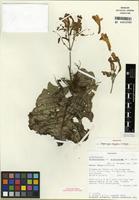
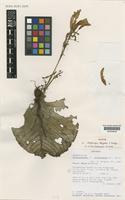
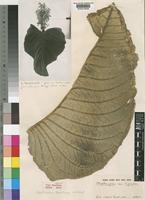
Holotype of Streptocarpus mbeyensis I. Darbysh. [family GESNERIACEAE]
Isotype of Streptocarpus mbeyensis I.Darbysh. [family GESNERIACEAE]
Type of Streptocarpus michelmorei B.L.Burtt [family GESNERIACEAE]
Previous
Next

Name

Identification
Streptocarpus michelmorei B.L.Burtt [family GESNERIACEAE ] (stored under name); Streptocarpus grandis N.E.Br. [family GESNERIACEAE ]
Related name
  • Streptocarpus mbeyensis
  • Streptocarpus undesignated
  • Streptocarpus grandis
  • Streptocarpus michelmorei

Flora

Entry for Streptocarpus michelmorei B.L. Burtt [family GESNERIACEAE]
Herbarium
Royal Botanic Gardens, Kew (K)
Collection
Flora Zambesiaca
Resource Type
Reference Sources
Entry From
FZ, Vol 8, Part 3, page 43, (1988) Author: O. M. Hilliard and B. L. Burtt
Names
Streptocarpus michelmorei B.L. Burtt [family GESNERIACEAE], in Kew Bull. 1939: 72 (1939); in Curtis, Bot. Mag. 166: t. 54 (1949).—Hilliard & Burtt, Streptocarpus 182 fig. 27D, a & b, pl. 6b (1971). Type: Zimbabwe, Chipinga Distr., Inyamadzi R., near Mt. Selinda, Michelmore, cult. in Hort. Bot. Reg. Kew 1938 (K, holotype).
Information
Monocarpic. Leaf solitary, up to 350 × 300 mm., usually more or less cordate at the base, shortly pilose on both surfaces, subsessile or with a short thick stalk. Inflorescences arising from top of stalk and base of midrib, one to several, floriferous with several flowers open at a time; peduncles shortly but densely pubescent; pedicels up to 25 mm.; bracts small, linear. Calyx divided to the base into 5 linear-lanceolate segments 2–5 mm. long. Corolla 30–50 mm.; medium violet on outside of tube and lobes and on inside of lobes, with a deep violet patch on the palate and behind that, typically, a well marked yellow bar; tube 25–30 × 4 mm., subcylindrical, somewhat deepened on the lower side above the middle, mouth wide open, almost circular; limb almost regular, upper lobes c. 4 × 7 mm.; inferior lip c. 11 mm. long, lateral lobes c. 4 × 7 mm., anterior c. 6 × 7 mm., more or less porrect. Stamens arising in middle third of tube; filaments 5 mm., thick, curved, glabrous; anther lobes 1.5 mm. Staminodes small. Ovary c. 20 mm. long, densely pubescent with short spreading hairs; style 10 mm., pubescent; stigma stomatomorphic. Capsule very slender, pubescent, up to 130 × 1 mm. Seeds 0.5–6 mm. long, reticulate.
Distribution
Mozambique MS tributary of Busi R., on rd. to Gogoi, c. 2500 m., fr. 1.i.1962, Goldsmith 24/62 (E; K; LISC; SRGH).Zimbabwe E Chimanimani Distr., Ngorima Reserve, 4000 m., fr. 11.i.1961, Plowes 2131 (K; SRGH).
Notes
Populations at Bridal Veil Falls near Chimanimani may well represent hybrids between S. michelmorei and S. eylesii, whose distributional ranges probably meet about here. These plants tend to have the deeper colouring and slender fruits of S. michelmorei, but the distinctly curved corolla tube and larger median lobe strongly suggest the influence of S. eylesii. There is considerable variation within these populations. Similar plants from elsewhere (Cookson 1363 from Vumba Mts. (NU), Chase 8234 from Ngorima Reserve (SRGH)), need further field studies.Plants closely allied to S. michelmorei are known from Malawi (2A) and from Zambia (2B). Unfortunately the Malawi plant is known only from a single locality, while we have seen only dried material from Zambia and it is very desirable that living material be examined before taking a decision whether the plant can be included in S. michelmorei.

Related Materials

  • Terms and Conditions
  • Privacy Policy
  • Cookie Policy
  • Cookie Settings
  • Accessibility
  • Help
  • Contact Us
  • Facebook
  • Twitter
ITHAKA

JSTOR is part of ITHAKA, a not-for-profit organization helping the academic community use digital technologies to preserve the scholarly record and to advance research and teaching in sustainable ways.

©2000-2026 ITHAKA. All Rights Reserved. JSTOR®, the JSTOR logo, JPASS®, Aluka®, and ITHAKA® are registered trademarks of ITHAKA.

╳