JSTOR Global Plants Home
  • Home
  • Browse
  • About
  • Access
  • Account
    • Saved Items
    • Profile
  • Log in

Global Plants

Skip to Main Content
  • JSTOR Global Plants Home
  • Global Plants

    • Browse
    • About
    • Access
    • Account
      • Saved Items
      • Profile
Log in
  • Browse
  • About
  • Access
  • Account
    • Saved Items
    • Profile
Advanced Search

Compilation
Streptocarpus mbeyensis

3 Images see all

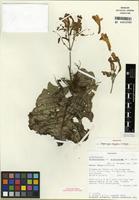
Holotype of Streptocarpus mbeyensis I. Darbysh. [family GESNERIACEAE]
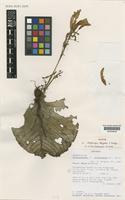
Isotype of Streptocarpus mbeyensis I.Darbysh. [family GESNERIACEAE]
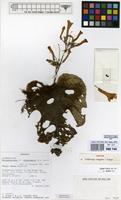
Isotype of Streptocarpus mbeyensis I.Darbysh [family GESNERIACEAE]
Previous
Next

Name

Identification
Isotype of Streptocarpus mbeyensis I.Darbysh [family GESNERIACEAE ] (stored under name); Verified by Not on sheet,
Related name
  • Streptocarpus mbeyensis
  • Streptocarpus undesignated
  • Streptocarpus michelmorei

Flora

Entry for Streptocarpus mbeyensis I.Darbysh. [family GESNERIACEAE]
Herbarium
Royal Botanic Gardens, Kew (K)
Collection
Flora of Tropical East Africa
Resource Type
Reference Sources
Entry From
Flora of Tropical East Africa, page 1, (2006) Author: IAIN DARBYSHIRE
Names
Streptocarpus mbeyensis I.Darbysh. [family GESNERIACEAE], sp. nov. S. solenanthus similis sed corolla maiore atque purpurea (nec alba neque lilacina), labio inferiore magis distincte protruso, stylo longiore et stigmate latiore differt. S. michelmorei similis sed tubo corollae proportione longiore e comparatione labio inferiore, stylo longiore et pilis glandulosis e inflorescentia carentibus differt. Type: Tanzania, Mbeya District, Pungulumo [Pungaluma] Hills, Lovett, Sidwell & Kayombo 4016 (MO!, holo.; BR!, K!, iso.)
Information
Monocarpic acaulescent herb. Unifoliate; blade broadly ovate, 17–40 cm long, 12–30 cm wide, base shallowly cordate, margin crenate-dentate to crenate, apex obtuse, usually withered, surfaces pubescent, hairs most dense and longest on the principal nerves beneath; lateral nerves 14–16 pairs, parallel, spreading; petiolode less than 1 cm long, pubescent. Inflorescences 2–5, arising from the petiolode and base of the midrib, 13–25(–40)-flowered; peduncles of primary inflorescence 6.5–9.5(–13) cm long, pubescent, the hairs somewhat deflexed towards the base; pedicels 10–22 mm long, spreading-pubescent, the hairs eglandular or rarely with a few scattered glandular hairs; bracts linear to oblanceolate, 6–10 mm long, pubescent particularly beneath. Calyx lobes oblong-lanceolate, 3–4(–5.5) mm long, eglandular-pubescent. Corolla purple, the lobes darker, with or without a whitish patch under the throat outside, 33–44 mm long, rather densely eglandular-pubescent outside, glabrous within; tube cylindric, 25–33 mm long, 3.5–6 mm deep, slightly downcurved and somewhat expanded towards the open mouth, where 8.5–10 mm deep; limb bilabiate; upper lip of two rounded lobes, 4–6 mm long and wide; lower lip 7.5–14 mm long, lateral lobes 5–6(–8) mm long, 4.5–5.5 (–8.5) mm wide, median lobe 4.5–6(–9) mm long, 5–7(–8) mm wide, all rounded and held forward. Stamens arising in the upper third of the corolla tube near the mouth; filaments purple, 4–6.5 mm long, slightly thickened above the base, glabrous or with few sessile glands towards the top; anther thecae purple and white, rounded, 1–1.5 mm wide; staminodes arising from below the stamens, to 0.5 mm long. Ovary narrowly cylindric, 11–19 mm long, densely pubescent, with short, spreading, eglandular hairs; style 8–14 mm long, shortly pubescent, barely narrower than the ovary; stigma white, shallowly bilobed, 1.7–2 mm wide, shortly papillose. Capsule 55–70 mm long, 1.5–2 mm diameter, pubescent. Seeds ± 0.5 mm long, reticulate.
Range
DISTR. T 7 not known elsewhere
Altitude range
1200–1350 m
Distribution
TANZANIA Mbeya District Mbeya, May 1975, Hepper & Field 5502!TANZANIA & below Ipota area, rock gorge leading down to Mbalizi river near Mshewe village, Jan. 1990, Lovett et al. 3886! & Pungulomo Hills, Jan. 1990, Lovett et al. 4016! (type)
Notes
USES. None recorded on herbarium specimens. CONSERVATION This species is known from only the three locations listed above, within a highly restricted range. It is found in gulleys or gorges of watercourses, within a variety of vegetation types from forest to rather dry woodland. One of the populations (Hepper & Field 5502) was made from a residential area and is thus likely to be or have been lost through human encroachment. It is therefore considered Endangered (EN B1ab(iii) 2ab+(iii)). This newly described species falls within S. aggregate cooperi C.B.Clarke sensu Hilliard & B.L.Burtt (in Streptocarpus: 175–186 (1971)), a complex of closely related species with long, largely cylindric corolla tubes which do not deepen strongly towards the mouth, and with (sub-)spreading hairs on the ovary. This group was previously represented in our region only by S. solenanthus from which S. mbeyensis is readily distinguished by the larger, darker corollas with a more clearly bilabitate limb, the longer style, the broader stigma and the somewhat coarser indumentum of the inflorescence. Of the other formally described taxa within this aggregate, S. mbeyensis is closest to S. michelmorei B.L.Burtt, a species restricted to the Zimbabwe-Mozambique borderlands. S. michelmorei differs in having a somewhat shorter corolla tube (20–27 mm long) with a proportionately longer limb (the tube being 2–2.4 times the length of the limb, this being 2.3–3 times in S. mbeyensis), in the stamens arising lower in the corolla tube and in having a shorter style (4.5–7 mm long, the length of 10 mm recorded by Hilliard & Burtt in F.Z. 8(3): 46 (1988), appearing to be erroneous). In addition, S. michelmorei often has numerous glandular hairs on the pedicels, corolla and ovary, though these are sometimes absent. Hilliard & B.L. Burtt (in F.Z. 8(3): 46 (1988)) recognise two entities with close affinity to S. michelmorei which have never been formally described. The first (sp. 2A of F.Z.) is recorded from Chimaliro Hill on the Vipya Plateau. A specimen from the same location which closely matches the description of this taxon has been seen (la Croix 4353!); it is close to S. mbeyensis but differs in having a very narrow capsule (to 1.3 mm diameter), a puberulous indumentum to the inflorescence more akin to S. solenanthus, a less conspicuous stigma (1–1.3 mm wide) and a more slender corolla tube (3–4 mm diameter). The second (sp. 2B of F.Z.), recorded from northwestern and central Zambia (Mutimushi 3335! & Robinson 6630!, Kabompo Gorge; Kornaś 3166!, Strid 2896! & Williamson 1727! Kundalila Falls), appears to be the most closely allied taxon to S. mbeyensis. They share the very long corolla tube and pistil, purple corolla and long, slender capsule. The Zambian material however displays corollas with a proportionally smaller lower lip, the tube being 2.8–4.4 times its length and being more notably curved than in S. mbeyensis. In addition, the indumentum of the inflorescence is again more akin to S. solenanthus, being less coarse than in S. mbeyensis. Whether these differences are consistent remains unconfirmed, and the Zambian material may well prove conspecific with S. mbeyensis. A full revision of S. aggregate cooperi is desirable, ideally with the study of living wild plants; this may result in a broadened species concept. The extent to which hybridisation results in these highly localised taxa is also not fully understood and again requires further field knowledge. However, in the absence of such information, it is currently considered most appropriate to recognise the entities discussed above as a series of closely related but discrete species; as such S. mbeyensis is restricted to the Mbeya region of Tanzania.

Related Materials

  • Terms and Conditions
  • Privacy Policy
  • Cookie Policy
  • Cookie Settings
  • Accessibility
  • Help
  • Contact Us
  • Facebook
  • Twitter
ITHAKA

JSTOR is part of ITHAKA, a not-for-profit organization helping the academic community use digital technologies to preserve the scholarly record and to advance research and teaching in sustainable ways.

©2000-2026 ITHAKA. All Rights Reserved. JSTOR®, the JSTOR logo, JPASS®, Aluka®, and ITHAKA® are registered trademarks of ITHAKA.

╳