JSTOR Global Plants Home
  • Home
  • Browse
  • About
  • Access
  • Account
    • Saved Items
    • Profile
  • Log in

Global Plants

Skip to Main Content
  • JSTOR Global Plants Home
  • Global Plants

    • Browse
    • About
    • Access
    • Account
      • Saved Items
      • Profile
Log in
  • Browse
  • About
  • Access
  • Account
    • Saved Items
    • Profile
Advanced Search

Compilation
Streptocarpus eylesii

7 Images see all

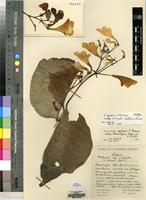
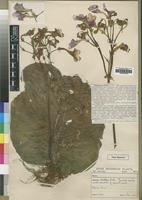
Holotype of Streptocarpus eylesii S.Moore subsp. silvicola Hilliard & B.L.Burtt [family GESNERIACEAE]
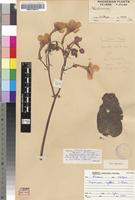
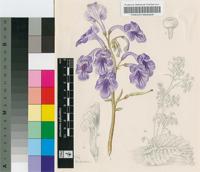
Isotype of Streptocarpus eylesii S.Moore [family GESNERIACEAE]
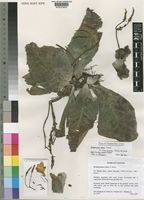
Holotype of Streptocarpus eylesii S.Moore subsp. silvicola Hilliard & B.L.Burtt [family GESNERIACEAE]
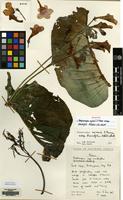
Holotype of Streptocarpus eylesii S.Moore ssp. brevistylus Hilliard & B.L.Burtt [family GESNERIACEAE]
Type of Streptocarpus eylesii S.Moore [family GESNERIACEAE]
Streptocarpus eylesii S.Moore subsp. eylesii
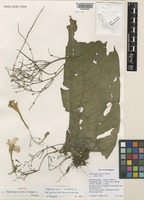
Holotype of Streptocarpus acicularis I. Dasbysh. & Massingue [family GESNERIACEAE]
Previous
Next

Name

Identification
Streptocarpus eylesii S.Moore [family GESNERIACEAE ]
Related name
  • Streptocarpus eylesii

Flora

Entry for Streptocarpus eylesii S.Moore [family GESNERIACEAE]
Herbarium
Royal Botanic Gardens, Kew (K)
Collection
Flora of Tropical East Africa
Resource Type
Reference Sources
Entry From
Flora of Tropical East Africa, page 1, (2006) Author: IAIN DARBYSHIRE
Names
Streptocarpus eylesii S.Moore [family GESNERIACEAE], in J.B. 57: 245 (1919); Hilliard & B.L. Burtt, Streptocarpus: 193, t. 8, fig. 29 (1971); Cribb & Leedal, Mountain flow. south. Tanzania: 123, t. 30 (1982); Hilliard & B.L. Burtt in F.Z. 8(3): 48 (1988). Type: Zimbabwe, Matopo Hills, Eyles 1097 (BM!, holo.; PRE, SRGH, Z, iso.)
Information
Monocarpic, unifoliate to perennial, plurifoliate acaulescent herb. Leaves often pendant; blade broadly ovate, oblong or obovate, (4–)8–30 cm long, (2.5–)5–20 cm wide, base shallowly cordate, truncate or shortly attenuate, margin crenate-dentate, sometimes irregularly so, apex usually withered, surfaces densely long-pubescent; lateral nerves 7–14(–24) pairs, parallel, spreading; petiolode usually less than 1 cm long but occasionally to 2 cm, densely pubescent. Inflorescences 1–4, erect, arising from the petiolode and/or base of the leaf midrib, panicles subcorymbiform to somewhat elongate, 4–30-flowered; peduncles (2.5–)8–18.5 cm long, pilose with eglandular and sometimes glandular hairs; pedicels 15–35 mm long, densely pilose, with or without glandular hairs; bracts linear to oblanceolate, 5–16 mm long, pubescent. Calyx lobes lanceolate to linear-lanceolate, 3–9.5 mm long, pilose outside, with or without glandular hairs, eglandular-pubescent within. Flowers (?sometimes) smelling of creosote and honey. Corolla pendulous, variously pale blue-violet to white, sometimes darker on the limb than the tube, with either a paler (white or yellow) or darker (purple) mouth, (32–)37–60 mm long, pilose or glandular-pilose outside; tube (16–)20–40 mm long, 3–6 mm deep in the centre, downcurved above the centre and expanding to the mouth, where 10–15 mm deep; limb strongly bilabiate; upper lip of two suberect rounded lobes (5.5–)7–12 mm long, (6–)8–13 mm wide; lower lip 15–28 mm long, lateral lobes 8–15 mm long, 8.5–17.5 mm wide, median lobe 10–17.5 mm long, (8–)10–19.5 mm wide, all rounded. Stamens arising above the middle of the corolla tube; filaments 4–6(–8) mm long, slightly thickened centrally, with stalked or subsessile glands; anther thecae rounded, 1.4–2 mm wide; staminodes 0.5–0.75 mm long. Ovary cylindric, 6–17.5 mm long, densely pubescent, hairs short, spreading, predominantly glandular; style 1.5–7 mm long, glandular-pubescent; stigma shallowly bilobed, 1–2.5 mm wide, papillose. Capsule 20–60(–70) mm long, 2–3.5 mm diameter, pubescent. Seeds 0.5–0.8 mm long, reticulate.

Related Materials

  • Terms and Conditions
  • Privacy Policy
  • Cookie Policy
  • Cookie Settings
  • Accessibility
  • Help
  • Contact Us
  • Facebook
  • Twitter
ITHAKA

JSTOR is part of ITHAKA, a not-for-profit organization helping the academic community use digital technologies to preserve the scholarly record and to advance research and teaching in sustainable ways.

©2000-2026 ITHAKA. All Rights Reserved. JSTOR®, the JSTOR logo, JPASS®, Aluka®, and ITHAKA® are registered trademarks of ITHAKA.

╳