JSTOR Global Plants Home
  • Home
  • Browse
  • About
  • Access
  • Account
    • Saved Items
    • Profile
  • Log in

Global Plants

Skip to Main Content
  • JSTOR Global Plants Home
  • Global Plants

    • Browse
    • About
    • Access
    • Account
      • Saved Items
      • Profile
Log in
  • Browse
  • About
  • Access
  • Account
    • Saved Items
    • Profile
Advanced Search

Compilation
Sterculia triphaca

8 Images see all

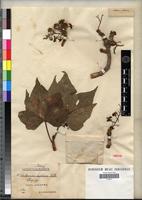
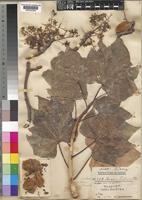
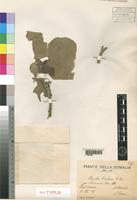
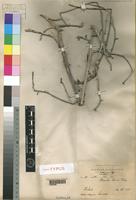
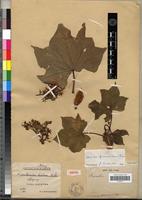
Isotype of Sterculia triphaca R.Br. var. socotrana K.Schum. [family STERCULIACEAE]
Sterculia africana (Lour.) Fiori [family STERCULIACEAE]
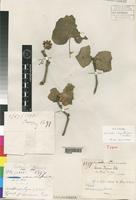
Sterculia triphaca R.Br. [family STERCULIACEAE]
Sterculia africana (Lour.) Fiori [family STERCULIACEAE]
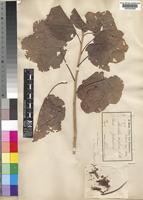
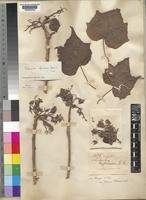
Sterculia triphaca R.Br. [family STERCULIACEAE]
Isotype of Sterculia triphaca R.Br. var. socotrana K.Schum. [family STERCULIACEAE]
Previous
Next

Name

Identification
Sterculia rhynchocarpa K.Schum. [family STERCULIACEAE ] (stored under name); Verified by Data not digitized, Sterculia triphaca R.Br. [family STERCULIACEAE ] Verified by Data not digitized,
Related name
  • Sterculia africana
  • Sterculia triphaca
  • Sterculia rhynchocarpa

Flora

Entry for Sterculia africana (Lour.) Fiori [family STERCULIACEAE]
Herbarium
Royal Botanic Gardens, Kew (K)
Collection
Flora of Tropical East Africa
Resource Type
Reference Sources
Entry From
Flora of Tropical East Africa, page 1, Author: MARTIN CHEEK AND LAURENCE DORR
Names
Sterculia africana (Lour.) Fiori [family STERCULIACEAE], in Agric. Colon. Ital. 5, suppl.: 37 (1912); T.T.C.L.: 602 (1949); E.P.A. 1: 584 (1958); Wild in F.Z. 1: 553 (1961); K.T.S.: 551, t. 101 (1961); K.T.S.L.: 167, fig., map (1994); Vollesen in Fl. Eth. 2, 2: 184, fig. 80.8: 1–7 (1995); Thulin, Fl. Somal. 2: 35 (1999). Type: Mozambique, Mossuril, Loureiro s.n. (P!, holo.)
Triphaca africana Lour. [family ], Fl. Cochinch.: 577 (1790)
Sterculia triphaca (Lour.) R.Br. [family STERCULIACEAE], in Bennett, Pl. Jav. Rar.: 228 (1844); Mast. in F.T.A. 1: 216 (1868); K. Schum. in E.M. 5: 106 (1900) pro parte; Engl. in V.E. 3 (2): 452 (1921). Type: as for S. africana
Sterculia ipomoeifolia Garcke [family STERCULIACEAE], in Peters, Reise Mossamb. Bot. 1: 130 (1861). Type: Mozambique, Sena, Peters (B, holo. probably destroyed)
Sterculia triphaca K.Schum. var. rivaei [family STERCULIACEAE], in E.M. 5: 106 (1900). Types: Somalia, Savati, Riva 1597 ((B, syn., probably destroyed, FT); Kenya?, Muansa, fl. May 1892, Stuhlman 4587 (B, syn., probably destroyed); Teita District: Ndi (Taita), fl. Feb. 1877, Hildebrandt 2566 (B, syn., probably destroyed); Tanzania, Lushoto District: Usambara Mts, Holst 2373 (B, syn., probably destroyed; K!, isosyn.); Malawi, Buchanan 1025 (B, syn., probably destroyed); Angola, Buchner 518 (B, syn., probably destroyed; K!, isosyn.)
Sterculia setigera [family STERCULIACEAE], sensu Brenan in T.T.C.L.: 602 (1949), non Del.
Information
Tree 4–10(–18) m tall; bole often thick and squat, bark whitish grey or liver-colored; slash unknown; young extension shoots pale brown, shortly tomentellous. Leaf-blade orbicular to ovate in outline, shallowly 3-lobed or entire, 3.5–10(–12.5) cm long, (3–)5–8(–11) cm wide, lateral lobes 0.5(–2) cm deep, always more shallow than the apical lobe, apex rounded to acuminate, base cordate, sinus 0.5–1.5 cm deep, edges usually not quite meeting, shortly and thinly tomentose to glabrescent above and beneath, hairs stellate, greyish with 5–7 ± horizontal arms; petiole 2.3–7.5(–12.5) cm long, 0.5 mm thick, tomentellous with greyish stellate hairs; stipules not long persistent. Inflorescences borne on ± leafless stem apices, 2–6(–20) per shoot, 1.5–3 cm long, 1–2 cm wide, indumentum as the leaf, spike-like or branches 2–5; pedicels 3–8 mm long. Flowers greenish or yellowish with pink or red markings, widely campanulate, 7–8 mm long, (5.5–)8–20 mm wide, divided into 5 rounded-triangular, patent or reflexed lobes 7–9 mm long, 4–4.5 mm wide, outside with small stellate hairs, as the leaf, inside glabrous apart from the lobes which densely covered in longer, white silky simple to 3–4-armed stellate hairs. Fruits with follicles ± ellipsoid in lateral view, 6–11 cm long, widest at the equator in end view, 5–7 cm wide, dehiscing by 90–180°, then shorter and 8–9 cm wide, rostrum, if present, stout, slightly curved, 0–2 cm long, stipe stout and short if present, 0–0.5(–0.8) cm long, pericarp woody, 1.5–2(–4) mm thick, outer surface yellowish brown, tomentose to subscabrid, without sculpturing, inner surface yellowish white, softly and thinly tomentose, characteristically lined, placenta covered densely in yellow-brown urticating hairs 2–3 mm long; seeds with peg-like stalks (2–)3–3.5 mm long, (0.5–)1–1.5 mm wide, covered with urticating hairs, persistently attached to the placenta; seeds ellipsoid–oblong, grey-black, 12–15 mm long, 7–8 mm wide, the aril apical, 2–3 mm long, 3–5 mm wide, drying white; hilum at aril margin, round, 1–1.5 mm wide. Fig. 1/1, 7, p. 6.
Range
DISTR. T 3, 5–8, Z
Altitude range
0–600 m
Distribution
TANZANIA Handeni District Zindeni Hill, 12 Sep. 1933, Burtt 4880!TANZANIA Mpwapwa District road to Mlunduzi, 12 May 1976, Magogo & Ruffo 686!TANZANIA Morogoro District Morogoro, Sep. 1951, Eggeling 6294!TANZANIA Zanzibar 1927, Toms 257!
Distribution (external)
Sudan
Ethiopia
Somalia
Angola
Zambia
Malawi
Mozambique
Zimbabwe
Notes
LOCAL USES. Bark used for rope, Greenway 5110.  This species is here assessed as “Least Concern” in view of its large geographic range and because of its wide habitat range.  It is remarkable that though Sterculia africana is the only member of that genus illustrated in ‘Kenya Trees and Shrubs’, this species is not known from that country, though it is recorded to the North, from Ethiopia and Somalia, and to the South from Tanzania to South Africa and Botswana. Many specimens from Kenya which have initially borne the name Sterculia africana have subsequently proven to be the closely related S. rhynchocarpa (for diagnostic characteristics, see there). Both Greenway 5110 & 5289, figured in the K.T.S. plate, are from Mafia Island, Tanzania. Sterculia triphaca var. rivaei was very probably based on specimens attributable to both Sterculia africana and to S. rhynchocarpa. This is because two of the six syntypes of var. rivaei (both believed destroyed) were from Kenya, whence specimens of S. africana are unknown, although S. rhynchocarpa is common. Sterculia arabica (R.Br.) T.Anders of Yemen and Oman is very closely related to Sterculia africana. Specimens of the former can usually be differentiated by the smaller, uniformly rounded leaves and smaller fruits, about half the size of the latter. However, qualitative differential characters seem scarce and monographic research might relegate these two taxa to subspecific rank. Sterculia arabica has nomenclatural priority. Specimens collected from coastal districts at sea-level, including all those from Mafia and Zanzibar, have very much larger and more sparsely hairy leaves than those from Acacia bushland, but this phenomenon may be environmentally engendered. Although several varieties have been recognized throughout the coastal range of Sterculia africana, examination of the available material from E Africa suggests that these are unwarranted. Although the species does seem rather variable in leaf-shape and indumentum, intermediates can be demonstrated. The record fromT8 is derived from a sight record at Ngarama North Forest Reserve by Luke (pers. comm.).

Related Materials

  • Terms and Conditions
  • Privacy Policy
  • Cookie Policy
  • Cookie Settings
  • Accessibility
  • Help
  • Contact Us
  • Facebook
  • Twitter
ITHAKA

JSTOR is part of ITHAKA, a not-for-profit organization helping the academic community use digital technologies to preserve the scholarly record and to advance research and teaching in sustainable ways.

©2000-2026 ITHAKA. All Rights Reserved. JSTOR®, the JSTOR logo, JPASS®, Aluka®, and ITHAKA® are registered trademarks of ITHAKA.

╳