JSTOR Global Plants Home
  • Home
  • Browse
  • About
  • Access
  • Account
    • Saved Items
    • Profile
  • Log in

Global Plants

Skip to Main Content
  • JSTOR Global Plants Home
  • Global Plants

    • Browse
    • About
    • Access
    • Account
      • Saved Items
      • Profile
Log in
  • Browse
  • About
  • Access
  • Account
    • Saved Items
    • Profile
Advanced Search

Compilation
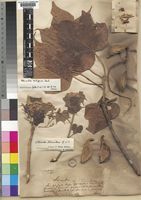
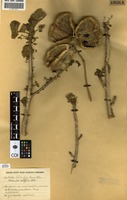
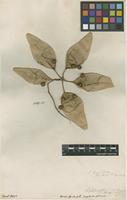
Sterculia tomentosa

11 Images see all

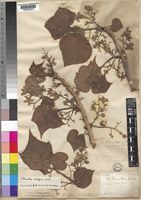
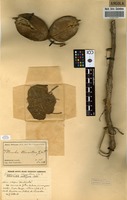
Sterculia setigera Delile [family STERCULIACEAE]
Type? of Sterculia tomentosa Guill. & Perr. [family STERCULIACEAE]
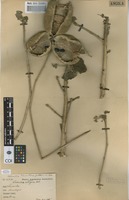
Sterculia tomentosa Guill. & Perr. [family STERCULIACEAE]
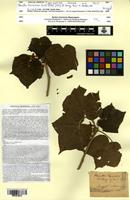
Filed as Sterculia tomentosa Guill. & Perr.; nom. illeg. [family STERCULIACEAE]
Filed as Sterculia tomentosa Guill. & Perr. [family STERCULIACEAE]
Filed as Sterculia setigera Delile [family STERCULIACEAE]
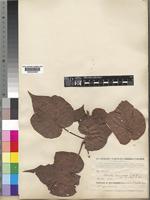
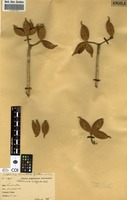
Sterculia cinerea A.Rich. [family STERCULIACEAE]
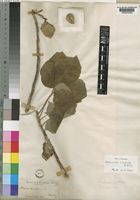
Sterculia setigera Delile [family STERCULIACEAE]
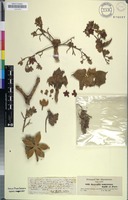
Filed as Sterculia setigera Delile [family STERCULIACEAE]
Type? of Sterculia tomentosa Guill. & Perr. [family STERCULIACEAE]
Previous
Next

Name

Identification
Sterculia cinerea A.Rich. [family STERCULIACEAE ] (stored under name); Verified by Vollesen, K., Sterculia abyssinica R.Br. [family STERCULIACEAE ] Sterculia tomentosa unrecorded [family STERCULIACEAE ]
Related name
  • Sterculia tomentosa
  • Sterculia cinerea
  • Sterculia indet.
  • Sterculia abyssinica
  • Sterculia setigera

Flora

Entry for Sterculia setigera Del. [family STERCULIACEAE]
Herbarium
Royal Botanic Gardens, Kew (K)
Collection
Flora of Tropical East Africa
Resource Type
Reference Sources
Entry From
Flora of Tropical East Africa, page 1, Author: MARTIN CHEEK AND LAURENCE DORR
Names
Sterculia setigera Del. [family STERCULIACEAE], in Voy. Méroé Bot.: 61 (1826); I.T.U.: 423 (1952); Germain in F.C.B. 10: 266 (1963); Vollesen in Fl. Eth. 2, 2: 183 (1995). Type: Sudan, Gonso (or Tertu), Cailliaud s.n. (MPU, holo.)
Sterculia tomentosa Guill. & Perr. [family STERCULIACEAE], in Fl. Senegambia Tent. 1: 81, t. 16 (1831); Mast. in F.T.A. 1: 217 (1868); K. Schum. in E.M. 5: 106 (1900), non Thunberg (1802). Type: Senegal, Walo, Dagagna; Galam, Bakal, Leprieur s.n. (P, holo.)
Cola tomentosa (Guill. & Perr.) Schott. & Endl. [family STERCULIACEAE], Meletem.: 33 (1832)
Clompanus tomentosa (Guill. & Perr.) Kuntze [family ], Rev. Gen.: 78 (1891)
Information
Large shrub or tree 4.5–12 m tall; bole often buttressed at the base; bark grey-purple, rough, flaking to leave pale patches; slash meat-red with paler streaks, watery, with white gum; ultimate branchlets yellowish brown tomentose to tomentellous, 3–7 mm wide, at length becoming ridged, rough, grey and exfoliating; bud-scales triangular, 2–2.5 mm long, 1.5–1.8 mm wide, tomentellous. Leaf-blade ± orbicular in outline, 3–5-lobed, 8.5–17 cm long, 8.5–17.5 cm wide, lobes subequal, wide, 4–7 cm long, 7–9 cm wide, apices acuminate, ± 3 cm long, 0.2 cm wide, base cordate, sinus 3–5 cm deep, edges overlapping, tomentellous above, densely yellow-brown tomentose with 6–8-armed pale stellate hairs below; petiole terete, 8–12 cm long, 2–3 mm wide, densely yellow-brown tomentellous; stipules caducous. Inflorescences borne 5–8 at the apex of leafless stems, 4–8.5 cm long, 2–4 cm wide, yellow-brown, tomentellous and densely stellate-hairy, with 3–10 lateral branches, lowest branch 3–9 mm from the base, 15–35 mm long, bearing 1–4 partial peduncles, each 1–3-flowered. Flowers with perianth green outside, red inside, widely campanulate, 9.5–13 mm long, 11–16 mm wide, divided into 5 oblong acute lobes, 5–9 mm long, 3–4 mm wide, outside velutinous, densely covered with short yellow-brown (when dried) stellate hairs which completely obscure the epidermis, inside glabrous apart from the upper 2/3–3/4 of the lobes which more sparsely covered in patent white, simple hairs. Fruit with follicles ± ellipsoid, 7–12 cm long, 2–3 cm wide, nearly dehiscing flat, then slightly shorter, 4.5–8 cm wide, rostrum long, stout, straight or curved, 1–3 cm long, stipe short and stout, 0.2–0.5 cm long, pericarp woody, 2–4 mm thick, outer surface brown, tomentellous, inner surface yellow, drying dull orange, softly tomentose except the placenta which is covered in urticating yellow hairs ± 2 mm long; seeds with stout, peg-like stalks 2–3 mm long, persisting on old fruits; seeds ellipsoid, 11–12 mm long, 7–8 mm wide, grey-black, hilum sub-apical, round, 1 mm wide, at the margin of the aril; aril large, rounded, apical, 5 mm wide, 2 mm high, red, drying orange or red. Fig. 2, p. 15.
Range
DISTR. U 1, 2; T 1
Altitude range
750–1200 m
Distribution
TANZANIA Shinyanga District Shinyanga, Mar. 1936, Burtt 5608!UGANDA Acholi District Gulu–Pakelli, Eggeling 1226!UGANDA Karamoja District Labwor, 4 Jun. 1940, Thomas 3709!UGANDA Bunyoro District Bunyoro, near Lake Albert, Dawe 771!
Distribution (external)
Senegal
Gambia
Ghana
Togo
Benin
Nigeria
Cameroon
Central African Republic
Congo-Kinshasa
Sudan
Ethiopia
Angola
Notes
LOCAL USES. Wood white and soft, of little value. Seeds taste like groundnuts, eaten in Uganda (fide Eggeling in I.T.U.: 423 (1952)).  This species is here assessed as “Least Concern” in view of its large geographic range and because of its common habitat.   Sterculia setigera is closely related to Sterculia africana, the flowers being very similar apart from indumentum, the fruits being almost identical. It is distinguished from the latter by the 6–8-armed stellate hairs that make the lower leaf-blade tomentose and the perianth yellow-brown velvety, and are so dense as to entirely obscure the epidermis below. In addition, the leaves are at least twice the size usual in Sterculia africana. However, the latter is a variable species and some larger leaved specimens from T 3 with thicker indumentum than the norm have been treated, for example by Brenan (T.T.C.L.: 603 (1949)) as S. setigera. Throughout its range, S. setigera seems to be rather constant in leaf shape and size, and in perianth indumentum. A discordant element, with the indumentum of the lower leaf-blade silkily white, occurs in Ethiopia. This seems referable to S. cinerea A.Rich., normally treated as a synonym of S. setigera. Further investigation is warranted.

Related Materials

  • Terms and Conditions
  • Privacy Policy
  • Cookie Policy
  • Cookie Settings
  • Accessibility
  • Help
  • Contact Us
  • Facebook
  • Twitter
ITHAKA

JSTOR is part of ITHAKA, a not-for-profit organization helping the academic community use digital technologies to preserve the scholarly record and to advance research and teaching in sustainable ways.

©2000-2026 ITHAKA. All Rights Reserved. JSTOR®, the JSTOR logo, JPASS®, Aluka®, and ITHAKA® are registered trademarks of ITHAKA.

╳