JSTOR Global Plants Home
  • Home
  • Browse
  • About
  • Access
  • Account
    • Saved Items
    • Profile
  • Log in

Global Plants

Skip to Main Content
  • JSTOR Global Plants Home
  • Global Plants

    • Browse
    • About
    • Access
    • Account
      • Saved Items
      • Profile
Log in
  • Browse
  • About
  • Access
  • Account
    • Saved Items
    • Profile
Advanced Search

Compilation
Sterculia schliebenii

11 Images see all

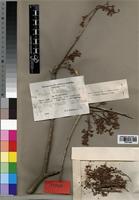
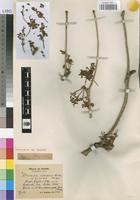
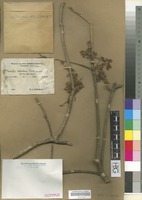
Type of Sterculia schliebenii Mildbr. [family STERCULIACEAE]
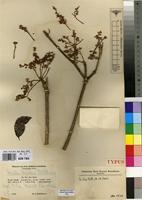
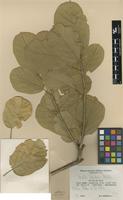
Isotype of Sterculia schliebenii Mildbr. [family MALVACEAE]
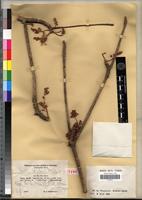
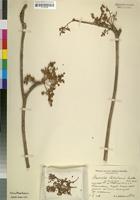
Type of Sterculia schliebenii Mildbr. [family STERCULIACEAE]
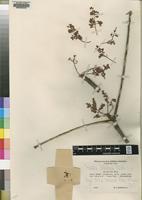
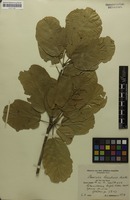
Filed as Sterculia schliebenii Mildbr. [family STERCULIACEAE]
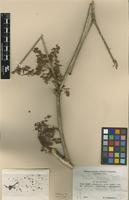
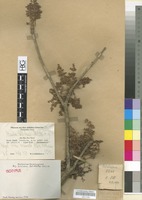
Type of Sterculia schliebenii Mildbr. [family STERCULIACEAE]
Isotype of Sterculia schliebenii Mildbr. [family STERCULIACEAE]
Previous
Next

Name

Identification
Sterculia schliebenii Mildbr. [family STERCULIACEAE ] (stored under name); Sterculia schliebenii Mildbr. [family STERCULIACEAE ]
Related name
  • Sterculia schliebenii

Flora

Entry for Sterculia schliebenii Mildbr. [family STERCULIACEAE]
Herbarium
Royal Botanic Gardens, Kew (K)
Collection
Flora of Tropical East Africa
Resource Type
Reference Sources
Entry From
Flora of Tropical East Africa, page 1, Author: MARTIN CHEEK AND LAURENCE DORR
Names
Sterculia schliebenii Mildbr. [family STERCULIACEAE], in N.B.G.B. 12: 519 (1935); T.T.C.L.: 604 (1949); Wild in F.Z. 1: 557 (1961); K.T.S.L.: 168 (1994). Type: Tanzania, Lindi District: Lake Lutamba, 40 km W of Lindi, Schlieben 5243 (B, holo., probably destroyed; lecto. MAD, designated by Dorr in K.B. 59: 161 (2004); LISC, P!, S, iso.)
Information
Deciduous tree 4–16 m tall, sometimes branching from the base; bark very rough, grey or brown, slash pink, watery; ultimate branchlets ridged or smooth, 3–5(–8) mm wide, becoming grey with scattered tuberculate lenticels; bud-scales narrowly triangular, 4–5 mm long, 1–2 mm wide. Leaf-blade obovate, sometimes slightly pandurate, (5–)8–18(–22) cm long, (3–)6–10(–1) cm wide, apex rounded to truncate, subacuminate, base obtuse, rarely truncate or subcordate, papery, glabrous to subscabrid above, tomentellous, subscabrid to glabrescent beneath with small fine pale brown appressed stellate hairs; petiole terete, (1.5–)3–5.5(–8) mm long, 1–2 mm wide, pale brown, subscabrid with indumentum as leaf-blade; stipules caducous. Inflorescences in clusters of 3–13 from the apex of leafless stems, each 4–7 cm long, 1–1.5(–3) cm wide, indumentum of purple, patent hairs, main axis bearing 9–12 short branches, the lowest 0.5–2 cm from the base, 0.3–2.1 cm long, bearing 1–3 partial- peduncles each with 1–3(–5) flowers; bracts narrowly triangular to linear, 4–5 mm long, 1–2 mm wide; pedicels 1–5 mm long. Flower perianth widely campanulate, 3–3.5(–7) mm long, 4–4.5(–8.5) mm wide, divided into 4–5(–7) triangular, acute, reflexed lobes 2–2.5 mm long, 2 mm wide, the outer surface pink, drying red, with purplish patent stellate hairs, the inner surface greenish white, drying grey, with short white simple hairs. Male flowers with androphore 2–3 mm long. Female flowers with gynophore slightly tapered, 0.5–1 mm long, glabrous, sometimes slightly angular; anthers reduced, ± sessile at ovary base; ovary globose, 2–2.3 mm wide, densely grey-brown tomentose, style 0.5 mm long. Fruit known only from one old, fallen, seedless follicle, elliptic, 9.5 mm long, 7.5 mm wide, 1.5 mm thick, inner surface tomentose, stellate; seed unknown.
Range
DISTR. K 7; T 6, 8
Altitude range
20–400 m
Distribution
KENYA Kwale District Shimba Hills, Mwele Mdogo Forest, 6 Jan. 1988, Luke 896! & Shimba Hills, SW Pengo Hill, 8 Nov. 1970, Faden, Evans & Mahasi 70/826! & Marenji Forest Reserve, 25 Feb. 1989, Luke & Robertson 1739!TANZANIA Uzaramo District Pugu Hills, 29 Aug. 1982, Hawthorne 1683!TANZANIA Lindi District Rondo Plateau, Mchingiri, Mar. 1952, Semsei S688! & Lake Lutamba, 4 Sep. 1934, Schlieben 5243!
Distribution (external)
Mozambique
Notes
LOCAL USES. None recorded.  Apparently restricted to the increasingly scanty scraps of undisturbed coastal rainforest of East Africa. In Kenya known only from four collections, all in Kwale District; in Tanzania known only from four collections, all but one in Lindi District. In Mozambique, known from a single collection. This species is here assessed as VU B2 a, b(iii), or vulnerable, due to being known from less than 10 locations, with an area of occupancy of less than 2,000 km2 and an inferred decline in its lowland moist forest habitat. Robertson & Luke 6315 (Gongoni Forest reserve): “Tree to 10 m which had been cut down for firewood by contractor (A Khan) to sell to Kenya Calcium Products, Waa”. www.redlist.org already lists S. schliebenii as vulnerable (VU D2, based on an assessment by Lovett & Clarke in 1996).  The leaves of S. schliebenii closely resemble those of S. tragacantha, a widespread species in Guineo-Congolian Africa. Confusion sometimes occurs. S. tragacantha differs in flowering with the leaves and in having the tips of the perianth united at anthesis, it also has a rather more tomentose lower surface to the leaf-blade. Luke (pers. comm.) that S. schliebenii grows above 400 m alt. in Mozambique.

Related Materials

  • Terms and Conditions
  • Privacy Policy
  • Cookie Policy
  • Cookie Settings
  • Accessibility
  • Help
  • Contact Us
  • Facebook
  • Twitter
ITHAKA

JSTOR is part of ITHAKA, a not-for-profit organization helping the academic community use digital technologies to preserve the scholarly record and to advance research and teaching in sustainable ways.

©2000-2026 ITHAKA. All Rights Reserved. JSTOR®, the JSTOR logo, JPASS®, Aluka®, and ITHAKA® are registered trademarks of ITHAKA.

╳