JSTOR Global Plants Home
  • Home
  • Browse
  • About
  • Access
  • Account
    • Saved Items
    • Profile
  • Log in

Global Plants

Skip to Main Content
  • JSTOR Global Plants Home
  • Global Plants

    • Browse
    • About
    • Access
    • Account
      • Saved Items
      • Profile
Log in
  • Browse
  • About
  • Access
  • Account
    • Saved Items
    • Profile
Advanced Search

Compilation
Sterculia bequaertii

12 Images see all

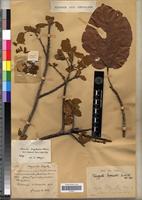
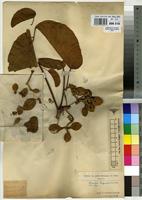
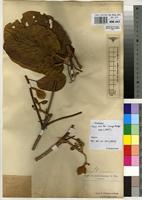
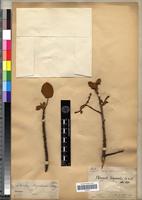
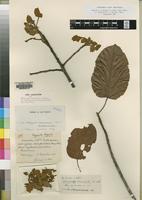
Type of Sterculia bayakensis Pellegr. [family STERCULIACEAE]
Type of Sterculia bayakensis Pellegr. [family MALVACEAE]
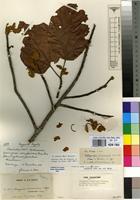
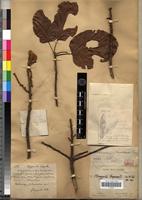
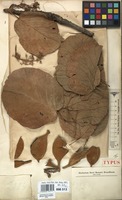
Type of Sterculia tragacantha Lindl. var. cruciata Vermoesen [family STERCULIACEAE]
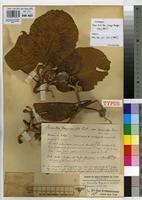
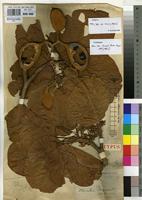
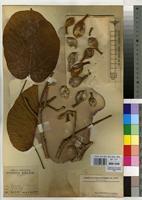
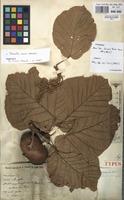
Type of Sterculia bequaertii De Wild. [family STERCULIACEAE]
Type of Sterculia tragacantha Lindl. var. cruciata Vermoesen [family STERCULIACEAE]
Type of Sterculia bayakensis Pellegr. [family STERCULIACEAE]
Type of Sterculia bequaertii De Wild. [family STERCULIACEAE]
Previous
Next

Name

Identification
Sterculia tragacantha Lindl. [family STERCULIACEAE ] Verified by Not on sheet, Sterculia bequaertii De Wild. [family STERCULIACEAE ] (stored under name); Verified by Not on sheet,
Related name
  • Sterculia bequaertii
  • Sterculia dawei
  • Sterculia tragacantha

Flora

Entry for Sterculia dawei Sprague [family STERCULIACEAE]
Herbarium
Royal Botanic Gardens, Kew (K)
Collection
Flora of Tropical East Africa
Resource Type
Reference Sources
Entry From
Flora of Tropical East Africa, page 1, Author: MARTIN CHEEK AND LAURENCE DORR
Names
Sterculia dawei Sprague [family STERCULIACEAE], in Bull. Herb. Boiss. sér. 2, 5: 1167 (1905); I.T.U.: 422 (1952); Hamilton, Uganda For. Trees: 118 (1981); K.T.S.L.: 167 (1994). Types: Uganda, “all over”, Dawe 143; Uganda, Mengo District: Busiro, Dawe 206 (both K!, syn.)
Sterculia bequaertii De Wildeman [family STERCULIACEAE], in Ann. Soc. Sc. Brux. 40 (1): 188 (1921); Hallé in Fl. Gabon 2: 17, t. 3 (1961); Germain in F.C.B. 10: 271 (1963). Type: Congo-Kinshasa, Ituri, Bequaert 2384 (BR, holo.), syn. nov.
Sterculia tragacantha Vermoesen var. cruciata [family STERCULIACEAE], in Man. Ess. For. Congo Belge: 258 (1923). No type indicated.
Sterculia purpurea Exell [family STERCULIACEAE], in J. B. 65, suppl. 1: 37 (1927). Type: Angola, Mayombe, Gossweiler 5393, 5402 (both BM, syn.), syn. nov.
Information
Tree 9–27 m tall, to 1.5 m DBH; bole cylindrical, lacking buttresses or with large buttresses to 2.5 m, bark rough, brown to grey, flaking off in small pieces ± 1 cm wide; slash pink or red, with a reticulate pattern, rapidly turning brown; ultimate branchlets grey, rough and wrinkled, 5–8 mm wide; bud-scales triangular, 5 mm long, 2 mm wide, densely tomentose, with pale brown patent stellate hairs. Leaf-blade widely elliptic, rarely broadly ovate or suborbicular, (10–)11–16 cm long, (5.5–)10–16(–19) cm wide, apex rounded to subacute, sometimes shortly subacuminate, base cordate, the sinus (0.3–)1–1.5(–3) cm deep, texture papery, glabrous and drying dark green above, subscabrid with sparse, pale brown cruciform hairs beneath, drying grey; petiole slightly swollen at base and tip, terete, (2–)4–6.5 cm long, 1–3 mm wide, glabrous, rarely subscabrid, with indumentum as lower leaf surface; stipules caducous. Inflorescences produced with the leaves, (1–)2–7 per stem, each 5–15.5 cm long, 1.5–4.5 mm wide with 10–35 branches, indumentum as bud-scales; bracts ovate-acuminate, 7 mm long, 3 mm wide, pale brown tomentose; lowest branch 2–4 cm from the base, 0.8–3 cm long, bearing 1–4 partial peduncles each 5–9-flowered; pedicels 1.5–4.5 mm long. Flowers green outside, deep red inside, with campanulate perianth 4–7 mm long, 4–5 mm wide, divided into 5 triangular-acute lobes 1–1.5 mm long, 0.7–1 mm wide, outside with appressed, wide, flaccid, colourless, simple hairs, inner surface largely glabrous except the teeth and extreme base which densely covered in fine white simple hairs. Fruit usually with 3 follicles; follicles ellipsoid, 6–10 cm long, 3–4.5 cm wide, dehiscing flat, then ± 4.5 cm long, 8–10.5 cm wide, rostrum short and blunt, 0.3–0.9 cm long, stipe stout, 0.7–1 cm long, pericarp woody, 3–6 mm thick, outer surface red, then rusty brown, tomentellous, inner surface softly tomentose, pale brown; seeds glossy black, ellipsoid, 13–19 mm long, 9–11 mm wide, hilum white, terminal, elliptic 1–2 mm long with on a long margin a small globose orange aril, 0.5–1 mm wide; seed-stalk absent, detached seed leaving a white elliptic scar on the inner pericarp surface.
Range
DISTR. U 2, 4; K 5
Altitude range
900–1500 m
Distribution
KENYA North Kavirondo District Marach, 14 Mar. 1960, Coffee Officer (Elgon Nyanza) H86/60!UGANDA Toro District Bwamba, Kitengya, Aug. 1937, Eggeling 3365!UGANDA Mengo District Entebbe, Dec. 1931, Eggeling 132! & Busiro, Dawe 206!
Distribution (external)
Cameroon
Gabon
Congo-Kinshasa
Angola
Notes
LOCAL USES. None recorded. CONSERVATION This species is here assessed as “Least Concern” in view of its large geographic range and because of its common habitat.  The leaves of S. dawei are similar to and so confused with those of Chlorophora (Milicia), Uganda’s most valuable timber tree. In East Africa, Sterculia dawei is closely related to S. schliebenii and S. tragacantha. It is most easily distinguished from both by its cordate leaves, with characteristic cruciform hairs sparsely distributed beneath. It is odd that S. purpurea and S. bequaertii have not been reduced to synonymy before now.

Related Materials

  • Terms and Conditions
  • Privacy Policy
  • Cookie Policy
  • Cookie Settings
  • Accessibility
  • Help
  • Contact Us
  • Facebook
  • Twitter
ITHAKA

JSTOR is part of ITHAKA, a not-for-profit organization helping the academic community use digital technologies to preserve the scholarly record and to advance research and teaching in sustainable ways.

©2000-2026 ITHAKA. All Rights Reserved. JSTOR®, the JSTOR logo, JPASS®, Aluka®, and ITHAKA® are registered trademarks of ITHAKA.

╳