JSTOR Global Plants Home
  • Home
  • Browse
  • About
  • Access
  • Account
    • Saved Items
    • Profile
  • Log in

Global Plants

Skip to Main Content
  • JSTOR Global Plants Home
  • Global Plants

    • Browse
    • About
    • Access
    • Account
      • Saved Items
      • Profile
Log in
  • Browse
  • About
  • Access
  • Account
    • Saved Items
    • Profile
Advanced Search

Compilation
Sterculia appendiculata

5 Images see all

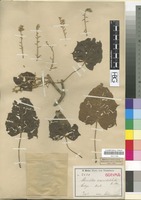
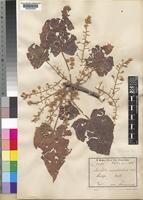
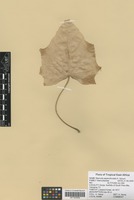
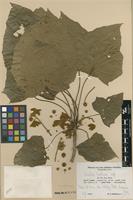
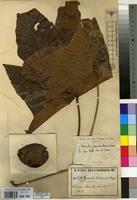
Isotype of Sterculia appendiculata K. Schum. [family STERCULIACEAE]
Sterculia appendiculata K.Schum. [family STERCULIACEAE]
Filed as Sterculia appendiculata K. Schum. [family STERCULIACEAE]
Isoneotype of Sterculia lindensis Engl. [family MALVACEAE]
Isotype of Sterculia lindensis Engl. [family MALVACEAE]
Previous
Next

Name

Identification
Isotype of Sterculia lindensis Engl. [family MALVACEAE ] Verified by Not on sheet, Sterculia appendiculata K.Schum. [family MALVACEAE ] (stored under name); Verified by Not on sheet,
Related name
  • Sterculia appendiculata
  • Sterculia lindensis

Flora

Entry for Sterculia appendiculata K.Schum. [family STERCULIACEAE]
Herbarium
Royal Botanic Gardens, Kew (K)
Collection
Flora of Tropical East Africa
Resource Type
Reference Sources
Entry From
Flora of Tropical East Africa, page 1, Author: MARTIN CHEEK AND LAURENCE DORR
Names
Sterculia appendiculata K.Schum. [family STERCULIACEAE], in P.O.A. C: 272, t. 24 (1895) & in E.M. 5: 105, t. 9/c (1900); T.T.C.L.: 602 (1949); K.T.S.: 551 (1961); Wild in F.Z. 1: 554, t.104/B (1961); K.T.S.L.: 167, map (1994). Type: Tanzania, Lushoto District: Usambaras, Holst 2529 (K!, iso.)
Sterculia lindensis Engl. [family STERCULIACEAE], in E.J. 39: 592 (1907); T.T.C.L.: 603 (1949). Type: Tanzania, Lindi District: Seliman–Mamba, Busse 2679 (B†, holo.; BR, EA (not found), iso.)
Information
Deciduous tree 12–40 m tall; bole straight, bark smooth, pale grey or greenish yellow or white, usually with short buttresses up to 20 m high, slash white; ultimate branchlets strongly longitudinally ridged, (3–)5–8(–18) mm thick, pale brown or grey brown, glabrous except the rusty, thickly woolly apex; bud-scales triangular, ± 3 mm long, 2 mm wide, rusty and scurfy when young. Leaf-blade ± orbicular in outline, shallowly (3–5–)7–lobed, 10–24 cm long, 7–19 cm wide, lobes widely based, acuminate, apical lobe 4–9 cm long, 5.5–11.5 cm wide, lateral lobes much smaller, 0.5–3.7 cm long, base deeply cordate, sinus 1.5–6 cm deep, edges never overlapping, glabrous above and below when adult, young leaves scurfy with dense rusty tomentum; petiole terete, sometimes slightly swollen at base and tip, 5.5–15.5 cm long, (0.7–)1–2 mm wide, glabrous when mature, scurfily brown-tomentose when young; stipules caducous. Inflorescence usually borne with the leaves, 1–14 per stem, each 4–11 cm long, 3–5 cm wide, thickly covered in yellow-brown stellate hairs; bearing 6–9 short branches, the lowest 2–22 mm from the base, 4–28 mm long, bearing 1–3(–5) flowers; pedicels 2(–12) mm long; 3 bracts at apex of pedicel, whorled, equal, subvalvate, calyx-like, elliptic, 7 mm long, 3 mm wide, velutinous, outer surface brown, inner purple grey. Flowers yellowish, perianth widely campanulate, 12–14 mm long, 18–23 mm wide, divided into 5 elliptic lobes, 6–8 mm long, 4–6.5 mm wide, indumentum as inflorescence, rusty yellow-brown, with stellate hairs, texture felty. Fruit with undehisced follicles ellipsoid, (5–)7–9 cm long, 3.5–6 cm wide, suture thickened, rostrum short and blunt, 3–5 mm long, stipe absent or very short and stout, 0–7 mm long, surface subscabrid with rusty brown dense stellate tomentum, pericarp woody, 2.5 mm thick increasing to 10 mm thick at the suture; follicle only opening slightly at dehiscence, inner surface glabrous, white, perhaps pulpy at maturity; seeds large, pale yellow, rounded oblong, 15–21 mm long, 10–13 mm wide, hilum ± rounded, 4–5 mm wide, white, lacking an aril, dangling from the fruit on a white thread 1–2 cm long. Fig. 1/2, 8, p. 6.
Range
DISTR. K 7; T 3, 6–8, Z
Altitude range
5–750 m
Distribution
KENYA Tana River District 7 km NE Garsen, July 1972, Gillett & Kibuwa 19948! & Pokoma, Bura, 4 Jan. 1943, Bally 2036!KENYA Kwale District Mteza & Kwale, Aug. 1937, Dale 3772!TANZANIA Handeni District Tamota, Jul. 1950, Semsei 593!TANZANIA Iringa District 5 km S confluence of Great Ruaha & Yovi Rivers, 7 Sep. 1970, Thulin & Mhoro 906!TANZANIA Masasi District 38 km Masasi–Tunduru, 19 Nov. 1967, Gillett 17934!TANZANIA Zanzibar near Pwani Mchangani, 1 Dec. 1930, Greenway 2613!
Distribution (external)
Somalia
Malawi
Mozambique
Notes
LOCAL USES. “Timber has been sawn for box staves at Mikesse, soft, perishable and requiring precautions against borers. Possible use for plywood?” Wigg 1350; “soft timber tree, wood easy to work, not very durable” Semsei 936; “leaves used as a side dish” Barker 464.  This species is here assessed as “Least Concern” in view of its large geographic range and because of its fairly common habitat.  The palmately lobed leaves of S. appendiculata are similar in shape and in their large size to those of S. quinqueloba. The latter however, grows in drier forest and has a variegated trunk, the bark flaking off in plates, unlike the smooth whitish trunk of S. appendiculata. The leaves of S. quinqueloba are tomentose beneath, in contrast to the glabrous S. appendiculata. The similarity of the two species is only superficial, they differ very greatly in flowers and fruit. Dorr has shown that Sterculia lindensis Engl., the placement of which has been much debated (e.g. Brenan 1956 loc. cit. placed it tentatively as a synonym of Cola scheffleri K. Schum.), is probably this species (Dorr in K.B. 59: 161 (2004)). The lower altitudinal record was reported by Luke (pers. comm.), his record being “Luke sr Buxton Plot, Vipingo, Kilifi Distr.”.

Related Materials

  • Terms and Conditions
  • Privacy Policy
  • Cookie Policy
  • Cookie Settings
  • Accessibility
  • Help
  • Contact Us
  • Facebook
  • Twitter
ITHAKA

JSTOR is part of ITHAKA, a not-for-profit organization helping the academic community use digital technologies to preserve the scholarly record and to advance research and teaching in sustainable ways.

©2000-2026 ITHAKA. All Rights Reserved. JSTOR®, the JSTOR logo, JPASS®, Aluka®, and ITHAKA® are registered trademarks of ITHAKA.

╳