JSTOR Global Plants Home
  • Home
  • Browse
  • About
  • Access
  • Account
    • Saved Items
    • Profile
  • Log in

Global Plants

Skip to Main Content
  • JSTOR Global Plants Home
  • Global Plants

    • Browse
    • About
    • Access
    • Account
      • Saved Items
      • Profile
Log in
  • Browse
  • About
  • Access
  • Account
    • Saved Items
    • Profile
Advanced Search

Compilation
Stephania cyanantha

7 Images see all

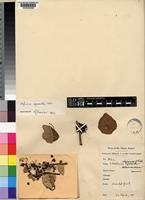
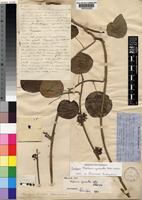
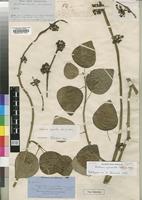
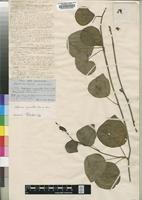
Stephania cyanantha Welw. ex Hiern [family MENISPERMACEAE]
Filed as Stephania cyanantha Welw. ex Hiern [family MENISPERMACEAE]
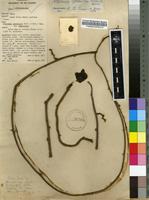
Stephania cyanantha Welw. ex Hiern [family MENISPERMACEAE]
Type of Stephania cyanantha Welw. ex Hiern [family MENISPERMACEAE]
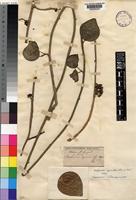
Stephania cyanantha Welw. ex Hiern [family MENISPERMACEAE]
Holotype of Stephania cyanantha Welw. ex Hiern [family MENISPERMACEAE]
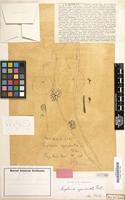
Type of Stephania cyanantha Welw. ex Hiern [family MENISPERMACEAE]
Previous
Next

Name

Identification
Stephania cyanantha Welw. ex Hiern [family MENISPERMACEAE ] (stored under name); Verified by Troupin, 1954 Stephania cyanantha Welw. ex Hiern [family MENISPERMACEAE ] Verified by Benvenuto,E., 1972
Related name
  • Stephania abyssinica
  • Stephania cyanantha

Flora

Entry for Stephania cyanantha [Welw. ex] Hiern [family MENISPERMACEAE]
Herbarium
Royal Botanic Gardens, Kew (K)
Collection
Flora of Tropical East Africa
Resource Type
Reference Sources
Entry From
Flora of Tropical East Africa, page 1, (1956) Author: G. TROUPIN
Names
Stephania cyanantha [Welw. ex] Hiern [family MENISPERMACEAE], in Cat. Afr. Pl. Welw. 1: 20 (1896); Diels in E.P. IV. 94: 276 (1910); Exell & Mendonça in Consp. Fl. Angol. 1: 42 (1937); Troupin in F.C.B. 2: 244 (1951). Type: Angola, Cuanza Norte, Calinda, Welwitsch 2321 (BM, holo.!, K!, LISU, iso.)
Information
Somewhat woody, twining, completely glabrous liane; stem and branches succulent. Leaves with slender petiole 3–5 cm. long; blade triangular-orbicular to orbicular, rarely reniform, acuminate to obtuse at apex, entire or with the margins slightly undulate, 4.5–6.5 cm. long and wide, membranous; basal nerves 10–12, palmate. Male inflorescences of false umbels of subglobular cymes, usually arising from leafless stems, 1–2.5 cm. in diameter; peduncles and pedicels very short. Male flowers with 6 obovate-incurved, single-nerved sepals 1.5–2 mm. long and 1–1.5 mm. wide; petals 3–5, broadly subreniform, 0.6–1 mm. long, 1–1.5 mm. wide, fleshy; synandrium 6–9-locular, 1.2–1.6 mm. in diameter, on a stipe 0.5–1 mm. long. Female inflorescences similar to the ♂. Female flowers unknown. Drupes subreniform, 4–6 mm. long; exocarp like a thin skin, red when alive; endocarp transversely ribbed and furrowed. Seeds 5–7 mm. long.
Range
DISTR. K5; T7
Altitude range
a preference for the higher altitudes up to 2200 m.
Distribution
KENYA Elgon, Jan. 1931 (♂ fl.), Lugard 502! & Apr. 1931 (fr.), Lugard 502a!TANGANYIKA Rungwe District without locality, 1913, Stolz 2241!
Distribution (external)
; Fernando Po
French Cameroons
Belgian Congo
Angola
Northern Rhodesia
Notes
According to Welwitsch also, this species is monoecious. This character — a rare one in the family — requires to be verified. The androecium is quite typical and characteristic of Stephania, but the inflorescences and the fruit are very different from those of the other species at present placed in this genus.

Related Materials

  • Terms and Conditions
  • Privacy Policy
  • Cookie Policy
  • Cookie Settings
  • Accessibility
  • Help
  • Contact Us
  • Facebook
  • Twitter
ITHAKA

JSTOR is part of ITHAKA, a not-for-profit organization helping the academic community use digital technologies to preserve the scholarly record and to advance research and teaching in sustainable ways.

©2000-2026 ITHAKA. All Rights Reserved. JSTOR®, the JSTOR logo, JPASS®, Aluka®, and ITHAKA® are registered trademarks of ITHAKA.

╳