JSTOR Global Plants Home
  • Home
  • Browse
  • About
  • Access
  • Account
    • Saved Items
    • Profile
  • Log in

Global Plants

Skip to Main Content
  • JSTOR Global Plants Home
  • Global Plants

    • Browse
    • About
    • Access
    • Account
      • Saved Items
      • Profile
Log in
  • Browse
  • About
  • Access
  • Account
    • Saved Items
    • Profile
Advanced Search

Compilation
Stellaria neglecta

7 Images see all

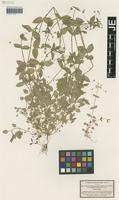
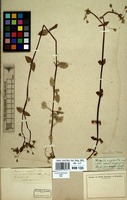
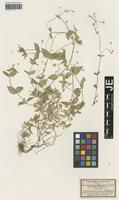
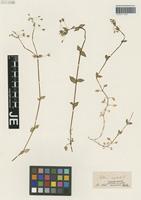
Syntype of Stellaria elisabethae F. W. Schultz [family CARYOPHYLLACEAE]
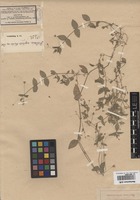
Original material of Stellaria neglecta (Lej.) Weihe var. longipedunculata F.W. Schultz [family CARYOPHYLLACEAE]
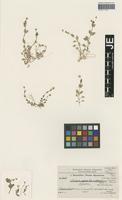
Isotype of Stellaria media (L.) Vill. variety pseudomacropetala Bornm. [family CARYOPHYLLACEAE]
Original material of Stellaria neglecta (Lej.) Weihe var. longipedunculata F.W. Schultz [family CARYOPHYLLACEAE]
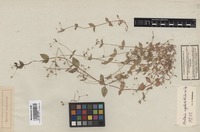
Type? of Stellaria neglecta Weihe [family CARYOPHYLLACEAE]
Syntype of Stellaria elisabethae F. W. Schultz [family CARYOPHYLLACEAE]
Type? of Stellaria neglecta Weihe ex Bluff & Fingerh. [family CARYOPHYLLACEAE]
Previous
Next

Name

Identification
Stellaria neglecta Weihe ex Bluff & Fingerh. [family CARYOPHYLLACEAE ] (stored under name); Verified by K. Victor (JE), 2011 Isotype of Stellaria media (L.) Vill. [family CARYOPHYLLACEAE ] Verified by K. Victor (JE), 2011
Related name
  • Stellaria elisabethae
  • Stellaria neglecta
  • Stellaria media
Common name
  • Greater chickweed, Flora of North America Vol. 5

Flora

Entry for Stellaria neglecta Weihe [family CARYOPHYLLACEAE]
Herbarium
Flora of North America (FNA)
Collection
Flora of North America
Resource Type
Reference Sources
Entry From
Flora of North America, Vol 5,
Names
Stellaria neglecta Weihe [family CARYOPHYLLACEAE], in M. J. Bluff et al., Comp. Fl. German., 1: 560. 1825
Alsine neglecta (Weihe) Á. Löve & D. Löve [family ]
Stellaria media (Linnaeus) Villars subsp. neglecta (Weihe) Murbeck [family CARYOPHYLLACEAE]
Treatment Author(s)
John K. Morton
Information
Plants annual or winter annual, from slender taproot. Stems decumbent proximally, ascending distally, diffusely branched, 4-angled, to 80 cm, with single line of hairs along each internode. Leaves petiolate (proximal and those on sterile shoots) or sessile (distal and mid stem); blade ovate to broadly elliptic, 0.5–4 cm × 2–18 mm, base round to cuneate, margins entire with few cilia at base, thin, apex acute to short-acuminate, ± glabrous. Inflorescences terminal, 9–many-flowered cymes; bracts ovate to lanceolate, 3–25 mm, reduced distally, herbaceous, sparsely ciliate on margins and underside. Pedicels erect, often becoming deflexed, 5–40 mm, pubescence a single line of hairs. Flowers 5–7 mm diam.; sepals 5, veins obscure, lanceolate, 5–6.5 mm, margins narrow, membranous, apex acute, pubescent; petals 5 (rarely absent), 2–5 mm, shorter than or equaling sepals; stamens 8–10; styles 3, ascending, outwardly curved, 0.5–1 mm. Capsules green to straw colored, ovoid-oblong, 5–7 mm, ca. equaling sepals, apex obtuse, opening by 6 slightly recurved valves; caropohore absent. Seeds very dark brown when mature, round, 1.1–1.7 mm diam., tuberculate; tubercles conic, taller than broad, apex acute. 2n = 22.
Phenology
mar-may (spring)
Altitude range
100–200 m;
Distribution
Europe.USA Ark.USA Calif.USA Ky.USA La.USA Md.USA N.C.USA Okla.USA Tenn.
Discussion
Formerly, Stellaria neglecta was rare in North America, but during the last ten to 15 years it has spread rapidly and become weedy. It is very like larger forms of S. media (see note under that species), but usually differs in having larger flowers, sepals, and seeds; having a larger number of stamens; and having seeds with acute conic tubercles. Flowers are self-compatible but usually are pollinated by flies.
Native/Introduced
introduced;

Related Materials

  • Terms and Conditions
  • Privacy Policy
  • Cookie Policy
  • Cookie Settings
  • Accessibility
  • Help
  • Contact Us
  • Facebook
  • Twitter
ITHAKA

JSTOR is part of ITHAKA, a not-for-profit organization helping the academic community use digital technologies to preserve the scholarly record and to advance research and teaching in sustainable ways.

©2000-2026 ITHAKA. All Rights Reserved. JSTOR®, the JSTOR logo, JPASS®, Aluka®, and ITHAKA® are registered trademarks of ITHAKA.

╳