JSTOR Global Plants Home
  • Home
  • Browse
  • About
  • Access
  • Account
    • Saved Items
    • Profile
  • Log in

Global Plants

Skip to Main Content
  • JSTOR Global Plants Home
  • Global Plants

    • Browse
    • About
    • Access
    • Account
      • Saved Items
      • Profile
Log in
  • Browse
  • About
  • Access
  • Account
    • Saved Items
    • Profile
Advanced Search

Compilation
Stapfiella usambarica

9 Images see all

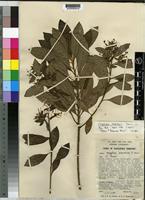
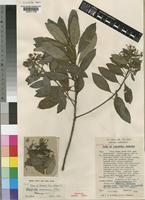
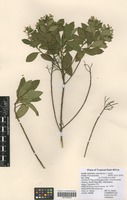
Isotype of Stapfiella usambarica J.Lewis [family TURNERACEAE]
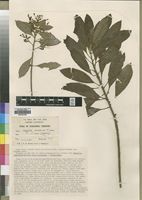
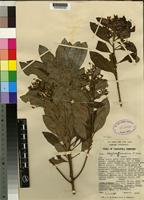
Type of Stapfiella usambarica J.Lewis [family TURNERACEAE]
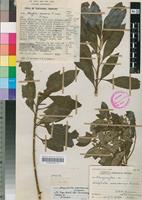
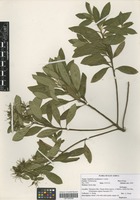
Isotype of Stapfiella usambarica J.Lewis [family TURNERACEAE]
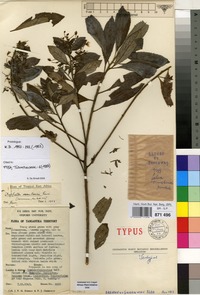
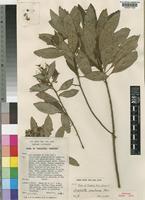
Holotype of Stapfiella usambarica J.Lewis [family TURNERACEAE]
Isotype of Stapfiella usambarica J.Lewis [family TURNERACEAE]
Filed as Stapfiella usambarica J. Lewis [family TURNERACEAE]
Holotype of Stapfiella usambarica J.Lewis [family TURNERACEAE]
Filed as Stapfiella usambarica J. Lewis [family TURNERACEAE]
Previous
Next

Name

Identification
Stapfiella usambarica J.Lewis [family TURNERACEAE ] (stored under name);
Related name
  • Stapfiella usambarica

Flora

Entry for STAPFIELLA usambarica J. Lewis [family TURNERACEAE]
Herbarium
Royal Botanic Gardens, Kew (K)
Collection
Flora of Tropical East Africa
Resource Type
Reference Sources
Entry From
Flora of Tropical East Africa, page 1, (1954) Author: J. Lewis
Names
STAPFIELLA usambarica J. Lewis [family TURNERACEAE], in K.B. 1953: 282 (1953). Type: Tanganyika, W. Usambara Mts., Magamba Peak, Brenan & Greenway 8299 (K, holo.!, EA, IFI, iso.!)
Information
Branches rusty brown, uniformly and very densely grey pubescent. Leaves 4–11 x 1–3 cm.; margin serrate, serrations occasionally “gland”-tipped, not hooked; apex acute, rarely sub-acuminate; midrib impressed and pubescent above, especially towards base, midrib and venation sparsely pubescent beneath, rest of lamina glabrous or subglabrous (on both surfaces); uniformly black gland-dotted by transmitted light when dry; petioles up to 1.5 cm. long, uniformly pubescent. Bracts within the panicle small or foliaceous (up to ± 2 cm. long); panicles proximally pubescent only, pubescence distally interspersed with or replaced by ± numerous 1 mm. long multicellular hairs with bases expanded into tubercles, apex of pedicel puberulous (only). Calyx-tube ± 1 (–1.5) mm. long; tubercles wholly adnate, neither free nor fringed apically; calyx-lobes 3–4 x 1 mm., puberu lous below, glabrous or subglabrous above, obscurely and sparsely black gland-dotted by transmitted light when dry. Petals white, up to 7 mm. long. Ovary ± 1 x 0.5 mm., ± longly pubescent and tuberculate-hairy. Fruiting pedicels sharply curving-reflexed. Capsules ± 4.25 mm. long, puberulous below, pubescent and tuberculate-hairy above, not black gland-dotted when dry. Aril less than half length of seed. Fig. 2, p. 5.
Range
DISTR. T3 known only from the Western Usambara Mts.
Altitude range
1900–2230 m.
Distribution
TANGANYIKA Lushoto District Magamba Forest, Oct. 1934, Pitt-Schenkel, 408! and Shagayu Peak, 24 May 1953, Drummond & Hemsley, 2733!

Related Materials

  • Terms and Conditions
  • Privacy Policy
  • Cookie Policy
  • Cookie Settings
  • Accessibility
  • Help
  • Contact Us
  • Facebook
  • Twitter
ITHAKA

JSTOR is part of ITHAKA, a not-for-profit organization helping the academic community use digital technologies to preserve the scholarly record and to advance research and teaching in sustainable ways.

©2000-2026 ITHAKA. All Rights Reserved. JSTOR®, the JSTOR logo, JPASS®, Aluka®, and ITHAKA® are registered trademarks of ITHAKA.

╳