JSTOR Global Plants Home
  • Home
  • Browse
  • About
  • Access
  • Account
    • Saved Items
    • Profile
  • Log in

Global Plants

Skip to Main Content
  • JSTOR Global Plants Home
  • Global Plants

    • Browse
    • About
    • Access
    • Account
      • Saved Items
      • Profile
Log in
  • Browse
  • About
  • Access
  • Account
    • Saved Items
    • Profile
Advanced Search

Compilation
Stapelia parvipuncta

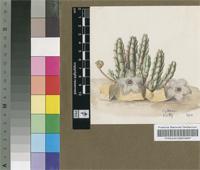
5 Images see all

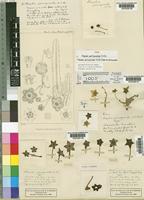
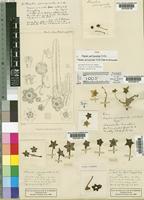
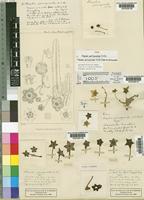
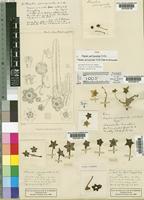
Type of Stapelia parvipuncta N.E.Br. [family ASCLEPIADACEAE]
Stapelia parvipuncta N.E.Br.
Type of Stapelia parvipuncta N.E.Br. [family ASCLEPIADACEAE]
Previous
Next

Name

Identification
Stapelia parvipuncta N.E.Br. [family APOCYNACEAE ]
Related name
  • Stapelia parvipuncta

Flora

Entry for STAPELIA parvipuncta N. E. Br. [family ASCLEPIADACEAE]
Herbarium
Royal Botanic Gardens, Kew (K)
Collection
Flora Capensis
Resource Type
Reference Sources
Entry From
Flora Capensis, Vol 4, page 518, (1909) Author: By N. E. BROWN.
Names
STAPELIA parvipuncta N. E. Br. [family ASCLEPIADACEAE], in Hook. Ic. Pl. t. 1923
STAPELIA parvipunctata K. Schum. [family ASCLEPIADACEAE], in Engl. und Prantl, Pflanzenfam. iv. ii. 278; Schlechter in Journ. Bot. 1898, 482.
Information
stems erect, somewhat crowded, 2–5 in. long, 1/2– 2/3 in. square, obtusely 4-angled, grooved down the sides, very shortly toothed on the angles, the teeth tipped with rudimentary subulate leaves 1/2 lin. long, glabrous, dull green; flowers several together, successively developed on a stout gradually elongating peduncle near the base or middle of the young stems; pedicels 3/4–2 in. long, glabrous, spreading or directed downwards; sepals 1–2 1/2 lin. long, ovate or lanceolate, acute or acuminate, glabrous; corolla in bud flat, pentagonal, with very short points at the angles; when expanded 1–1 1/4 in. in diam., lobed to half-way down, flat, without a distinct tube, quite glabrous on both sides, but ciliate along 2/3 of the length of the lobes with long vibratile clavate purple hairs, smooth and pale green thickly spotted with purple-brown on the back; inner surface slightly rugulose, varying from very pale sulphur-white to pale greenish-yellow, everywhere covered with minute dust-like dots of purple-brown or those on the lobes much larger than those on the disk, sometimes the lobes are narrowly margined with purple-brown; lobes 3 1/2–5 lin. long and as much in breadth, broadly ovate or deltoid-ovate, acute, flat, recurving; outer corona-lobes 1–1 1/4 lin. long, deeply bifid, with the rectangular basal part ascending-spreading and the subulate teeth recurving and diverging, dark purple-brown, shining; inner corona-lobes simple, ovate or ovate-lanceolate, acute or acuminate, horizontally incumbent on the backs of the anthers, in some flowers shorter than them, in others longer, with their tips crossing one another but not erect, not gibbous behind, purple-brown. null
Distribution
CENTRAL REGION Laingsburg Div.; Zout Kloof Farm, near Laingsburg, Pillans, 41! Matjesfontein, ex Pillans. Beaufort West or Frazerburg Div.; Nieuwveld Mountains, Bain! and cultivated specimens!
Notes
Described from a living plant, sent by Sir Henry Barkly in 1877.

Related Materials

  • Terms and Conditions
  • Privacy Policy
  • Cookie Policy
  • Cookie Settings
  • Accessibility
  • Help
  • Contact Us
  • Facebook
  • Twitter
ITHAKA

JSTOR is part of ITHAKA, a not-for-profit organization helping the academic community use digital technologies to preserve the scholarly record and to advance research and teaching in sustainable ways.

©2000-2026 ITHAKA. All Rights Reserved. JSTOR®, the JSTOR logo, JPASS®, Aluka®, and ITHAKA® are registered trademarks of ITHAKA.

╳