JSTOR Global Plants Home
  • Home
  • Browse
  • About
  • Access
  • Account
    • Saved Items
    • Profile
  • Log in

Global Plants

Skip to Main Content
  • JSTOR Global Plants Home
  • Global Plants

    • Browse
    • About
    • Access
    • Account
      • Saved Items
      • Profile
Log in
  • Browse
  • About
  • Access
  • Account
    • Saved Items
    • Profile
Advanced Search

Compilation
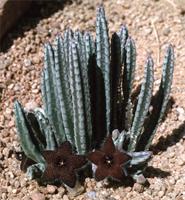
Stapelia olivacea

8 Images see all

Stapelia olivacea N.E.Br.
Stapelia olivacea N.E.Br. [family ASCLEPIADACEAE]
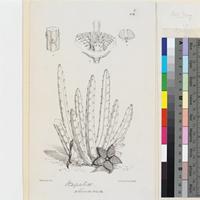
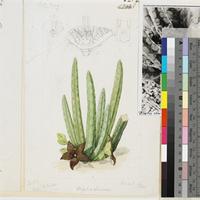
Stapelia olivacea N. E. Brown published illustration from Curtis's Botanical Magazine
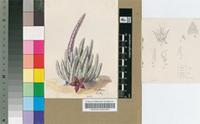
Stapelia olivacea N.E. Brown original illustration from Curtis's Botanical Magazine
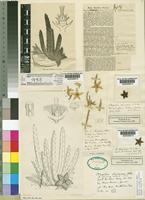
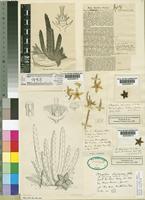
Stapelia olivacea N.E.Br. [family ASCLEPIADACEAE]
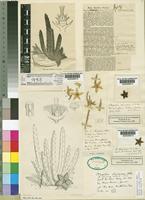
Type of Stapelia pearsonii N.E.Br. [family ASCLEPIADACEAE]
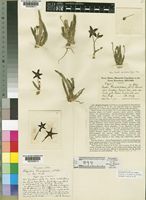
Stapelia olivacea N.E.Br. [family ASCLEPIADACEAE]
Previous
Next

Name

Identification
Stapelia olivacea N.E.Br. [family APOCYNACEAE ]
Related name
  • Stapelia olivacea

Flora

Entry for STAPELIA olivacea N. E. Br. [family ASCLEPIADACEAE]
Herbarium
Royal Botanic Gardens, Kew (K)
Collection
Flora Capensis
Resource Type
Reference Sources
Entry From
Flora Capensis, Vol 4, page 518, (1909) Author: By N. E. BROWN.
Names
STAPELIA olivacea N. E. Br. [family ASCLEPIADACEAE], in Gard. Chron. 1875, iii. 136 and 137, fig. 24;—Dyer in Bot. Mag. t. 6212; N. E. Br. in Hook. Ic. Pl. under t. 1920; and Gard. Chron. 1908, xliv. 196, fig. 86; Schlechter in Journ. Bot. 1898, 482.
STAPELIA eruciformis Hort. ex N. E. Br. [family ASCLEPIADACEAE], in Gard. Chron. 1875, iii. 136.
Information
plant rather compactly branched at the base; stems erect, 3–5 in. high, 3/8– 1/2 in. square, very obtusely 4-angled, with the faces slightly grooved, not toothed on the angles, but with an impressed transverse line at the base of the erect 1/2– 3/4 lin.-long rudimentary leaves, minutely puberulous, very smooth-looking, greyish-green, with the grooves and impressed lines darker, usually blotched with purple where exposed to the sun; flowers 2–6 together at the base of the young stems; pedicels 2–3 (in fruit 6–8) lin. long, puberulous; sepals 2–2 1/2 lin. long, lanceolate-subulate, puberulous; corolla in bud ovoid, subobtuse, when expanded 1 1/4–1 3/4 in. in diam., with very spreading or slightly recurved lobes 5–7 lin. long, 4–5 lin. broad, ovate, acute, puberulous and dull green on the back, inner face deeply and closely rugose, glabrous, ciliate with white simple hairs, varying from pale olive to dark olive-green with the rugosities brown, or sometimes entirely dull brownish-red; outer corona-lobes ascending-spreading, 1–1 1/2 lin. long, narrowly deltoid-subulate, acute, dark purple-brown, with a smooth polished central stripe from the base to the middle; inner corona-lobes 2-horned, dark purple-brown; inner horn 2–2 1/2 lin. long, erect or very slightly recurving, slenderly filiform; outer horn erectly recurved, 3/4–1 1/2 lin. long, falcately subulate, laterally compressed; follicles 3 1/2–4 in. long, about 1/4 in. thick, narrowly fusiform, acute, puberulous; seeds not seen; odour strong, fetid. null
Distribution
CENTRAL REGION Beaufort West Div.; Rhenoster Kop, Foster! Richmond Div.; near Richmond Road Station, Foster in Herb. Pillans, 98! Middelburg Div.; two miles east of Conway Station, Pillans! Philipstown Div.; near De Aar, living plant from MacOwan! Div.? common throughout the Karoo, Barkly, 43! and cultivated specimens!
Notes
Described from living plants. In the Gardeners' Chronicle, 1875, iii. 206, it is stated by Mr. Croucher, and alluded to in Bot. Mag., that another plant with black flowers, ciliate with black hairs, was also in cultivation under the name of S. eruciformis. I afterwards obtained flowers of Mr. Croucher's plant and found them to be identical with S. olivacea, and to have white cilia!

Related Materials

  • Terms and Conditions
  • Privacy Policy
  • Cookie Policy
  • Cookie Settings
  • Accessibility
  • Help
  • Contact Us
  • Facebook
  • Twitter
ITHAKA

JSTOR is part of ITHAKA, a not-for-profit organization helping the academic community use digital technologies to preserve the scholarly record and to advance research and teaching in sustainable ways.

©2000-2026 ITHAKA. All Rights Reserved. JSTOR®, the JSTOR logo, JPASS®, Aluka®, and ITHAKA® are registered trademarks of ITHAKA.

╳