JSTOR Global Plants Home
  • Home
  • Browse
  • About
  • Access
  • Account
    • Saved Items
    • Profile
  • Log in

Global Plants

Skip to Main Content
  • JSTOR Global Plants Home
  • Global Plants

    • Browse
    • About
    • Access
    • Account
      • Saved Items
      • Profile
Log in
  • Browse
  • About
  • Access
  • Account
    • Saved Items
    • Profile
Advanced Search

Compilation
Stapelia jucunda

9 Images see all

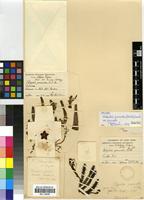
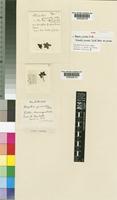
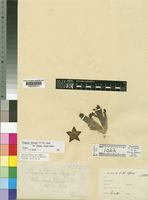
Lectotype of Stapelia jucunda N.E.Br. [family APOCYNACEAE]
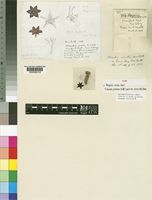
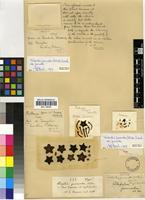
Type of Stapelia cincta Marloth [family ASCLEPIADACEAE]
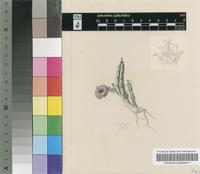
Tridentea jucunda (N.E.Br.) L.C.Leach var. jucunda [family ASCLEPIADACEAE]
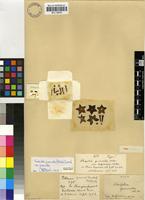
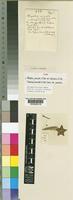
Type of Stapelia jucunda N.E.Br. var. deficiens N.E.Br. [family APOCYNACEAE]
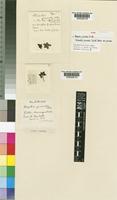
Type of Stapelia jucunda N.E.Br. [family ASCLEPIADACEAE]
Lectotype of Stapelia jucunda N.E.Br. [family APOCYNACEAE]
Type of Stapelia jucunda N.E.Br. var. deficiens N.E.Br. [family ASCLEPIADACEAE]
Stapelia jucunda N.E.Br.
Tridentea jucunda (N.E.Br.) L.C.Leach var. dinteri (Berger) Leach [family ASCLEPIADACEAE]
Previous
Next

Name

Identification
Stapelia jucunda N.E.Br. [family APOCYNACEAE ]
Related name
  • Stapelia jucunda

Flora

Entry for STAPELIA jucunda N. E. Br. [family ASCLEPIADACEAE]
Herbarium
Royal Botanic Gardens, Kew (K)
Collection
Flora Capensis
Resource Type
Reference Sources
Entry From
Flora Capensis, Vol 4, page 518, (1909) Author: By N. E. BROWN.
Names
STAPELIA jucunda N. E. Br. [family ASCLEPIADACEAE]
Information
stems compactly erect, 2–3 in. high, 4–7 lin. square, obtusely 4-angled, with spreading stoutly subulate acute deciduous teeth 1/2– 3/4 lin. long, leaving rather large and slightly prominent whitish tubercle-like scars, glabrous, green or greyish-green, spotted and mottled with purple, rather soft in substance; flowers 1–3 together at the middle or upper part of the stems, successively developed; pedicels 1/2–1 in. long, glabrous; sepals 1–1 3/4 lin. long, ovate or ovate-lanceolate, acute or acuminate, glabrous; corolla nearly flat, with the centre depressed, lobed to half-way down, about 1 in. in diam., glabrous on both surfaces, ciliate from near the base nearly to the tips of the lobes with long vibratile clavate purple hairs, smooth and light green on the back dotted and spotted with purple-brown; inner surface slightly rugulose, cream-colour, spotted all over and edged on the lobes with purple-brown, the spots around the corona not smaller than the rest; lobes 3–3 1/2 lin. long and as much in breadth, broadly ovate or deltoid-ovate, acute; outer corona-lobes erectly spreading, 1 1/2–1 3/4 lin. long, 1/2– 3/4 lin. broad at the base, thence gradually tapering to the minutely notched or acute apex, concave down the face, dark purple-brown; inner corona-lobes about 3 times as long as the anthers, 1 1/2 lin. long, subulate-filiform, acute, connivent-erect, usually more or less spreading at the tips, and with a short dorsal gibbosity at their base, marked with cream-colour and purple and tipped with white. null
Distribution
CENTRAL REGION Var. β: Victoria West Div.; Biesjes Poort, Pillans, 675!KALAHARI REGION Griqualand West; near Douglas, Pillans, 644! Mrs. Barber!

Related Materials

  • Terms and Conditions
  • Privacy Policy
  • Cookie Policy
  • Cookie Settings
  • Accessibility
  • Help
  • Contact Us
  • Facebook
  • Twitter
ITHAKA

JSTOR is part of ITHAKA, a not-for-profit organization helping the academic community use digital technologies to preserve the scholarly record and to advance research and teaching in sustainable ways.

©2000-2026 ITHAKA. All Rights Reserved. JSTOR®, the JSTOR logo, JPASS®, Aluka®, and ITHAKA® are registered trademarks of ITHAKA.

╳