JSTOR Global Plants Home
  • Home
  • Browse
  • About
  • Access
  • Account
    • Saved Items
    • Profile
  • Log in

Global Plants

Skip to Main Content
  • JSTOR Global Plants Home
  • Global Plants

    • Browse
    • About
    • Access
    • Account
      • Saved Items
      • Profile
Log in
  • Browse
  • About
  • Access
  • Account
    • Saved Items
    • Profile
Advanced Search

Compilation
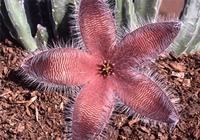
Stapelia grandiflora

24 Images see all

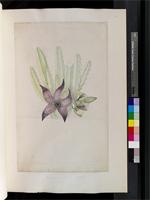
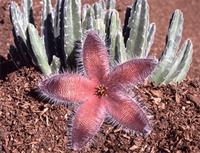
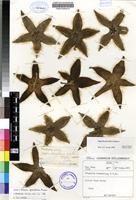
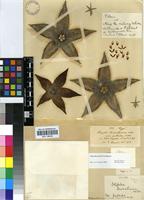
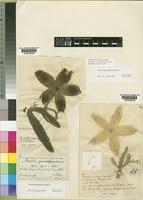
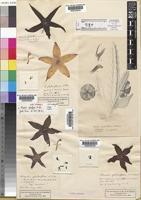
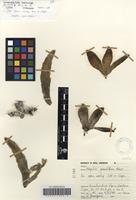
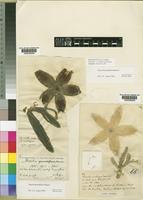
Stapelia grandiflora Masson, from South Africa
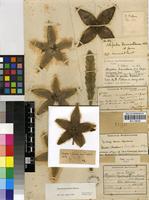
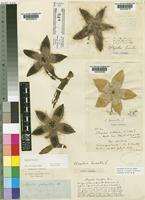
Isotype of Stapelia desmetiana N.E.Br. [family APOCYNACEAE]
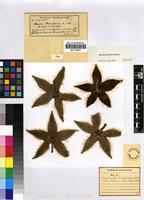
Stapelia grandiflora Masson [family ASCLEPIADACEAE]
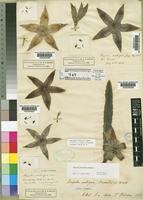
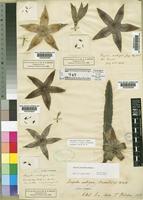
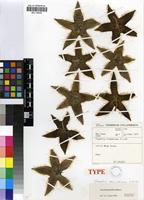
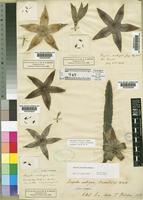
Type of Stapelia senilis N.E.Br. [family APOCYNACEAE]
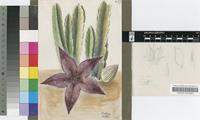
Stapelia grandiflora Masson
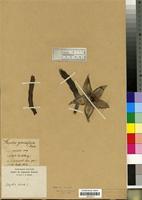
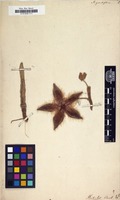
Stapelia hirsuta L. [family ASCLEPIADACEAE]
Stapelia grandiflora Masson [family ASCLEPIADACEAE]
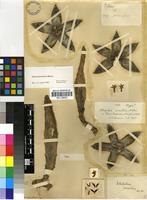
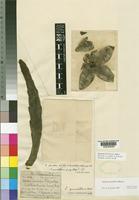
Isotype of Stapelia desmetiana N.E.Br. [family APOCYNACEAE]
Type of Stapelia grandiflora Masson [family APOCYNACEAE]
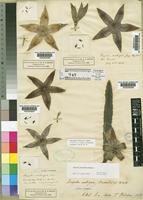
Type of Stapelia senilis N.E.Br. [family ASCLEPIADACEAE]
Filed as Stapelia hirsuta L. [family ASCLEPIADACEAE]
Isotype of Stapelia desmetiana N.E.Br. [family APOCYNACEAE]
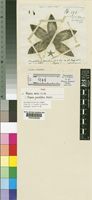
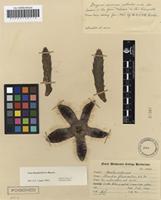
Type of Stapelia desmetiana N.E.Br. var. pallida N.E.Br. [family APOCYNACEAE]
Stapelia grandiflora Masson [family ASCLEPIADACEAE]
Syntype of Stapelia glabriflora N.E.Br. [family ASCLEPIADACEAE]
Filed as Stapelia grandiflora Masson [family APOCYNACEAE]
Stapelia grandiflora Masson [family ASCLEPIADACEAE]
Stapelia grandiflora Masson
Filed as Stapelia grandiflora [family ASCLEPIADACEAE]
Filed as Stapelia grandiflora Masson [family APOCYNACEAE]
Stapelia grandiflora Masson [family ASCLEPIADACEAE]
Previous
Next

Name

Identification
Stapelia grandiflora Masson [family ASCLEPIADACEAE ]
Related name
  • Stapelia grandiflora

Flora

Entry for STAPELIA flavirostris N. E. Br. [family ASCLEPIADACEAE]
Herbarium
Royal Botanic Gardens, Kew (K)
Collection
Flora Capensis
Resource Type
Reference Sources
Entry From
Flora Capensis, Vol 4, page 518, (1909) Author: By N. E. BROWN.
Names
STAPELIA flavirostris N. E. Br. [family ASCLEPIADACEAE], in Gard. Chron. 1877, vii. 558, under S. grandiflora, var. lineata;—N. E. Br. in Gard. Chron. 1908, xliv. 187–188, fig. 80.
STAPELIA grandiflora N. E. Br. var. lineata [family ASCLEPIADACEAE], in Gard. Chron. 1877, vii. 558, fig. 85, and in Hook. Ic. Pl. under t. 1916.
Information
stems erect, rather crowded, 4–7 in. high, 3/4–1 1/4 in. square, with compressed angles and concave sides, distinctly toothed, with erect rudimentary leaves 1–2 lin. long, green, with a distinctly visible dense velvety pubescence; flowers solitary or 3 together on a short stout peduncle, the two lateral (under cultivation) usually not developing, near the base of the young stems; pedicels 3/4–1 1/2 in. long, 2–2 1/2 (in fruit 5–6) lin. thick, velvety; sepals 5–7 lin. long, lanceolate, acute, velvety; corolla in bud ovoid, obtuse and slightly depressed at the apex, when expanded 5 1/2–6 1/2 in. in diam. with the lobes extended, velvety on the back; inner surface everywhere transversely rugose, with the apical 2/3 of the lobes glabrous and the basal part and disk covered with erect soft simple purple hairs, dull purple-red on the disk, marked with transverse pale yellow and dull purple lines on the basal half and entirely very dark purple-brown on the apical half of the lobes, the dark colour extending towards the base in a broad triangle; lobes 2–2 3/4 in. long, 1–1 1/4 in. broad, lanceolate; acute, somewhat narrowed at the base, much recurved, ciliate to their tips with long simple hairs, half directed inwards and usually pale purple, the others white; outer corona-lobes ascending-spreading, recurved at the tips, 2 1/2–3 lin. long, linear, linear-lanceolate or linear-oblong, acute, concave down the face, dull reddish-brown or dull purple at the base, ochreous at the apex; inner corona-lobes ascending-spreading, pale yellow or ochreous-yellow shading into dark purple-brown at the base, with the dorsal wing adnate usually from 2/3 to wholly (rarely for 1/2 or less) to the inner horn, very rarely free nearly or to the base, 2–4 lin. long, usually 1 1/2–2 (rarely 1) lin. broad, entire, obtuse to truncate, rarely acute or toothed at the apex; inner horn 3–5 lin. long, triquetrous-subulate, acute or 3-toothed at the apex, varying from scarcely longer to twice as long as the wing, nearly straight or slightly recurved at the tips; follicles parallel, 6–7 in. long, 1/2 in. thick, terete, tapering to the base and to the incurved-hooked apex, velvety-pubescent. null
Distribution
CENTRAL REGION Somerset Div.; near the Fish River, 2000 ft., MacOwan, 1197! Barkly, 21! near Pearston, Pillans, 39! Beaufort West Div.; Rhenoster Kop, Foster in Herb. Pillans, 138! Victoria West, Barkly, 21 bis! Richmond Div.; near Richmond Road Station, Foster in Herb. Pillans, 96! Middelburg Div.; near Middelburg, Chalwin in Herb. Pillans, 135! near Conway, Pillans, 163! 635. Steynsburg Div.; near Steynsburg, Cumming in Herb. Pillans, 680! Albert Div.; New Hantam, Drège, 6397! Colesberg Div.; near Colesberg, Shaw! Barkly, 21! and without precise locality, Pillans, 4!COAST REGION George or Oudtshoorn Div.; between George and Oudtshoorn, Pillans, 664! Bedford Div.; Babians River, Albany Museum, 14! Queenstown Div.; near Queenstown, Frost in Herb. Pillans, 106!KALAHARI REGION Griqualand West; near Griquatown, Thompson in Herb. Pillans, 123! Arnot, 7! and cultivated specimens! Basutoland; Leribe, Buchanan!SOUTH AFRICA without locality, cultivated specimens! Herb. Pillans, 33! 34! Herb. Albany Museum, 11!WESTERN REGION Little Namaqualand, Templeman in Herb. Pillans, 11!
Notes
Mr. Pillans states of his 664, “This is the most southern point from which I have had this species. The stems of this form are narrow and elongated, resembling those of S. lucida, so the growth is influenced by the heavy rainfall.”

Related Materials

  • Terms and Conditions
  • Privacy Policy
  • Cookie Policy
  • Cookie Settings
  • Accessibility
  • Help
  • Contact Us
  • Facebook
  • Twitter
ITHAKA

JSTOR is part of ITHAKA, a not-for-profit organization helping the academic community use digital technologies to preserve the scholarly record and to advance research and teaching in sustainable ways.

©2000-2026 ITHAKA. All Rights Reserved. JSTOR®, the JSTOR logo, JPASS®, Aluka®, and ITHAKA® are registered trademarks of ITHAKA.

╳