JSTOR Global Plants Home
  • Home
  • Browse
  • About
  • Access
  • Account
    • Saved Items
    • Profile
  • Log in

Global Plants

Skip to Main Content
  • JSTOR Global Plants Home
  • Global Plants

    • Browse
    • About
    • Access
    • Account
      • Saved Items
      • Profile
Log in
  • Browse
  • About
  • Access
  • Account
    • Saved Items
    • Profile
Advanced Search

Compilation
Stapelia glabriflora

4 Images see all

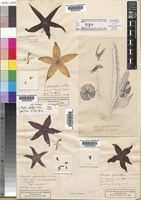
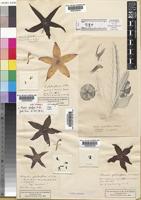
Syntype of Stapelia glabriflora N.E.Br. [family ASCLEPIADACEAE]
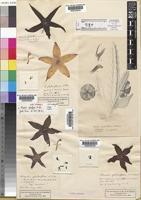
Stapelia glabriflora N.E.Br. [family ASCLEPIADACEAE]
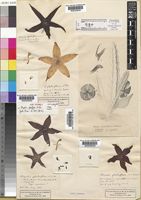
Syntype of Stapelia glabriflora N.E.Br. [family ASCLEPIADACEAE]
Previous
Next

Name

Identification
Stapelia glabriflora N.E.Br. [family ASCLEPIADACEAE ] (stored under name); Stapelia grandiflora unrecorded [family ASCLEPIADACEAE ]
Related name
  • Stapelia grandiflora
  • Stapelia glabriflora

Flora

Entry for STAPELIA glabriflora N. E. Br. [family ASCLEPIADACEAE]
Herbarium
Royal Botanic Gardens, Kew (K)
Collection
Flora Capensis
Resource Type
Reference Sources
Entry From
Flora Capensis, Vol 4, page 518, (1909) Author: By N. E. BROWN.
Names
STAPELIA glabriflora N. E. Br. [family ASCLEPIADACEAE], [in Gard. Chron. 1876, vi. 809, fig. 149;]—N. E. Br. in Gard. Chron. 1908, xliv. 187, fig. 78; Schlechter in Journ. Bot. 1898, 480.
Information
stems 4–9 in. long, erect, 3/4–1 in. square, puberulous, green; angles much compressed, with erect rudimentary leaves 2/3–1 1/2 lin. long at the teeth; flowers 1–2 together at the middle or lower part of the young stems, opening successively; pedicels 1/2– 2/3 in. long, 1 1/3–1 1/2 lin. thick, velvety; sepals 1/4– 1/3 in. long, lanceolate, acuminate, velvety; corolla in bud ovate, acuminate, 5-angled, when expanded the lobes recurve and cross each other behind, but if laid flat the flower measures 3–4 1/2 in. in diam., velvety on the back, transversely rugose and quite glabrous on the inner face, not ciliate, dull reddish-purple, darker at the tips of the lobes, the whole surface to the tips transversely marked with numerous very narrow linear irregular yellowish-white lines, those on the disk more slender and often dark-coloured instead of whitish; lobes 1 1/2–2 in. long, 3/4 in. broad, lanceolate, acuminate, much recurved, slightly revolute at the margins; outer corona-lobes 1/4 in. long, nearly 1 lin. broad, erectly spreading, recurved at the apex, linear, channelled down the face, obtuse or emarginate, with a very distinct apiculus, blackish-purple; inner corona-lobes ascending-spreading, blackish-purple, with the dorsal wing 1/4 in. long, erectly spreading, free to the base, oblong-linear or deltoid-lanceolate, obtuse or acute, entire or slightly toothed on the inner margin; inner horn 1/4– 1/3 in. long, triquetrous-subulate, straight, with hooked or recurved tips. null
Distribution
SOUTH AFRICA ORIGIN UNKNOWN: cultivated specimens!
Notes
Described from living plants. In all probability a hybrid raised in Europe.

Related Materials

  • Terms and Conditions
  • Privacy Policy
  • Cookie Policy
  • Cookie Settings
  • Accessibility
  • Help
  • Contact Us
  • Facebook
  • Twitter
ITHAKA

JSTOR is part of ITHAKA, a not-for-profit organization helping the academic community use digital technologies to preserve the scholarly record and to advance research and teaching in sustainable ways.

©2000-2026 ITHAKA. All Rights Reserved. JSTOR®, the JSTOR logo, JPASS®, Aluka®, and ITHAKA® are registered trademarks of ITHAKA.

╳