JSTOR Global Plants Home
  • Home
  • Browse
  • About
  • Access
  • Account
    • Saved Items
    • Profile
  • Log in

Global Plants

Skip to Main Content
  • JSTOR Global Plants Home
  • Global Plants

    • Browse
    • About
    • Access
    • Account
      • Saved Items
      • Profile
Log in
  • Browse
  • About
  • Access
  • Account
    • Saved Items
    • Profile
Advanced Search

Compilation
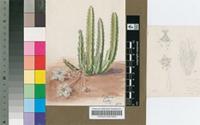
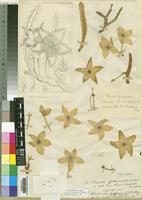
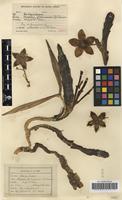
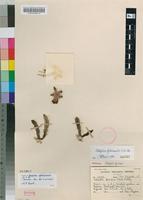
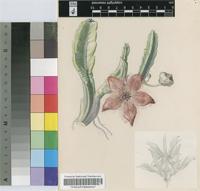
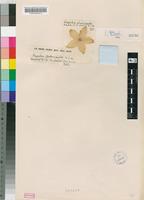
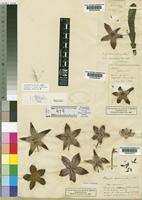
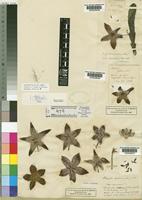
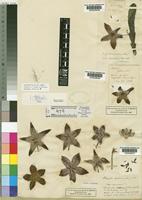
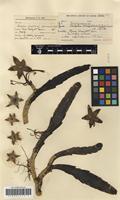
Stapelia glabricaulis

10 Images see all

Stapelia glabricaulis N.E.Br.
Type of Stapelia glabricaulis N.E.Br. [family ASCLEPIADACEAE]
Filed as Stapelia glabricaulis N.E.Br. [family APOCYNACEAE]
Holotype of Stapelia forcipis E.Phillips & Letty [family APOCYNACEAE]
Stapelia glabricaulis N.E.Br.
Type of Stapelia glabricaulis N.E.Br. [family APOCYNACEAE]
Stapelia glabricaulis N.E.Br. [family ASCLEPIADACEAE]
Type of Stapelia glabricaulis N.E.Br. [family ASCLEPIADACEAE]
Stapelia glabricaulis N.E.Br. [family ASCLEPIADACEAE]
Filed as Stapelia glabricaulis N.E.Br. [family APOCYNACEAE]
Previous
Next

Name

Identification
Stapelia glabricaulis N.E.Br. [family APOCYNACEAE ]
Related name
  • Stapelia glabricaulis

Flora

Entry for STAPELIA glabricaulis N. E. Br. [family ASCLEPIADACEAE]
Herbarium
Royal Botanic Gardens, Kew (K)
Collection
Flora Capensis
Resource Type
Reference Sources
Entry From
Flora Capensis, Vol 4, page 518, (1909) Author: By N. E. BROWN.
Names
STAPELIA glabricaulis N. E. Br. [family ASCLEPIADACEAE], in Hook. Ic. Pl. t. 1917;—Schlechter in Journ. Bot. 1898, 480, excl. syn.
Information
stems rather loosely branching, decumbent at the base, 4–8 in. high, 1/2– 2/3 in. square, with the angles much compressed, quite glabrous, green; teeth with erect rudimentary leaves 1–1 1/2 lin. long; flowers 2–5 together, towards the base of the young stems, successively developed or sometimes 2 expanded at the same time; pedicels 1–2 in. long, 1 1/2 lin. thick, glabrous or with very few minute scattered hairs only noticeable under a lens; sepals 4–6 lin. long, lanceolate, acuminate, with a slight protuberance at the base, glabrous on the back, usually with a few hairs on the inner surface and sometimes on the margins; corolla subglobose in bud, with 5 depressions just below the obtusely pointed apex, when expanded 2 1/2–3 1/2 in. in diam., with stellately spreading (not recurved) lobes 1 1/4–1 1/3 in. long, about 3/4 in. broad, ovate-oblong, acute, with revolute margins, ciliate to their tips with long simple pale purple hairs, half of them directed inwards, glabrous on the back, transversely rugose and reddish-purple without markings on the inner face, becoming paler and somewhat ochreous at the centre, glabrous on the terminal half of the lobes, with their basal half and the disk densely covered with long fine silky purple or greyish-purple hairs, which are more or less adpressed and directed towards the tips of the lobes; outer corona-lobes spreading, recurved at the tips, 2 1/2–3 lin. long, linear, variably obtuse, apiculate, erose, minutely 3-toothed or more rarely acuminate at the apex, purplish-brown with a yellow base and sometimes yellow-brown margins; inner corona-lobes dark purple-brown, with the dorsal wing free to the base or adnate up to half its length to the inner horn, ascending, 2 1/2–3 lin. long, 2/3– 3/4 lin. broad at the base, gradually tapering to the acute apex, or oblong-linear and acute or slightly toothed at the apex; inner horn 3 1/2–4 1/2 lin. long, triquetrous-subulate, acute, erect below, with the apex recurved (often rather suddenly) over the dorsal wings; follicles 4 1/2 in. long, 7–8 lin. thick, fusiform, acute (Mrs. Barber). null
Distribution
COAST REGION Bathurst Div.; near Port Alfred, Mrs. Hutton (cultivated specimens) in Herb. Albany Museum, 13! and Herb. Pillans, 653! Fort Beaufort Div.; Blinkwater, Barkly, 52! and cultivated specimens!

Related Materials

  • Terms and Conditions
  • Privacy Policy
  • Cookie Policy
  • Cookie Settings
  • Accessibility
  • Help
  • Contact Us
  • Facebook
  • Twitter
ITHAKA

JSTOR is part of ITHAKA, a not-for-profit organization helping the academic community use digital technologies to preserve the scholarly record and to advance research and teaching in sustainable ways.

©2000-2026 ITHAKA. All Rights Reserved. JSTOR®, the JSTOR logo, JPASS®, Aluka®, and ITHAKA® are registered trademarks of ITHAKA.

╳