JSTOR Global Plants Home
  • Home
  • Browse
  • About
  • Access
  • Account
    • Saved Items
    • Profile
  • Log in

Global Plants

Skip to Main Content
  • JSTOR Global Plants Home
  • Global Plants

    • Browse
    • About
    • Access
    • Account
      • Saved Items
      • Profile
Log in
  • Browse
  • About
  • Access
  • Account
    • Saved Items
    • Profile
Advanced Search

Compilation
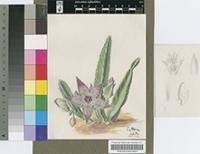
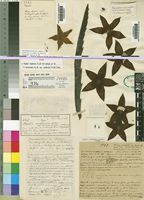
Stapelia conformis

6 Images see all

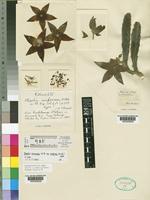
Type of Stapelia conformis unrecorded [family ASCLEPIADACEAE]
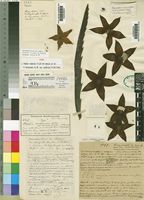
Type of Stapelia conformis N.E.Br. var. abrasa N.E.Br. [family ASCLEPIADACEAE]
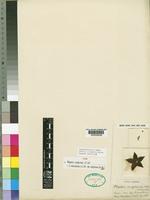
Type of Stapelia macowanii N.E.Br. var. conformis (N.E.Br.) L.C.Leach [family ASCLEPIADACEAE]
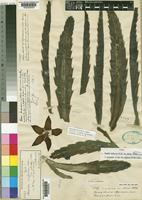
Type of Stapelia conformis N.E.Br. var. abrasa N.E.Br. [family ASCLEPIADACEAE]
Stapelia conformis N.E.Br.
Type of Stapelia conformis N.E.Br. var. abrasa N.E.Br. [family ASCLEPIADACEAE]
Previous
Next

Name

Identification
Stapelia conformis N.E.Br. [family APOCYNACEAE ]
Related name
  • Stapelia conformis

Flora

Entry for STAPELIA conformis N. E. Br. [family ASCLEPIADACEAE]
Herbarium
Royal Botanic Gardens, Kew (K)
Collection
Flora Capensis
Resource Type
Reference Sources
Entry From
Flora Capensis, Vol 4, page 518, (1909) Author: By N. E. BROWN.
Names
STAPELIA conformis N. E. Br. [family ASCLEPIADACEAE]
Information
stems erect, 5–11 in. long, 3/4–1 1/4 in. square, with much compressed toothed angles and rudimentary erect leaves 1–2 lin. long, velvety puberulous, green, sometimes tinted with purplish; flowers 2 to several together, successively developed from a short stout peduncle or cyme near the base of the young stems; pedicels 1/2–1 in. long, stout, velvety; sepals 2–4 lin. long, lanceolate or ovate-lanceolate, acute, velvety; corolla 3–4 in. in diam., velvety on the back, transversely rugulose (except at the tips of the lobes) and glabrous or with a minute erect pubescence around the corona on the inner face, irregularly ciliate (sometimes very sparsely) on the very edge of the lobes with spreading white hairs 1–2 lin. long, mingled with others more minute; disk and basal half of the lobes sulphur-yellow or dull yellowish-green or yellowish-white marked with numerous crowded narrow irregular transverse purple-brown lines, margins narrowly bordered with and apical half of lobes entirely dark purple-brown, usually with a dull yellowish or greenish spot at apex; disk broadly and shallowly cup-like with a small star-like cavity at the centre; lobes very spreading and more or less recurved, 1–1 1/2 in. long, 8–9 lin. broad, ovate-lanceolate, acute or somewhat acuminate; outer corona-lobes ascending-spreading, scarcely recurved at apex, 2 1/2–3 1/2 lin. long, 2/3– 3/4 lin. broad, linear, acuminate, acute or obtuse, with or without a minute apiculus deeply channelled down the face, brownish-ochreous or purple-brown with paler margins; inner corona-lobes dark olive-brown or purple-brown, with the dorsal wing free to the base, ascending-spreading, 1–2 lin. long, 3/4–1 lin. broad at the base, deltoid to oblong-linear, acute or obtuse, entire or toothed on the inner margin; inner horns connivent at the base, then recurving, sometimes with the tips incurved, 1 1/2–3 lin. long, triquetrous-subulate, acute. null
Distribution
CENTRAL REGION Somerset Div.; near Cookhouse Station, Pillans, 637!COAST REGION Albany Div.; near Grahamstown, Cooper, 1534! Herb. Albany Museum, 3! Herb. Pillans, 3! Curries Kloof, near Grahamstown, MacOwan! and cultivated specimen! Var. β: Bedford Div.; Patrys Hoogte, near the Great Fish River, MacOwan, 2247!
Notes
Described from a living plant which flowered at Kew in Sept. 1898, and many dried flowers. Pillans, 637, is a form ciliate with very few long hairs and intermediate between the type and var. abrasa.

Related Materials

  • Terms and Conditions
  • Privacy Policy
  • Cookie Policy
  • Cookie Settings
  • Accessibility
  • Help
  • Contact Us
  • Facebook
  • Twitter
ITHAKA

JSTOR is part of ITHAKA, a not-for-profit organization helping the academic community use digital technologies to preserve the scholarly record and to advance research and teaching in sustainable ways.

©2000-2026 ITHAKA. All Rights Reserved. JSTOR®, the JSTOR logo, JPASS®, Aluka®, and ITHAKA® are registered trademarks of ITHAKA.

╳