JSTOR Global Plants Home
  • Home
  • Browse
  • About
  • Access
  • Account
    • Saved Items
    • Profile
  • Log in

Global Plants

Skip to Main Content
  • JSTOR Global Plants Home
  • Global Plants

    • Browse
    • About
    • Access
    • Account
      • Saved Items
      • Profile
Log in
  • Browse
  • About
  • Access
  • Account
    • Saved Items
    • Profile
Advanced Search

Compilation
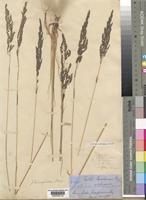
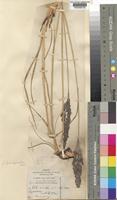
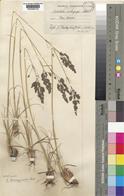
Sporobolus laxivaginatus

3 Images see all

Type of Sporobolus laxivaginatus Stent [family POACEAE]
Previous
Next

Name

Identification
Sporobolus centrifugus (Trin.) Nees [family POACEAE ] (stored under name); Verified by Unknown, Sporobolus laxivaginatus Stent [family POACEAE ] Verified by unknown,
Related name
  • Sporobolus centrifugus
  • Sporobolus laxivaginatus

Flora

Entry for SPOROBOLUS centrifugus (Trin.) Nees [family POACEAE]
Herbarium
Royal Botanic Gardens, Kew (K)
Collection
Flora of Tropical East Africa
Resource Type
Reference Sources
Entry From
Flora of Tropical East Africa, Part (Part 2), page 177, (1974) Author: W. D. CLAYTON, S. M. PHILLIPS AND S. A. RENVOIZE
Names
SPOROBOLUS centrifugus (Trin.) Nees [family POACEAE], ,Fl. Afr. Austr.: 158 (1841); F.P.S. 3: 548 (1956); Ann. list Nyasaland grasses: 61 (1958); G.T.: 45 (1965). Type: South Africa, Cape Province, Windvogel Mt. to Zwart Kei R., Drège (B, lecto.!, K, isolecto.!)
Vilfa centrifuga Trin. [family POACEAE], in Mém. Acad. Sci. Pétersb., sér. 6, Sci. Nat. 5: 57 (1840)
Sporobolus filifolius Stent [family POACEAE], in Bothalia 2: 260 (1927). Type: South Africa, Natal, Strydhoek, Doidge in Nat. Herb. 19813 (PRE, holo., K, iso.!)
Sporobolus tysonii Stent [family POACEAE], in Bothalia 2: 262 (1927). Type: South Africa, Cape Province, Kohstad, Tyson 1473 (K, iso.!)
Sporobolus laxivaginatus Stent [family POACEAE], in Bothalia 2: 262 (1927). Types: South Africa, Natal, Umpumulu, Buchanan 297 & Van Reenen, Wood 7218 & Cape Province, Bazeia, Baur 555 (all K, isosyn.!) and many other syntypes
Sporobolus schlechteri Schweick. [family POACEAE], in K.B. 1935: 208 (1935). Type: South Africa, Transvaal, Lydenberg, Schlechter 3965 (K, holo.!)
Sporobolus centrifugus (Stent) Goossens var. filifolius [family POACEAE], in Trans. Roy. Soc. S. Afr. 26: 183 (1938)
Sporobolus centrifugus (Stent) Goossens var. laxivaginatus [family POACEAE], in Trans. Roy. Soc. S. Afr. 26: 183 (1938)
Information
Densely caespitose perennial; culms 20–80 cm. high; basal sheaths indurated, yellow and horny, rarely broad and papery. Leaf-blades filiform, 6–30 cm. long, mostly 1–1.5 mm. wide, the culm leaves sometimes broader and up to 5 mm. wide, hairy or glabrous. Panicle narrowly ovate to pyramidal, sometimes ± contracted, (4–)8–18 cm. long; primary branches in 4–8 whorls, the spikelets gathered into dense clusters at their tips. Spikelets 2.5–4.2 mm. long, glabrous, very dark green; lower glume narrowly lanceolate, 2.2–3.5 mm. long, three-quarters to as long as the spikelet, acuminate; upper glume lanceolate, as long as the spikelet, acuminate; lemma similar to the upper glume but a little shorter; anthers 3, 1.7–2 mm. long. Grain ellipsoid, 1.7–2 mm. long.
Range
DISTR. K3; T4
Altitude range
2300 m.
Distribution
KENYA Naivasha District escarpment above Lake Naivasha, 5 Aug. 1967, Vesey-FitzGerald 5332!TANZANIA Mpanda District Mahali Mts., 5 km. S. of Sisaga, 24 Aug. 1958, Newbould & Jefford 1769!
Distribution (external)
Malawi
Zambia
Rhodesia
South Africa
one gathering from the Sudan
Notes
The clustered spikelets with long narrow lower glume, and the generally horny basal sheaths contribute to a distinct and fairly constant facies in southern Africa. Therefore, although they intergrade with S. mauritianus, I have maintained these plants as a distinct species.

Related Materials

  • Terms and Conditions
  • Privacy Policy
  • Cookie Policy
  • Cookie Settings
  • Accessibility
  • Help
  • Contact Us
  • Facebook
  • Twitter
ITHAKA

JSTOR is part of ITHAKA, a not-for-profit organization helping the academic community use digital technologies to preserve the scholarly record and to advance research and teaching in sustainable ways.

©2000-2026 ITHAKA. All Rights Reserved. JSTOR®, the JSTOR logo, JPASS®, Aluka®, and ITHAKA® are registered trademarks of ITHAKA.

╳