JSTOR Global Plants Home
  • Home
  • Browse
  • About
  • Access
  • Account
    • Saved Items
    • Profile
  • Log in

Global Plants

Skip to Main Content
  • JSTOR Global Plants Home
  • Global Plants

    • Browse
    • About
    • Access
    • Account
      • Saved Items
      • Profile
Log in
  • Browse
  • About
  • Access
  • Account
    • Saved Items
    • Profile
Advanced Search

Compilation
Spiranthes romanzoffiana

9 Images see all

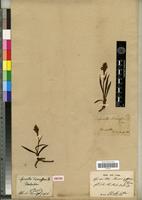
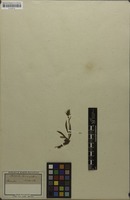
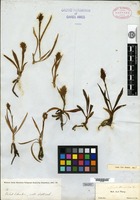
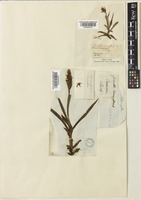
Isotype of Spiranthes romanzoffiana Cham. [family ORCHIDACEAE]
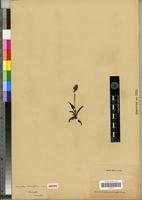
Spiranthes romanzoffiana Cham. [family ORCHIDACEAE]
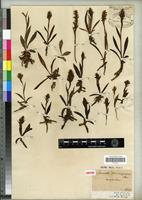
Isotype of Spiranthes romanzoffiana Cham. [family ORCHIDACEAE]
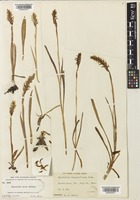
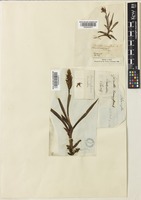
Type? of Spiranthes romanzoffiana Chamisso [family ORCHIDACEAE]
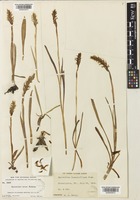
Spiranthes romanzoffiana Cham. [family ORCHIDACEAE]
Previous
Next

Name

Identification
Isotype of Spiranthes romanzoffiana Cham. [family ORCHIDACEAE ] (stored under name); Verified by Not on sheet,
Related name
  • Spiranthes romanzoffiana

Flora

Entry for Spiranthes romanzoffiana Chamisso [family ORCHIDACEAE]
Herbarium
Flora of North America (FNA)
Collection
Flora of North America
Resource Type
Reference Sources
Entry From
Flora of North America, Vol 26,
Names
Spiranthes romanzoffiana Chamisso [family ORCHIDACEAE], Linnaea, 3: 32. 1828
Gyrostachys stricta Rydberg [family ORCHIDACEAE]
Ibidium strictum (Rydberg) House [family ORCHIDACEAE]
Spiranthes stricta (Rydberg) A. Nelson [family ORCHIDACEAE]
Treatment Author(s)
Charles J. Sheviak
Paul Martin Brown
Information
Plants 8–55 cm. Roots few–several, spreading to descending, tuberous, mostly to 1 cm diam. Leaves persisting through anthesis or fugaceous, basal, often on proximal portion of stem, ascending to spreading, linear to linear-lanceolate, elliptic, or oblanceolate, to 26 × 3 cm. Spikes usually very tightly spiraled, 3 flowers per cycle of spiral, rarely loosely spiraled or with more than 5 flowers per cycle; rachis glabrous to very sparsely pubescent, capitate glands short-stalked or often sessile (longest trichomes 0.03–0.18 mm). Flowers ascending, white to ivory, rarely yellowish white, tubular; sepals and petals connivent, forming hood above abruptly reflexed lip; sepals connate at base, 5.3–12.5 mm; petals linear to ovate, apex obtuse to subacute; lip pandurate, 4.8–10.2 × 1.6–6.8 mm, base broadly expanded, apex broadly dilated, separated by narrow isthmus, apical dilation variable, rarely lip nearly ovate, glabrous or with a few scattered trichomes on adaxial surface; veins typically 3, branches wide-spreading; viscidia linear-lanceolate; ovary 2–7 mm. Seeds monoembryonic. 2n = 44, 66, 88.
Phenology
jun-aug (summer), sep-oct (fall)
Altitude range
0–3400 m;
Distribution
Europe (Great Britain).Europe (n Ireland).USA AlaskaUSA Ariz.USA Calif.USA Colo.USA Conn.USA IdahoUSA Ill.USA Ind.USA IowaUSA MaineUSA Mass.USA Mich.USA Minn.USA Mont.USA Nebr.USA Nev.USA N.H.USA N.Mex.USA N.Y.USA N.Dak.USA Oreg.USA Pa.USA S.Dak.USA UtahUSA Vt.USA Wash.USA Wis.USA Wyo.Canada Alta.Canada B.C.Canada Man.Canada N.B.Canada Nfld. and Labr. (Nfld.)Canada N.W.T.Canada N.S.Canada NunavutCanada Ont.Canada P.E.I.Canada Que.Canada Sask.Canada Yukon
Discussion
Plants of Spiranthes romanzoffiana vary considerably in habit but are usually quite consistent in floral morphology. The strongly hooded, ascending flowers with abruptly reflexed lips provide a distinctive geometric precision. The pandurate lip with typically three veins, the lateral with abruptly wide-spreading branches, is a key feature. In some areas, however, especially at the edges of the range of the species, some variation is apparent and is sometimes coincident with variability in ploidy level. In particular, in California and adjacent southwestern Oregon variability reaches its peak, with plants variously exhibiting yellowish flowers, loosely spiraled inflorescences, and spreading lateral sepals. Some of this variation may result from gene flow from S. porrifolia, but with various ploidy levels common in this area, even within populations, the situation is apparently more complex than simple hybridization.
Hybrids of Spiranthes romanzoffiana with S. lacera var. lacera are known as S. ×simpsonii Catling & Sheviak.

Related Materials

  • Terms and Conditions
  • Privacy Policy
  • Cookie Policy
  • Cookie Settings
  • Accessibility
  • Help
  • Contact Us
  • Facebook
  • Twitter
ITHAKA

JSTOR is part of ITHAKA, a not-for-profit organization helping the academic community use digital technologies to preserve the scholarly record and to advance research and teaching in sustainable ways.

©2000-2026 ITHAKA. All Rights Reserved. JSTOR®, the JSTOR logo, JPASS®, Aluka®, and ITHAKA® are registered trademarks of ITHAKA.

╳