JSTOR Global Plants Home
  • Home
  • Browse
  • About
  • Access
  • Account
    • Saved Items
    • Profile
  • Log in

Global Plants

Skip to Main Content
  • JSTOR Global Plants Home
  • Global Plants

    • Browse
    • About
    • Access
    • Account
      • Saved Items
      • Profile
Log in
  • Browse
  • About
  • Access
  • Account
    • Saved Items
    • Profile
Advanced Search

Compilation
Sphagnum inundatum

5 Images see all

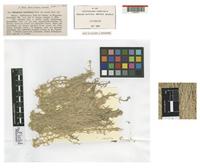
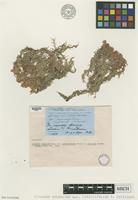
Type of Sphagnum inundatum Russow var. gracile G. Roth [family SPHAGNACEAE]
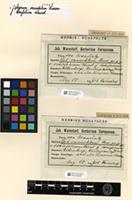
Type? of Sphagnum inundatum Russow f. laxifolium Warnst. [family SPHAGNACEAE]
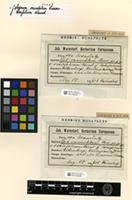
Type of Sphagnum inundatum Russow var. laxifolium Warnst. [family SPHAGNACEAE]
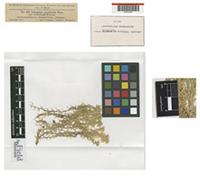
Isosyntype of Sphagnum inundatum Russ. var. diversifolium Warnst. [family SPHAGNACEAE]
Previous
Next

Name

Identification
Sphagnum inundatum Russow [family SPHAGNACEAE ] (stored under name); Verified by Not on sheet,
Related name
  • Sphagnum inundatum

Flora

Entry for Sphagnum inundatum Russow [family ]
Herbarium
Flora of North America (FNA)
Collection
Flora of North America
Resource Type
Reference Sources
Entry From
Flora of North America, Vol 27,
Names
Sphagnum inundatum Russow [family ], Arch. Naturk. Liv- Ehst- Kurlands, Ser., 2, Biol. Naturk. 10: 390. 1894,
Sphagnum auriculatum var. inundatum (Russow) M. O. Hill [family ]
Sphagnum novo-foundlandicum Warnstorf [family ]
Sphagnum subsecundum var. inundatum (Russow) C. E. O. Jensen [family ]
Information
Plants moderate-sized, green in the shade to variegated yellow or orange or both in open habitats; capitulum typically rounded. Stems green to brownish or yellow; superficial cortex of 1 layer of enlarged, thin-walled cells. Stem leaves lingulate to triangular-lingulate, 0.9–1.2 mm, apex rounded, usually 1/3–1/2 of leaf fibrillose; hyaline cells usually fibrillose in distal 1/3–1/2 of leaf, on convex surface near apex with 1–3 pores per cell, on concave surface near apex 1–4 pores per cell. Branches arched but rarely curved and contorted. Branch fascicles with 2–3 spreading and 2–3 pendent branches. Branch leaves ovate, 1–1.5 mm, straight to slightly subsecund; hyaline cells of convex surface with numerous ringed pores along the commissures (12–22 per cell), 0–3 pores per cell on the concave surface. Capsule with few pseudostomata. Spores 30–37 µm; finely papillose on both surfaces, indistinct raised Y-shaped sculpture on distal surface; proximal laesura 0.5 spore radius or less.
Altitude range
low to moderate elevations;
Distribution
Eurasia.USA AlaskaUSA Conn.USA Del.USA Ky.USA MaineUSA Mass.USA N.H.USA N.J.USA N.Y.USA N.C.USA OhioUSA Pa.USA R.I.USA S.C.USA Vt.USA Va.USA W.Va.Canada B.C.Canada N.B.Canada Nfld. and Labr. (Nfld.)Canada N.S.Canada Que.
Discussion
The sporophytes of Sphagnum inundatum are uncommon. The ovate, concave branch leaves that are occasionally subsecund give this species an appearance similar to that of S. subsecundum, from which it can usually be distinguished by its larger size. Sphagnum lescurii typically has distinctly larger stem leaves and capitulum branches that can be quite turgid and curved in open-grown forms.
The names Sphagnum bavaricum Warnstorf and S. bushii Warnstorf & Cardot have been applied to this taxon.

Related Materials

  • Terms and Conditions
  • Privacy Policy
  • Cookie Policy
  • Cookie Settings
  • Accessibility
  • Help
  • Contact Us
  • Facebook
  • Twitter
ITHAKA

JSTOR is part of ITHAKA, a not-for-profit organization helping the academic community use digital technologies to preserve the scholarly record and to advance research and teaching in sustainable ways.

©2000-2026 ITHAKA. All Rights Reserved. JSTOR®, the JSTOR logo, JPASS®, Aluka®, and ITHAKA® are registered trademarks of ITHAKA.

╳