

Compilation
Sphaeranthus napierae
2 Images see all
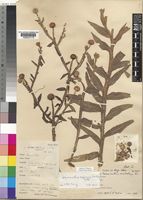
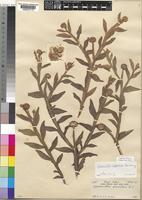
Name
Identification
Sphaeranthus napierae Ross-Craig [family COMPOSITAE ] (stored under name); Verified by Ross-Craig, S., Sphaeranthus suaveolens (Forssk.) DC. [family COMPOSITAE ]
Related name
- Sphaeranthus napierae
- Sphaeranthus suaveolens
Flora
Entry for SPHAERANTHUS suaveolens (Forssk.) DC. [family COMPOSITAE]
Herbarium
Royal Botanic Gardens, Kew (K)
Collection
Flora of Tropical East Africa
Resource Type
Reference Sources
Entry From
Flora of Tropical East Africa, page 315, (2002) Author: H.J. BEENTJE
Names
SPHAERANTHUS suaveolens (Forssk.) DC. [family COMPOSITAE], Prodr. 5: 370 (1836); Oliv. & Hiern in F.T.A. 3: 333 (1877); Robyns in K.B. 1924: 188 (1924); Ross-Craig in Hook., Ic. Pl. ser. 5, 6: 42, t. 3508 (1955); F.P.S. 3: 53 (1956); F.P.U.: 176 (1962); Wild in Kirkia 12: 105 (1980); Blundell, Wild Flow. E. Afr.: t. 775 (1987); Lisowski in F.A.C. Compositae, Inuleae: 222 (1989); U.K.W.F. ed. 2: 209, pl. 86 (1994). Lectotype selected here: Egypt, Rashid [Roseitae], Forsskål 1589 (C, lecto., BM!, isolecto., K!, photo.)
Polycephalos suaveolens Forssk. [family ], Fl. Aegypt.-Arab. 62: 134 (1775)
Sphaeranthus abyssinicus Steetz [family COMPOSITAE], in Peters, Reise Mossamb. Bot. 1: 411 (1863). Type: Ethiopia, Adwa, Schimper 219 (B†, holo., P!, iso.)
Sphaeranthus kotschyi Sch. Bip. [family COMPOSITAE], in Schweinf., Beitr. Fl. Aethiop.: 308 (1867), nomen nudum
Sphaeranthus suaveolens Oliv. var. angustifolius [family COMPOSITAE], in Trans. Linn. Soc., London 29: 94 (1873); Oliv. & Hiern, F.T.A. 3: 333 (1877), as var. angustifolia; Ross-Craig in Hook., Ic. Pl. ser. 5, 6: 46, t. 3509/3-7 (1955), syn. nov. Syntypes: Ethiopia/Sudan, Kotschy 500 (K!, syn.); Uganda, Madi, Speke & Grant s.n. (K!, syn.); Sudan, Bongoland, Mittuland and Niamniamland, Schweinfurth s.n. (K!, syn. but this specimen is in fact S. randii)
Sphaeranthus tetraphyllus S. Moore [family COMPOSITAE], in J.B. 54: 254 (1916). Type: Uganda, Mengo District, Namanyonyi, Dummer 2574 (BM!, holo., K!, iso.)
Sphaeranthus angustifolius [family COMPOSITAE], [sensu Robyns in K.B. 1924: 189 (1924), non DC. pro parte]
Sphaeranthus suaveolens (S. Moore) Ross-Craig var. tetraphyllus [family COMPOSITAE], in Hook., Ic. Pl. ser. 5, 6: 47, t. 3509/8–10 (1955); Wild in Kirkia 12: 106 (1980); Lisowski in F.A.C. Compositae, Inuleae: 224 (1989), syn. nov.
Sphaeranthus suaveolens Ross-Craig forma brevifolius [family COMPOSITAE], in Hook., Ic. Pl. ser. 5, 6: 49 (1955). Type: Uganda, foothills of Elgon, Small 1184 (K!, holo.)
Sphaeranthus suaveolens (Steetz) Ross-Craig var. abyssinicus [family COMPOSITAE], in Hook., Ic. Pl. ser. 5, 6: 44, t. 3509/1–2 (1955), syn. nov.
Sphaeranthus napierae Ross-Craig [family COMPOSITAE], in Hook., Ic. Pl. ser. 5, 6: 52, t. 3511 (1954); Blundell, Wild Flow. E. Afr.: t. 774 (1987); U.K.W.F. ed. 2: 209, t. 86 (1994), syn. nov. Type: Kenya, Kiambu District, Ruiru road 3 km beyond Ruaraka R., Napier 425 (K!, holo., EA!, iso.)
Information
Erect or trailing perennial herb 0.1–1 m tall, the lower stem often decumbent and rooting at the nodes with thread-like roots, sparsely branched distally; stems often flushed purple, densely pubescent to puberulous but glabrescent, glandular, winged with wings to 4 mm wide, entire to dentate. Leaves slightly succulent, elliptic or (ob-)lanceolate, 2–11 cm long, 0.5–4 cm wide, base decurrent into the wings, margins serrulate or serrate, rarely subentire, apex acute or obtuse and mucronate, pubescent or sparsely puberulous but glabrescent, glandular-punctate, aromatic with a smell like camphor, apples or mint. Glomerules purple or mauve, globose or broadly ovoid, occasionally double, 9–20 mm in diameter; peduncle 0.7–7 cm long, winged; receptacle globose or ovoid; glomerule bracts hidden by the capitula (except the very tips), or the proximal visible at the base and eventually deflexed, lanceolate or elliptic, 3–7 mm long, margins ciliate distally, acuminate to almost spinulose, puberulous to almost glabrous; capitula sessile, with 4–8 bracts, some slightly folded, linear or oblanceolate, 2–4 mm long, margins distally ciliate, apex apiculate or laciniate, puberulous distally; receptacle of glomerule flat or shallowly to deeply convex. Florets: outer florets 4–15, tube narrowing from a rather wide and corky base, 1–2.9 mm long, occasionally sparsely glandular, hardly toothed or with lobes up to 0.3 mm long; style 1.9–3.1 mm long, exserted at a very late stage; inner florets (1–)2–4, tube cylindric but widening and hardly narrowed below the lobes, 1–2.2(–3) mm long, sparsely glandular, lobes 0.2–0.5 mm long; anthers 0.9–1.8 mm long, exserted only at a late stage; style 1.8–4.5 mm long, not divided, papillose. Achenes of outer florets cylindrical, 0.5–0.9 mm, puberulous; of the inner florets to 1 mm long, thin and probably sterile, glabrous or nearly so, glandular or eglandular.
Range
DISTR. U 1–4; K 1, 3–6; T 1–8
Altitude range
350–2600 m
Distribution
UGANDA W Nile District Madi, Dec. 1862, Speke & Grant 714!;KENYA Northern Frontier District Maralal to Baragoi, Nov. 1978, Hepper & Jaeger 6726!;TANZANIA Masai District Ngorongoro, Munge swamp, July 1966, Greenway & Kanuri 12548!;UGANDA Mbale District Budadiri, Jan. 1932, Chandler 431!;UGANDA Kigezi District Kisiizi Falls, Dec. 1968, Lye & Lester 1040!KENYA Naivasha District Lake Naivasha, June 1976, Kahurananga & Kibui 2834!KENYA Nairobi: Eastleigh, Aug. 1971, Mwangangi 1742!TANZANIA Mpwapwa District Mpwapwa, Dec. 1969, Mapunda & Raya 1107!;TANZANIA Songea District 8 km W of Songea, Feb. 1956, Milne-Redhead & Taylor 8662!
Distribution (external)
; Congo (Kinshasa)
Rwanda
Burundi
Sudan
Ethiopia
Zambia
Malawi
Mozambique
Egypt
Notes
Ross-Craig (1954) accepts four varieties, based on leaf shape, receptacle shape and number and size of florets. The numerous intermediates between var. suaveolens and var. abyssinicus warrant, in my opinion, the merger of these two taxa.Var. angustifolius is a form with slightly narrower leaves and a slightly narrower receptacle; these might be adaptations to flowing water, and the glomerule bract character mentioned by Ross-Craig does not hold true. Numerous intermediates exist, and the taxon is brought into synonymy.The taxon formerly called var. tetraphyllus and especially its forma brevifolius Ross-Craig seems to be a form living under seasonally moist conditions, rather than permanently moist ones. The only constant character is the number of capitulum bracts, 3 rather than 4–8, associated with smaller stature (< 30 cm) and small leaves (< 6 cm long). The form as such is recognizable and occurs widely, but differences are gradual and not absolute, except for the capitula bract number; for this character, intermediates occur, with larger plants with only three capitulum bracts (e.g. Glover & Samuel 2888) and smaller plants with four bracts (e.g. Newbould 3701). I do not consider it worthy of varietal status because there is no break in the variability pattern, but it does form an extreme at the end of the range. S. napierae is just a form of S. suaveolens ,with even the type almost indistinguishable. Bally 8304 (this species) was mentioned by Ross-Craig as possibly S. incisus, but that taxon is a different, more southern species.