JSTOR Global Plants Home
  • Home
  • Browse
  • About
  • Access
  • Account
    • Saved Items
    • Profile
  • Log in

Global Plants

Skip to Main Content
  • JSTOR Global Plants Home
  • Global Plants

    • Browse
    • About
    • Access
    • Account
      • Saved Items
      • Profile
Log in
  • Browse
  • About
  • Access
  • Account
    • Saved Items
    • Profile
Advanced Search

Compilation
Sphaeranthus kirkii

12 Images see all

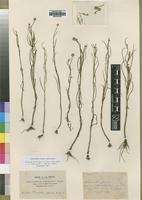
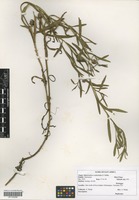
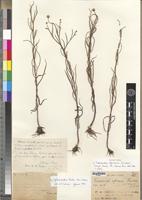
Type of Tisserantia africana Humbert [family ASTERACEAE]
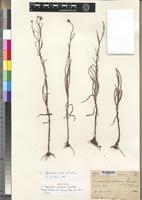
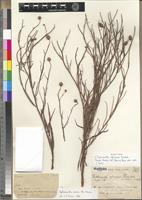
Syntype of Tisserantia africana Humbert [family ASTERACEAE]
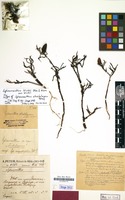
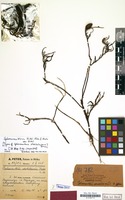
Type of Tisserantia africana Humbert [family ASTERACEAE]
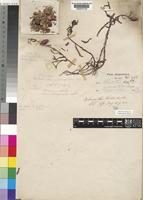
Syntype of Tisserantia africana Humbert [family ASTERACEAE]
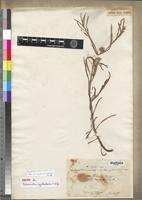
Filed as Sphaeranthus kirkii Oliv. & Hiern variety cyathuloides (O. Hoffm.) Beentje [family ASTERACEAE]
Syntype of Tisserantia africana Humbert [family ASTERACEAE]
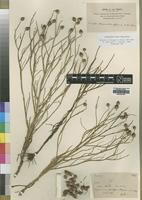
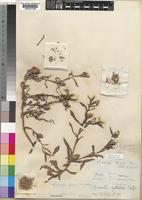
Type of Sphaeranthus strobilaceus Peter [family COMPOSITAE]
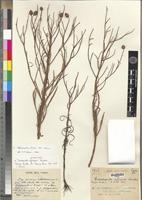
Sphaeranthus kirkii Oliv. & Hiern var. kirkii [family COMPOSITAE]
Syntype of Tisserantia africana Humbert [family ASTERACEAE]
Type of Sphaeranthus strobilaceus Peter [family COMPOSITAE]
Isotype of Sphaeranthus cyathuloides O.Hoffm. [family ASTERACEAE]
Sphaeranthus kirkii Oliv. & Hiern var. kirkii [family COMPOSITAE]
Previous
Next

Name

Identification
Tisserantia africana Humbert [family ASTERACEAE ] Sphaeranthus kirkii Oliv.&Hiern [family ASTERACEAE ] (stored under name);
Related name
  • Sphaeranthus johnstonii
  • Tisserantia africana
  • Sphaeranthus amaranthoides
  • Sphaeranthus kirkii
  • Sphaeranthus cyathuloides

Flora

Entry for SPHAERANTHUS kirkii Oliv. & Hiern [family COMPOSITAE]
Herbarium
Royal Botanic Gardens, Kew (K)
Collection
Flora of Tropical East Africa
Resource Type
Reference Sources
Entry From
Flora of Tropical East Africa, page 315, (2002) Author: H.J. BEENTJE
Names
SPHAERANTHUS kirkii Oliv. & Hiern [family COMPOSITAE], in F.T.A. 3: 333 (1877); Robyns in K.B. 1924: 186 (1924); Ross-Craig in Hook., Ic. Pl. ser. 5, 6: 82, t. 3523a (1954). Type: Tanzania, Bagamoyo District, Bagamoyo, Kirk s.n. (K!, holo.)
Information
Annual or perennial herb 0.1–0.8 m high, with several branched stems arising from a decumbent base rooting at the nodes; roots long; stems yellow-green, flushed reddish or purplish; branches unwinged or very narrowly winged just below the leaf but not continuous, glabrous or sparsely pilose, sparsely glandular. Leaves aromatic, lanceolate to linear, 1.5–11 cm long, 0.3–1.6 cm wide, base attenuate and not or shortly decurrent, margin denticulate or serrulate to subentire, apex acute, sparsely puberulous to glabrous, glandular-punctate. Glomerules mauve or purplish, sessile or on stalks of up to 15 mm long, bristly, resembling conifer cones, (narrowly) ovoid, (10–)13–25 mm long, 7–15 mm in diameter; receptacle cylindrical or narrowly ovoid; glomerule bracts green with purple apex or entirely purple, closely overlapping, the proximal larger than the others but not forming a cup, lanceolate to widely ovate, 5–9 mm long, to 5 mm wide, acuminate, the distal violin-shaped, 3.5–6 mm long, to 3.5 mm wide, margins scarious, apex truncate and cuspidate, all bracts glabrous; capitula sessile, with 3 bracts, the laterals folded, 3–5 mm long, scarious with a truncate or cuspidate and ciliate apex. Florets white with pale mauve tips; outer florets (3–)4, stalked, tube filiform, 1.7–2.6 mm long, glandular, 3-lobed at the apex with the lobes 0.1–0.2 mm long, style 1.8–3.4 mm long, bifid; inner florets 2, the tube widening and abruptly constricted just below the lobes, 1.5–2.4 mm long, rapidly becoming corky, sparsely glandular, lobes 0.3–0.7 mm long, puberulous and glandular; anthers cream, 0.7–2.3 mm long with a brief ovate distal appendage; style white with pale mauve tip, 2.6–4.7 mm long, papillose, entire or very shortly bifid at the apex. Achenes 0.6–1.6 mm long, ovoid and puberulous in the outer florets, flattened and glabrous in the inner florets, possibly sterile.

Related Materials

  • Terms and Conditions
  • Privacy Policy
  • Cookie Policy
  • Cookie Settings
  • Accessibility
  • Help
  • Contact Us
  • Facebook
  • Twitter
ITHAKA

JSTOR is part of ITHAKA, a not-for-profit organization helping the academic community use digital technologies to preserve the scholarly record and to advance research and teaching in sustainable ways.

©2000-2026 ITHAKA. All Rights Reserved. JSTOR®, the JSTOR logo, JPASS®, Aluka®, and ITHAKA® are registered trademarks of ITHAKA.

╳