JSTOR Global Plants Home
  • Home
  • Browse
  • About
  • Access
  • Account
    • Saved Items
    • Profile
  • Log in

Global Plants

Skip to Main Content
  • JSTOR Global Plants Home
  • Global Plants

    • Browse
    • About
    • Access
    • Account
      • Saved Items
      • Profile
Log in
  • Browse
  • About
  • Access
  • Account
    • Saved Items
    • Profile
Advanced Search

Compilation
Sparganium androcladum

9 Images see all

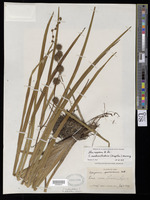
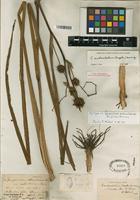
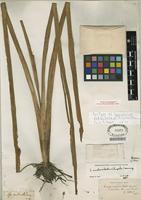
Sparganium androcladum Morong [family TYPHACEAE]
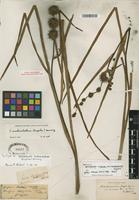
Syntype of Sparganium androcladum (Engelm.) Morong [family TYPHACEAE]
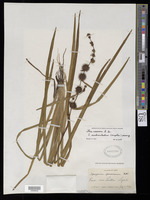
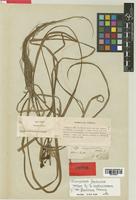
Sparganium androcladum Morong [family TYPHACEAE]
not on sheet of Sparganium lucidum Fernald & Eames [family SPARGANIACEAE]
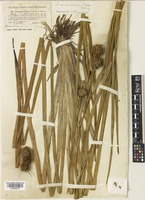
Syntype of Sparganium androcladum (Engelm.) Morong [family TYPHACEAE]
Sparganium androcladum Morong [family SPARGANIACEAE]
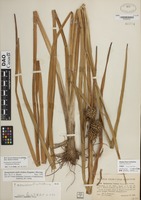
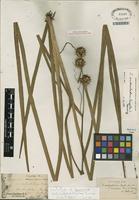
Sparganium androcladum (Engelm.) Morong [family TYPHACEAE]
Lectotype of Sparganium androcladum (Engelm.) Morong [family TYPHACEAE]
Syntype of Sparganium androcladum (Engelm.) Morong [family TYPHACEAE]
Previous
Next

Name

Identification
Isotype of Sparganium fluctuans (Morong) B. L. Rob. [family SPARGANIACEAE ] (stored under name); Verified by Data not digitized, Sparganium androcladum Morong [family SPARGANIACEAE ] Verified by Data not digitized,
Related name
  • Sparganium androcladum
  • Sparganium fluctuans
  • Sparganium simplex
Common name
  • Rubanier rameux, Flora of North America Vol. 22
  • Rubanier flottant, Flora of North America Vol. 22

Flora

Entry for Sparganium androcladum (Engelmann) Morong [family TYPHACEAE]
Herbarium
Flora of North America (FNA)
Collection
Flora of North America
Resource Type
Reference Sources
Entry From
Flora of North America, Vol 22,
Names
Sparganium androcladum (Engelmann) Morong [family TYPHACEAE], Bulletin of the Torrey Botanical Club, 15: 78. 1888
Sparganium simplex Hudson var. androcladum Engelmann [family TYPHACEAE], in A. Gray, Man. Bot. Northern U.S., Manual, ed., 5, 481. 1867
Sparganium americanum Nuttall var. androcladum (Engelmann) Fernald & Eames [family TYPHACEAE]
Information
Plants robust, to 1.2 m; leaves and inflorescences erect, emergent. Leaves stiff, keeled from base at least to middle, flattened distally, to 1.2 m  5--15 mm. Inflorescences: rachis (0--)1--3 branched, erect, bracts strongly ascending, not basally inflated; pistillate heads (1--)2--4 on main rachis, 0(--2) on lateral branches, axillary, not contiguous, sessile or short-peduncled, 2.5--3.5 cm diam. in fruit; staminate heads 3--8 on main rachis, 1--6 on lateral rachises, most not contiguous. Flowers: tepals often with prominent subapical dark spot, subentire to entire; stigma 1, linear. Fruits brown, proximally dull, distally shiny, subsessile to short-stipitate, fusiform, usually constricted near equator, body not strongly faceted, 5--7  2.5--3 mm, tapering to beak; beak often curved and hooked, 4--7 mm; tepals attached at base, reaching to equator or somewhat beyond. Seeds 1.
Phenology
Flowering late spring--summer (Apr--Jul)
Altitude range
0--800 m
Distribution
USA Ark.USA Conn.USA Ill.USA Ind.USA IowaUSA Ky.USA MaineUSA Mass.USA Mich.USA Minn.USA Mo.USA N.H.USA N.J.USA N.Y.USA OhioUSA Okla.USA Pa.USA R.I.USA Tenn.USA Vt.USA W.Va.USA Wis.Canada Ont.Canada Que.
Discussion
Sparganium androcladum is less variable than the similar and more common S. americanum, from which it is distinguished by its generally larger size and more robust habit; leaves stiffer, wider, more strongly keeled; inflorescence branches usually without pistillate heads, the bracts ascending; fruiting heads larger; fruits distally shiny, the beak longer and hooked. Immature fruits of S. androcladum resemble mature fruits of S. americanum. Some specimens will not key readily to either species. The complex nomenclatural history is discussed by C. D. K. Cook and M. S. Nicholls (1987).
Sparganium androcladum has an unusual, discontinuous distribution, which is wholly within the range of S. americanum, except in the central Mississippi Valley (M. L. Fernald 1922b). In the absence of convincing specimens, the presence of S. androcladum in Virginia cannot be confirmed, although E. O. Beal (1960) reported it there, and it occurs nearby in West Virginia.

Related Materials

  • Terms and Conditions
  • Privacy Policy
  • Cookie Policy
  • Cookie Settings
  • Accessibility
  • Help
  • Contact Us
  • Facebook
  • Twitter
ITHAKA

JSTOR is part of ITHAKA, a not-for-profit organization helping the academic community use digital technologies to preserve the scholarly record and to advance research and teaching in sustainable ways.

©2000-2026 ITHAKA. All Rights Reserved. JSTOR®, the JSTOR logo, JPASS®, Aluka®, and ITHAKA® are registered trademarks of ITHAKA.

╳