JSTOR Global Plants Home
  • Home
  • Browse
  • About
  • Access
  • Account
    • Saved Items
    • Profile
  • Log in

Global Plants

Skip to Main Content
  • JSTOR Global Plants Home
  • Global Plants

    • Browse
    • About
    • Access
    • Account
      • Saved Items
      • Profile
Log in
  • Browse
  • About
  • Access
  • Account
    • Saved Items
    • Profile
Advanced Search

Compilation
Sorghum roxburghii

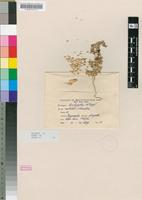
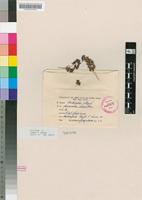
2 Images see all

Type of Sorghum roxburghii Stapf var. mutabile Snowden [family POACEAE]
Isotype of Sorghum roxburghii Stapf [family POACEAE]
Previous
Next

Name

Identification
Sorghum roxburghii Stapf [family POACEAE ] Verified by Not on sheet, Sorghum bicolor (L.) Moench [family POACEAE ] (stored under name); Verified by Not on sheet,
Related name
  • Sorghum roxburghii
  • Sorghum bicolor

Flora

Entry for SORGHUM Roxburghii Stapf [family POACEAE]
Herbarium
Royal Botanic Gardens, Kew (K)
Collection
Flora of Tropical Africa
Resource Type
Reference Sources
Entry From
Flora of Tropical Africa, Vol 9, page 1, (1917) Author: (By O. STAPF.)
Names
SORGHUM Roxburghii Stapf [family POACEAE]
Information
Annual. Culms stout, tall, often slightly waxy, pruinose below the nodes. Leaf-sheaths softly pubescent at the nodes; ligules very short, scarious, hairy from the back; blades linear to linear-lanceolate or (the upper) lanceolate from a broad clasping base, long-attenuated upwards, up to over 1 1/2 ft. long, and up to 1 1/2 in. wide, usually hairy to tomentose inside above the ligule and outside at the junction with the sheath, otherwise glabrous. Panicle oblong to ovoid-oblong, rarely subobovate or elliptic in outline, erect, contracted and dense (rarely lax) in flower, somewhat to much loosened when mature; branches slender, flexuous, whorled or semiverticillate, the longest undivided for up to 1/2–1 in. (rarely much more) from the base, more or less ciliate towards the base and often villous at the junction with the nodes, otherwise like their divisions glabrous or nearly so, finely scabrid upwards. Racemes tough, up to 4- (rarely 5-) noded, 1/3– 1/2 in. long; joints slender, 1–1 1/2 lin. long, distinctly and often densely ciliate, cilia white or purplish; pedicels similar but more slender, of about the same length or more often shorter with very slightly thickened tips. Sessile spikelet ovate, acute with a small fine point, sometimes flattened on the back when young but soon convex, about 2 1/2 lin. by 1 1/4–1 1/2 lin. permanently pale or dull straw-colour to tawny, at length slightly glossy; callus-beard distinct, white. Glumes equal, coriaceous, lower about 10–13-nerved, finely and often obscurely 2-keeled towards the tips with the keels slightly scabrid, transversely constricted at the base, more or less white-strigillose (to almost tomentose) when young, at length more or less glabrescent on the back, upper 7–9-nerved, finely keeled upwards, tip usually straight. Valves distinctly ciliate, cilia up to 1/2 lin. long, lower broad-oblong, as long as the glumes, upper broad-ovate, 1 1/2–1 3/4 lin. long, middle nerve much thickened from the middle upwards, running out into a short straight mucro, lobes adnate to it almost all along. Anthers 1 1/4 lin. long. Grains elliptic or ovate-elliptic in outline, 1 3/4–2 1/4 lin. by 1 1/4–1 1/2 lin., dull white (in the African specimens). Pedicelled spikelet usually neuter, linear or linear-lanceolate, up to 2 lin. long, more often much reduced and quite small, persistent; lower glume if well developed up to 9-nerved, upper 5-nerved.
Notes
There are several cultural races of S. Roxburghii known in India, and so far two of them have been found in tropical Africa, namely:— Var. semiclausum, Stapf. and Var. hians, Stapf. Hackel quotes under Andropogon Sorghum, var. Roxburghii, Roxburgh's Andropogon saccharatus. From Roxburgh's description (Fl. Ind. i. p. 274; ed. Carey i. 271), I should suggest it to be var. hians rather than var. semiclausum, and this seems to be supported by the fact that Wight quotes Andropogon saccharatus, Roxb., as a synonym of his No. 1670 which is var. hians; but as there is no figure of this form in Roxburgh's collection of drawings and Roxburgh does not mention the curiously exposed grains, the point must remain undecided. This species includes the forms cultivated in North America under the name of Shallu, an Indian vernacular.

Related Materials

  • Terms and Conditions
  • Privacy Policy
  • Cookie Policy
  • Cookie Settings
  • Accessibility
  • Help
  • Contact Us
  • Facebook
  • Twitter
ITHAKA

JSTOR is part of ITHAKA, a not-for-profit organization helping the academic community use digital technologies to preserve the scholarly record and to advance research and teaching in sustainable ways.

©2000-2026 ITHAKA. All Rights Reserved. JSTOR®, the JSTOR logo, JPASS®, Aluka®, and ITHAKA® are registered trademarks of ITHAKA.

╳