JSTOR Global Plants Home
  • Home
  • Browse
  • About
  • Access
  • Account
    • Saved Items
    • Profile
  • Log in

Global Plants

Skip to Main Content
  • JSTOR Global Plants Home
  • Global Plants

    • Browse
    • About
    • Access
    • Account
      • Saved Items
      • Profile
Log in
  • Browse
  • About
  • Access
  • Account
    • Saved Items
    • Profile
Advanced Search

Compilation
Sorghum margaritiferum

4 Images see all

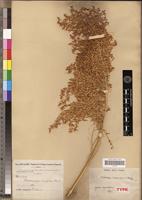
Type of Sorghum margaritiferum Stapf [family POACEAE]
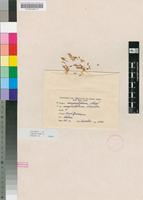
Type of Sorghum margaritiferum Stapf var. margaritiferum [family POACEAE]
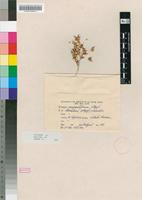
Isotype of Sorghum margaritiferum Stapf var. tremulans (Stapf) Snowden [family POACEAE]
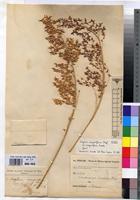
Type of Sorghum margaritiferum Stapf [family POACEAE]
Previous
Next

Name

Identification
Sorghum margaritiferum Stapf [family POACEAE ] (stored under name); Verified by Not on sheet,
Related name
  • Sorghum margaritiferum
  • Sorghum bicolor
Common name
  • guinea-corn; sweet sorghum (S. mellitum var. mellitum sensu Snowden); Sierra Leone guinea-corn (S. margaritiferum sensu Snowden)., Burkill, H.M. 1985. The useful plants of west tropical Africa, Vol. 2
  • tòl-lε (FCD) (SIERRA LEONE, BULOM), Burkill, H.M. 1985. The useful plants of west tropical Africa, Vol. 2
  • gros mil; sorgho; tigne; tègne (S. margaritiferum sensu Snowden)., Burkill, H.M. 1985. The useful plants of west tropical Africa, Vol. 2
  • thч̀l (Pichl) (SIERRA LEONE, BULOM (Sherbro)), Burkill, H.M. 1985. The useful plants of west tropical Africa, Vol. 2

Flora

Entry for SORGHUM margaritiferum Stapf [family POACEAE]
Herbarium
Royal Botanic Gardens, Kew (K)
Collection
Flora of Tropical Africa
Resource Type
Reference Sources
Entry From
Flora of Tropical Africa, Vol 9, page 1, (1917) Author: (By O. STAPF.)
Names
SORGHUM margaritiferum Stapf [family POACEAE]
Information
Annual. Culms stout. Leaf-sheaths almost glabrous (? always) at the nodes; ligules up to 1 lin. long, dark purple, densely ciliate from the back; blades linear-lanceolate from a broad clasping base, over 1 ft. by 2–2 1/2 in., subglaucous, sparingly spotted with red, tomentose inside at the base of the midrib. Panicle oblong, 1–1 1/4 ft. by 3–5 in., erect, contracted, dense; branches scattered or more or less verticillate, obliquely erect, the longest 3–6 in. long, branched almost from the base, but the lowest ramifications arrested, hence naked for 1–2 1/2 in., flexuous, like the branchlets very slender, almost filiform, and rather rough all along. Racemes up to 6-noded and up to 10 lin. long, crowded; joints slender to very slender, 1 to over 1 1/2 lin. long, ciliate, cilia white, under 1/2 lin. long; pedicels very similar, tips minutely discoid. Sessile spikelet oblong-lanceolate, subacute, 2 1/4–2 1/2 lin. by 1–1 1/3 lin., straw-colour, flushed with bright-red below; callus-beard less than 1/2 lin. long. Glumes equal, coriaceous, thinner upwards, lower 13–15-nerved, sometimes minutely 3-toothed, sparingly and finely strigillose mainly below and on the sides, or almost quite glabrous and glossy, nerves very slightly raised at the very tips, keels short, sharp, somewhat rough, upper glume 9-nerved, very obscurely keeled, tip straight or slightly recurved, usually both involute when mature. Valves ciliate, lower oblong to elliptic, 2–2 1/2 lin. long, upper broad ovate, shortly 2-lobed, 1 1/2 lin. long; awn up to 6 lin. long, sharply bent above the middle. Grain elliptic-rotundate in outline, 1 1/2–1 3/4 by 1 1/4 lin., almost equally convex on both sides, slightly translucent, white; embryo-mark very distinct, elliptic-oblong, exceeding the middle of the grain. Pedicelled spikelet neuter, though often both valves present, persistent or deciduous, linear, acute, 2 1/2 lin. long, greenish; lower glume 7–9-, upper about 7-nerved.
Distribution
Congo Upper Guinea Bilima, Chevalier, 15861!
Notes
“ Keudé bilé ” or “ Keudé rouge ” and “ Keudé blanc ” of Dumas (Agric. Pays Chauds, v. 1905, 459, 460) probably belong here. Both have small translucent (vitrifié) grains, Keudé bile of red, and Keudé blanc of white colour. They are cultivated along the Middle Niger and are much valued as food grains.

Related Materials

  • Terms and Conditions
  • Privacy Policy
  • Cookie Policy
  • Cookie Settings
  • Accessibility
  • Help
  • Contact Us
  • Facebook
  • Twitter
ITHAKA

JSTOR is part of ITHAKA, a not-for-profit organization helping the academic community use digital technologies to preserve the scholarly record and to advance research and teaching in sustainable ways.

©2000-2026 ITHAKA. All Rights Reserved. JSTOR®, the JSTOR logo, JPASS®, Aluka®, and ITHAKA® are registered trademarks of ITHAKA.

╳