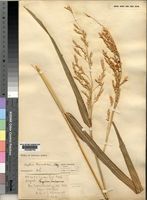
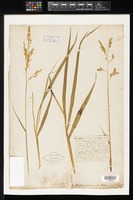
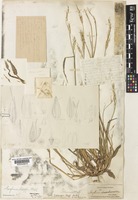
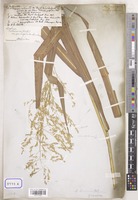
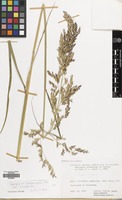
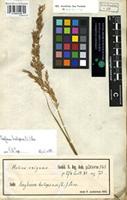
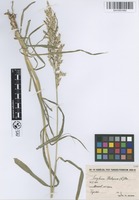
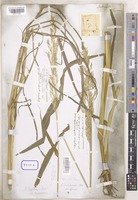
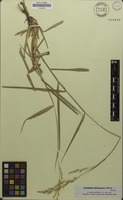
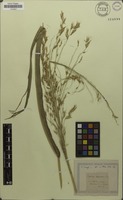
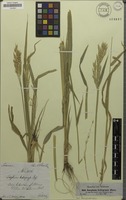
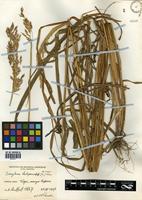
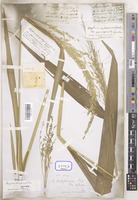
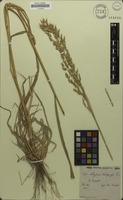
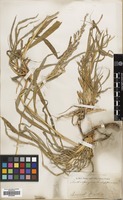
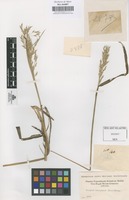
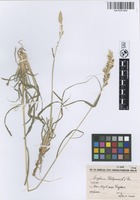
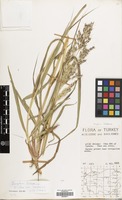
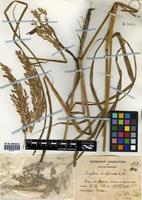
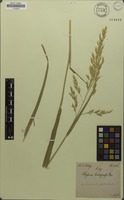
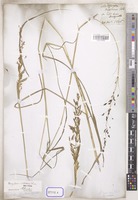
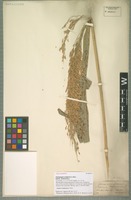
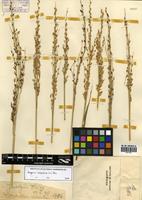
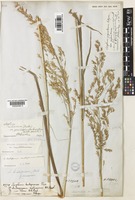
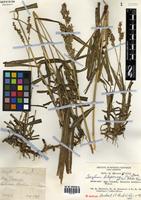
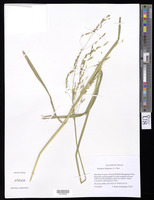
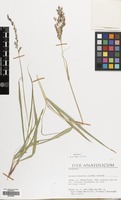
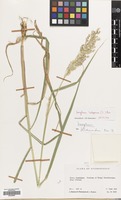
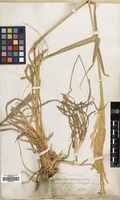
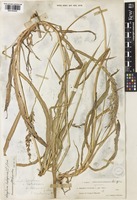
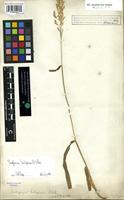
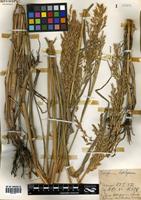
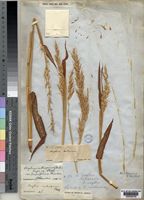
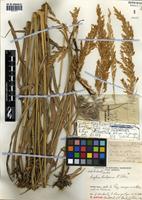
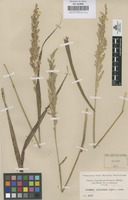
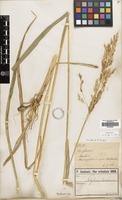
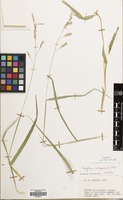
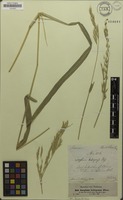
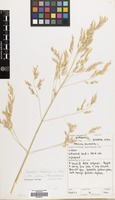
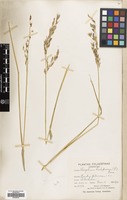
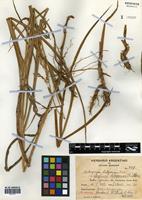
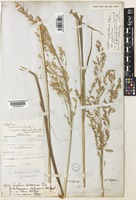
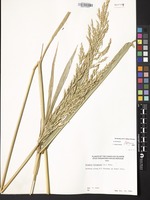
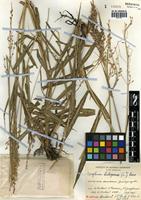
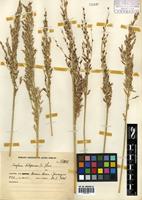
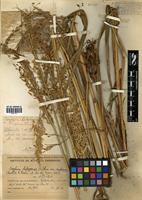
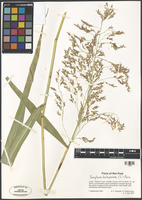
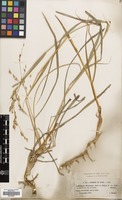
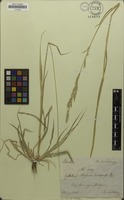
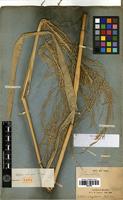
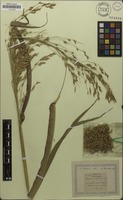
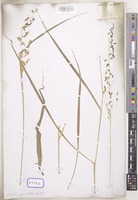
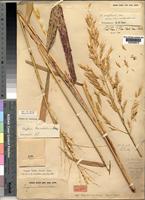
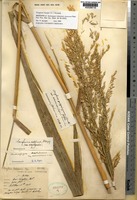
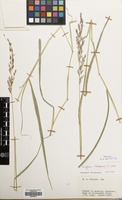
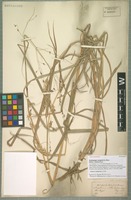
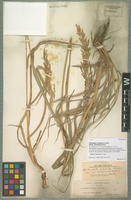
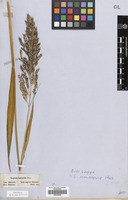
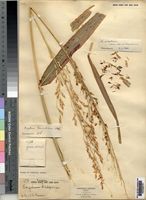
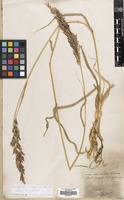
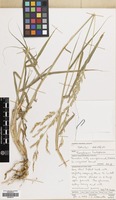
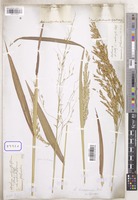
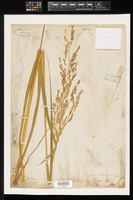
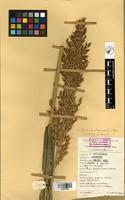
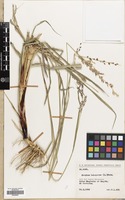
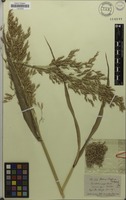
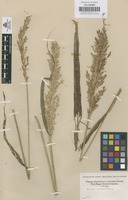
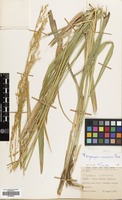
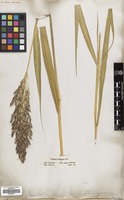
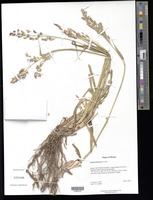
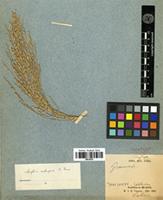
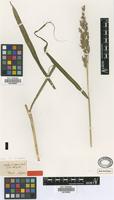
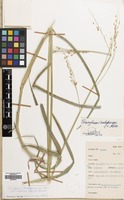
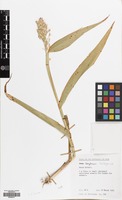
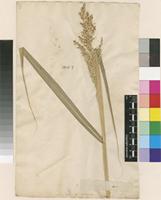
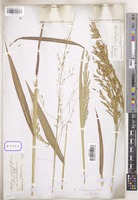
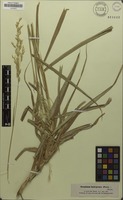
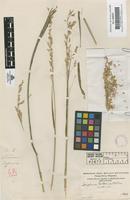
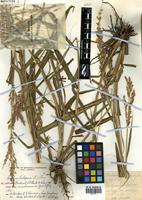
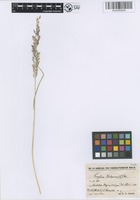
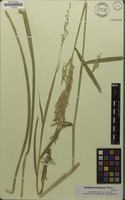
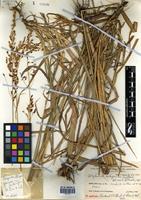
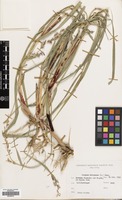
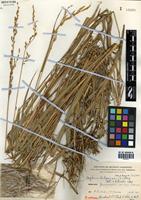
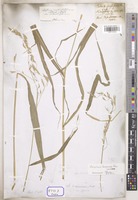
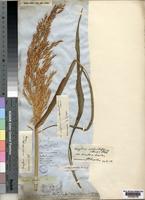
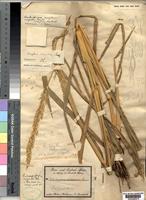
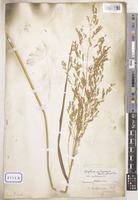
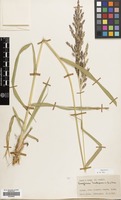
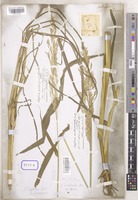
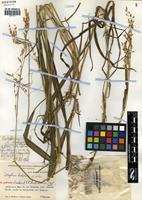
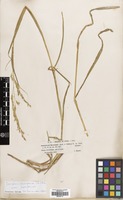
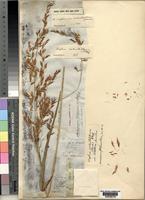
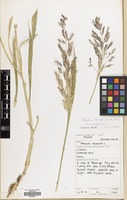
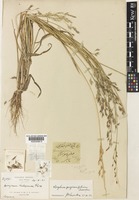
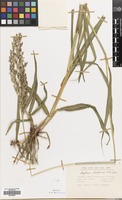
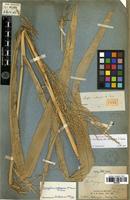
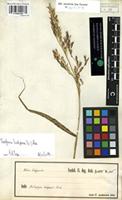
perennial; culms erect, usually very tall, up to 10–16 ft. long, stout, simple or scantily branched; sheaths glabrous, except the minutely silky nodes, strongly striate; ligules membranous, short, ciliate, hairy inside; blades linear-lanceolate or linear from an often rounded base, long tapering to a fine point, 1–2 ft. long, 3/4–2 1/2 in. broad, flat, glabrous, or with a silky line on the back at the union with the sheath, margins serrulate, midrib stout; panicle decompound, very large, up to 1 1/2 ft. long, effuse, nodding, lower branches up to 1 ft. long, often undivided to the middle; rhachis and branches or at least the ultimate branchlets scabrid and minutely bearded at the nodes; racemes 1/2–1 in. long, linear; joints 3–7, more than half as long as the sessile spikelets, more or less ciliate, pedicels very similar; sessile spikelets ovate-lanceolate, 3–4 1/2 lin. long, 1–1 1/2 lin. broad, pale, ultimately sometimes darker or even black, shining; lower glume more or less hairy, at least on the sides, 7–13-nerved, callus shortly bearded; upper lanceolate, acuminate, shining, 5–7-nerved; upper valve broadly oblong or ovate, 2-lobed, half as long as the glumes, ciliate, 1-nerved, awn 4–6 lin. long, rarely longer, kneed, sometimes reduced to a bristle or suppressed; pale linear-oblong, slightly shorter than the valve; anthers 1 1/4–1 1/2 lin. long; grain obovate or obovate-oblong, 1/3 shorter than the glumes; pedicelled spikelets almost as long as the sessile, but narrower, ♂ or barren; lower glume herbaceous, glabrous, 5–9-nerved, keels aculeolate or scabrid; upper similar, 3–5-nerved; valves, when present, hyaline, ciliate, 2–1-nerved. null