JSTOR Global Plants Home
  • Home
  • Browse
  • About
  • Access
  • Account
    • Saved Items
    • Profile
  • Log in

Global Plants

Skip to Main Content
  • JSTOR Global Plants Home
  • Global Plants

    • Browse
    • About
    • Access
    • Account
      • Saved Items
      • Profile
Log in
  • Browse
  • About
  • Access
  • Account
    • Saved Items
    • Profile
Advanced Search

Compilation
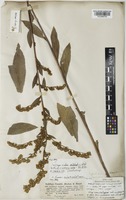
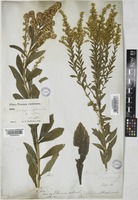
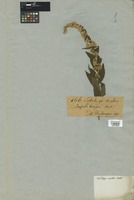
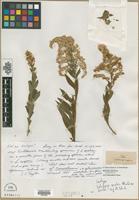
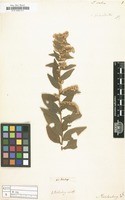
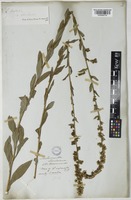
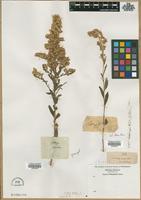
Solidago scabra

7 Images see all

Solidago patula Muhl. [family COMPOSITAE]
Solidago canadensis L. var. scabra (Muhl. ex Willd.) Torr. & A.Gray [family COMPOSITAE]
Filed as Solidago scabra Willd. [family COMPOSITAE]
Isotype of Solidago scabra Muhl. ex Willd. [family ASTERACEAE]
Filed as Solidago scabra [family COMPOSITAE]
Solidago patula Muhl. subsp. strictula Torr. & A.Gray [family COMPOSITAE]
Filed as Solidago gigantea Aiton subsp. serotina (Kuntze) McNeill [family ASTERACEAE]
Previous
Next

Name

Identification
Solidago gigantea Aiton [family ASTERACEAE ] (stored under name); Verified by Not on Sheet, Solidago scabra Muhl. ex Willd. [family ASTERACEAE ] Verified by Muhlenberg, G.H.E.,
Related name
  • Solidago canadensis
  • Solidago scabra
  • Solidago gigantea

Flora

Entry for Solidago altissima Linnaeus subsp. altissima [family COMPOSITAE]
Herbarium
Flora of North America (FNA)
Collection
Flora of North America
Resource Type
Reference Sources
Entry From
Flora of North America, Vol 20,
Names
Solidago altissima Linnaeus subsp. altissima [family COMPOSITAE]
Solidago canadensis Linnaeus var. scabra (Muhlenberg ex Willdenow) Torrey & A. Gray [family COMPOSITAE]
Solidago scabra Muhlenberg ex Willdenow [family COMPOSITAE]
Treatment Author(s)
John C. Semple
Rachel E. Cook
Information
Involucres usually 3–4 mm. 2n = 36, 54.
Phenology
aug (summer), sep-oct (fall)
Altitude range
0–1000+;
Distribution
Mexico.USA Ala.USA Ariz.USA Ark.USA Calif.USA Conn.USA Del.USA Fla.USA Ga.USA Ind.USA IowaUSA Kans.USA Ky.USA La.USA MaineUSA Md.USA Mass.USA Mich.USA Minn.USA Miss.USA Mo.USA Nebr.USA N.H.USA N.J.USA N.Y.USA OhioUSA Okla.USA Pa.USA R.I.USA S.C.USA Tenn.USA Tex.USA UtahUSA Vt.USA Va.USA W.Va.Canada Man.Canada N.B.Canada N.S.Canada Ont.Canada P.E.I.Canada Que.Canada Sask.
Discussion
Subspecies altissima is an escaped cultivar or has been introduced in Arizona, California, and Utah, and very likely in other western states. It is the most common and “weedy” member of subsect. Triplinerviae and has been introduced in many parts of the world. It replaces subsp. gilvocanescens in the eastern United States and adjacent Canada. Tetraploids are infrequent along the western edge of the subspecies’s distribution and rarely on glades in the southeastern United States. Hexaploids occur throughout the range. Array shape varies, narrower and elongate ones occurring in the southeastern United States; in Texas, such plants might be confused with Solidago juliae, which has more linear leaves. Further work is needed to analyze regional variants within each subspecies.

Related Materials

  • Terms and Conditions
  • Privacy Policy
  • Cookie Policy
  • Cookie Settings
  • Accessibility
  • Help
  • Contact Us
  • Facebook
  • Twitter
ITHAKA

JSTOR is part of ITHAKA, a not-for-profit organization helping the academic community use digital technologies to preserve the scholarly record and to advance research and teaching in sustainable ways.

©2000-2026 ITHAKA. All Rights Reserved. JSTOR®, the JSTOR logo, JPASS®, Aluka®, and ITHAKA® are registered trademarks of ITHAKA.

╳