JSTOR Global Plants Home
  • Home
  • Browse
  • About
  • Access
  • Account
    • Saved Items
    • Profile
  • Log in

Global Plants

Skip to Main Content
  • JSTOR Global Plants Home
  • Global Plants

    • Browse
    • About
    • Access
    • Account
      • Saved Items
      • Profile
Log in
  • Browse
  • About
  • Access
  • Account
    • Saved Items
    • Profile
Advanced Search

Compilation
Solidago albopilosa

9 Images see all

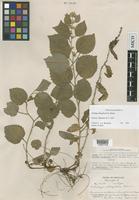
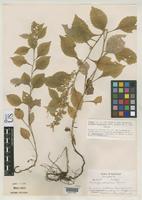
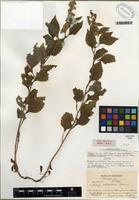
Isotype of Solidago albopilosa E.L.Braun [family ASTERACEAE]
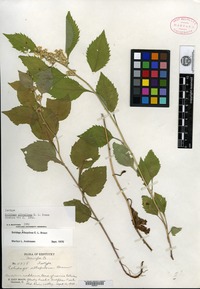
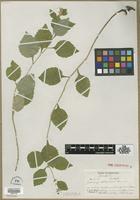
Isotype of Solidago albopilosa E. L. Braun [family ASTERACEAE]
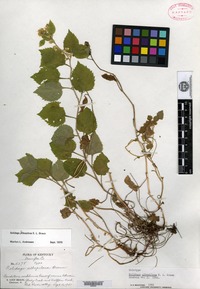
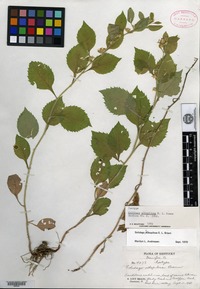
Holotype of Solidago albopilosa E. L. Braun [family ASTERACEAE]
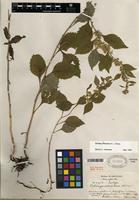
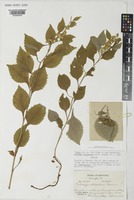
Isotype of Solidago albopilosa E.L. Braun [family ASTERACEAE]
Isotype of Solidago albopilosa Braun, E.L. 1942 [family ASTERACEAE]
Isotype of Solidago albopilosa Braun [family ASTERACEAE]
Isotype of Solidago albopilosa E. L. Braun [family ASTERACEAE]
Isotype of Solidago albopilosa E.L.Braun [family COMPOSITAE]
Isotype of Solidago albopilosa E.L. Braun [family ASTERACEAE]
Previous
Next

Name

Identification
Solidago albopilosa E. L. Braun [family ASTERACEAE ] (stored under name); Verified by E. L. Braun, 1942
Related name
  • Solidago albopilosa
Common name
  • White-haired goldenrod, Flora of North America Vol. 20

Flora

Entry for Solidago albopilosa E. L. Braun [family COMPOSITAE]
Herbarium
Flora of North America (FNA)
Collection
Flora of North America
Resource Type
Reference Sources
Entry From
Flora of North America, Vol 20,
Names
Solidago albopilosa E. L. Braun [family COMPOSITAE], Rhodora, 44: 2. 1942
Treatment Author(s)
John C. Semple
Rachel E. Cook
Information
Plants 28–60 cm; caudices woody. Stems 1–3+, erect, flexuous in proximal arrays, moderately to densely villous. Leaves: basal withering by flowering; basal and proximal cauline abruptly tapering to winged, villous petioles (petioles ± 1/2 or less total leaf length), blades broadly ovate to spatulate, 46–80(–90) × 23–47(–55) mm, margins serrate [teeth 6–12(–15)], abaxial faces moderately villous, more so along nerves, adaxial sparsely to moderately villoso-strigose; distal cauline petiolate, similar to proximal or more elliptic, 27–45 × 13–20 mm, margins entire to slightly serrate. Heads 10–30, in short axillary and terminal racemiform/paniculiform clusters. Peduncles 3–5 mm, sparsely strigose; bracteoles 1–3 scattered, ovate. Involucres campanulate, 4.3–6.5(–7) mm. Phyllaries in ca. 3 series, unequal, outer ovate, 1–1.5 mm, obtuse to acute, inner oblong, 1-nerved. Ray florets 3–5; laminae 2.4–4 × 1–1.5 mm. Disc florets 5–8; corollas 2.2–2.5 mm, lobes ca. 1–2 mm. Cypselae (obconic) 1–2 mm, moderately hairy; pappi 2.3–2.8 mm. 2n = 36.
Conservation Status
of conservation concern;
Phenology
sep (fall)
Altitude range
± 400 m;
Distribution
USA Ky.
Discussion
Solidago albopilosa is found along the Red River Gorge in Menifee, Powell, and Wolfe counties. It is most similar to S. flexicaulis; it appears weaker and smaller than plants of S. flexicaulis that grow nearby, outside of the rockhouses. Its biology and origins have been discussed in detail (J. R. Beaudry 1959; M. L. Andreasen and W. H. Eshbaugh 1973). Solidago albopilosa is listed as threatened by the U.S. Fish and Wildlife Service (Federal Register 1988).

Related Materials

  • Terms and Conditions
  • Privacy Policy
  • Cookie Policy
  • Cookie Settings
  • Accessibility
  • Help
  • Contact Us
  • Facebook
  • Twitter
ITHAKA

JSTOR is part of ITHAKA, a not-for-profit organization helping the academic community use digital technologies to preserve the scholarly record and to advance research and teaching in sustainable ways.

©2000-2026 ITHAKA. All Rights Reserved. JSTOR®, the JSTOR logo, JPASS®, Aluka®, and ITHAKA® are registered trademarks of ITHAKA.

╳