JSTOR Global Plants Home
  • Home
  • Browse
  • About
  • Access
  • Account
    • Saved Items
    • Profile
  • Log in

Global Plants

Skip to Main Content
  • JSTOR Global Plants Home
  • Global Plants

    • Browse
    • About
    • Access
    • Account
      • Saved Items
      • Profile
Log in
  • Browse
  • About
  • Access
  • Account
    • Saved Items
    • Profile
Advanced Search

Compilation
Solanum dregei

4 Images see all

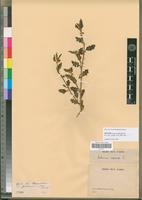
Isotype of Solanum dregei Dunal [family SOLANACEAE]
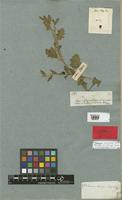
Solanum dregei Dunal [family SOLANACEAE]
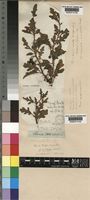
Type of Solanum dregei Dunal [family SOLANACEAE]
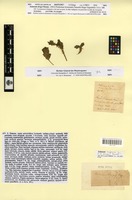
Isotype of Solanum dregei Dunal [family SOLANACEAE]
Previous
Next

Name

Identification
Solanum dregei Dunal [family SOLANACEAE ] (stored under name); Verified by Data not digitized, Solanum dregei Dunal [family SOLANACEAE ] Verified by Data not digitized,
Related name
  • Solanum capense
  • Solanum dregei

Flora

Entry for SOLANUM capense Linn. [family SOLANACEAE]
Herbarium
Royal Botanic Gardens, Kew (K)
Collection
Flora Capensis
Resource Type
Reference Sources
Entry From
Flora Capensis, Vol 4, page 87, (1904) Author: By C. H. WRIGHT.
Names
SOLANUM capense Linn. [family SOLANACEAE], Syst. ed. 10, 935;—Linn. fil. Suppl. 147; Thunb. Prodr. 37, Fl. Cap. ed Schult. 190; Drège, Zwei Pflanzengeogr. Documente, 57, 58, and in Linnæa, xx. 203; Dunal in DC. Prod. xiii. i. 288.
SOLANUM Milleri Jacq. [family SOLANACEAE], Coll. iv. 209, Ic. t. 330; Drège, Zwei Pflanzengeogr. Documente, 139, 150; Dunal l.c. 286.
SOLANUM Dregei Dunal [family SOLANACEAE], l.c. 288.
Information
stem shrubby, terete, with a few stellate hairs when young, soon glabrescent; spines 2–3 lin. long, sharply recurved, laterally compressed, enlarged at the base; leaves 1–2 in. by 8 lin., sinuately pinnatifid, glabrous, with straight or slightly curved yellow spines on the under (rarely upper) side of the midrib, unequal at the base; petiole 3–6 lin. long; cymes 2–3-flowered; peduncle very short; pedicels 2 lin. long; calyx campanulate, stellately hairy outside, deeply 5-lobed; lobes lanceolate, acuminate, acute; corolla 4 lin. in diam., blue or white, stellately hairy outside; lobes ovate, acute; filaments very short; anthers 1 1/2 lin. long, oblong, obtuse, with 2 small apical pores; style longer than the stamens, curved, stellately hairy below; fruit globose, 3–5 lin. in diam., glabrous. null
Distribution
CENTRAL REGION Prince Albert Div.; Gamka River, Burke! Somerset Div.; near Somerset East, 2800 ft., MacOwan, 1643! Graaff Reinet Div.; by the Sunday River, 1500–2000 ft., Drège, 7860! Victoria West Div.; Nieuwveld, between Brak River and Uitvlugt, 3000–4000 ft., Drège, near Victoria West, Mrs. Barber! Var. β. Somerset Div.; near Somerset East, Bowker, 83! Richmond Div.; Winterveld, between Niewjaars Fontein and Ezels Fontein, 3000–4000 ft., Drège!COAST REGION George Div.; Ellens Island, near Dumbletons Lake, Lady Barkly! Knysna Div.; near the landing-place at Plettenberg Bay, Bowie! Humansdorp Div.; between Kromme River and Zeekoe River, Thunberg! Alexandria Div.; Zwaart Hoogte, Burke! Albany Div.; Howisons Poort, near Grahamstown, 2000–3000 ft., Zeyher, 901! 3470, near Assegai Bosch and Botram, 1000–2000 ft., Drège! Fort Beaufort Div.; Kat River Poort, 2000 ft., Drège! and without precise locality, Cooper, 481! Queenstown Div.; Plains near Queenstown, 3500 ft., Galpin, 1695! Qamata, Baur, 481!EASTERN REGION Pondoland; between Umtata River and St. Johns River, 1000–2000 ft., Drège; Griqualand East; by streams near Clydesdale, 2500 ft., Tyson, 3120! Natal; in an ant-bear hole. Mid Illovo, 2200 ft., Wood, 1860! between Pietermaritzburg and Greytown, Wilms, 2168! Klip River County, Wood, 4499!KALAHARI REGION Transvaal; Jeppestown Ridges, near Johannesburg, 6000 ft., Gilfillan in Herb. Galpin, 6054! 6054a! 6160! Johannesburg, Ommanney!SOUTH AFRICA without locality, Forsyth! Harvey!
Notes
Dunal (l.c.) describes the corolla as “cœrulea,” most collectors call it white. The berries are used by the natives for coagulating milk. (Wood).

Related Materials

  • Terms and Conditions
  • Privacy Policy
  • Cookie Policy
  • Cookie Settings
  • Accessibility
  • Help
  • Contact Us
  • Facebook
  • Twitter
ITHAKA

JSTOR is part of ITHAKA, a not-for-profit organization helping the academic community use digital technologies to preserve the scholarly record and to advance research and teaching in sustainable ways.

©2000-2026 ITHAKA. All Rights Reserved. JSTOR®, the JSTOR logo, JPASS®, Aluka®, and ITHAKA® are registered trademarks of ITHAKA.

╳