JSTOR Global Plants Home
  • Home
  • Browse
  • About
  • Access
  • Account
    • Saved Items
    • Profile
  • Log in

Global Plants

Skip to Main Content
  • JSTOR Global Plants Home
  • Global Plants

    • Browse
    • About
    • Access
    • Account
      • Saved Items
      • Profile
Log in
  • Browse
  • About
  • Access
  • Account
    • Saved Items
    • Profile
Advanced Search

Compilation
Smithia welwitschii

7 Images see all

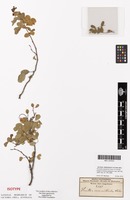
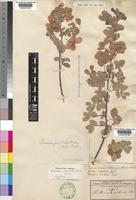
Isotype of Smithia welwitschii Taub. [family FABACEAE]
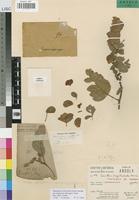
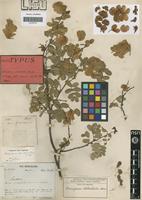
Isotype of Smithia megalophylla Harms [family LEGUMINOSAE-PAP]
Isotype of Smithia welwitschii Taub. [family FABACEAE]
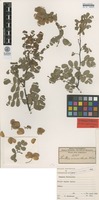
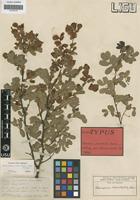
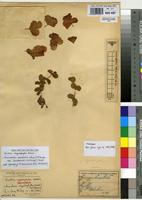
Isolectotype of Smithia welwitschii Taub. [family LEGUMINOSAE-PAP]
Humularia welwitschii (Taub.) Duvign. [family LEGUMINOSAE-PAPILIONOIDEAE]
Lectotype of Smithia welwitschii Taub. [family LEGUMINOSAE-PAP]
Isotype of Smithia megalophylla Harms [family FABACEAE]
Previous
Next

Name

Identification
Humularia welwitschii (Taub.) Duvign. [family LEGUMINOSAE-PAPILIONOIDEAE ] (stored under name); Verified by Torre, A., Smithia welwitschii Taub. [family LEGUMINOSAE-PAPILIONOIDEAE ] Smithia coronilloides Welw. [family LEGUMINOSAE-PAPILIONOIDEAE ] Geissaspis welwitschii (Taub.) Baker f. [family LEGUMINOSAE-PAPILIONOIDEAE ] Verified by De Wildeman, E., Damapana welwitschii Hiern [family LEGUMINOSAE-PAPILIONOIDEAE ]
Related name
  • Smithia welwitschii
  • Smithia coronilloides
  • Kotschya welwitschii
  • Damapana welwitschii
  • Humularia welwitschii
  • Geissaspis welwitschii

Flora

Entry for Humularia welwitschii Taub. P.A. Duvign. [family LEGUMINOSAE]
Herbarium
Royal Botanic Gardens, Kew (K)
Collection
Flora Zambesiaca
Resource Type
Reference Sources
Entry From
FZ, Vol 3, Part 6, (2000) Author: B. Verdcourt
Names
Humularia welwitschii Taub. P.A. Duvign. [family LEGUMINOSAE], in Bull. Soc. Roy. Bot. Belgique 86: 182 (1954). —Torre in C.F.A. 3: 210 (1966). —Verdcourt in Kirkia 9: 479 (1974). —Lock, Leg. Afr. Check-list: 114 (1989). Type from Angola.
Smithia welwitschii Taub. [family LEGUMINOSAE], in Bot. Jahrb. Syst. 23: 190 (1896).
Damapana welwitschii Taub. [family LEGUMINOSAE], Cat. Afr. Pl. Welw. 1: 238 (1896).
Geissaspis welwitschii Taub. Baker f. [family LEGUMINOSAE], in J. Bot. 46: 113 (1908). —De Wildeman in Bull. Jard. Bot. État 4: 124 (1914). —Harms in Engler, Pflanzenw. Afrikas [Veg. Erde 9] 3 (1): 118, fig. 300 (1915). —E.G. Baker, Legum. Trop. Africa: 314 (1929).
Information
Erect shrub or subshrub 0.15–1 m tall. Stems mostly robust and woody, branched, subcylindrical, glabrous, pubescent or densely scabrous with tubercular-based hairs, viscid-glandular. Leaves 6–16(22)-foliolate; leaflets 9–45 × 5–30 mm, elliptic or elliptic-oblong, often oblique, obtuse to acute and mucronulate at the apex, obliquely unequally rounded at the base, glabrous or glandular-serrate; the main nerve oblique dividing the lamina into unequal parts, the one 1.5–2 times as broad as the other; venation strongly reticulate, there being 5 other basal nerves; petiole 10–15 mm long; rhachis 2.5–7 cm long, with similar indumentum to the stem, the rhachis prolonged into a bristle 3 mm long; stipules 6–20 × 4–15 mm, elliptic or elliptic-oblong, rounded at base and apex, glabrous to densely scabrid with tubercular-based hairs, densely veined with numerous approximate basal nerves. Inflorescences often borne on branches with leaves reduced to stipules, 4–6 cm long, mostly densely strobilate; peduncle 1–2 cm long, scabrid-pubescent; pedicels 5 mm long, pubescent; bracts yellow, 8–25 × 15–24 mm, rounded, divided for one-sixth to half of their length into two rounded lobes which are venose, glabrous to densely covered with tubercular-based hairs; bracteoles 4–6 × 1.5–2.5 mm, oblong to ovate-lanceolate, ciliate and with tubercular-based hairs. Calyx lobes 10–11 × 5 mm, elliptic-oblong, the upper shortly 2-fid, the lower shortly distinctly 3-fid. Standard yellow, 12–17 × 7–12 mm, rectangular with upper half broadly widened and rounded. Fruit of 1–2 articles, each article half-elliptic, the upper margin straight, the lower very strongly curved, 5–6 mm long and wide, glandular-pubescent. Seeds dark reddish-brown, 4 mm long and wide, 2 mm thick, irregularly oblong in outline; the small hilum eccentric.

Related Materials

  • Terms and Conditions
  • Privacy Policy
  • Cookie Policy
  • Cookie Settings
  • Accessibility
  • Help
  • Contact Us
  • Facebook
  • Twitter
ITHAKA

JSTOR is part of ITHAKA, a not-for-profit organization helping the academic community use digital technologies to preserve the scholarly record and to advance research and teaching in sustainable ways.

©2000-2026 ITHAKA. All Rights Reserved. JSTOR®, the JSTOR logo, JPASS®, Aluka®, and ITHAKA® are registered trademarks of ITHAKA.

╳