JSTOR Global Plants Home
  • Home
  • Browse
  • About
  • Access
  • Account
    • Saved Items
    • Profile
  • Log in

Global Plants

Skip to Main Content
  • JSTOR Global Plants Home
  • Global Plants

    • Browse
    • About
    • Access
    • Account
      • Saved Items
      • Profile
Log in
  • Browse
  • About
  • Access
  • Account
    • Saved Items
    • Profile
Advanced Search

Compilation
Sloanea emarginata

2 Images see all

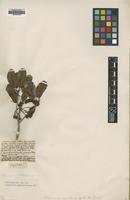
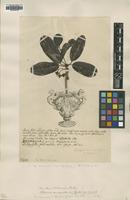
Type? of Sloanea emarginata L. [family SAPOTACEAE]
Previous
Next

Name

Identification
Sloanea emarginata L. [family SAPOTACEAE ] Manilkara jaimiqui (L.) Cronquist [family SAPOTACEAE ] (stored under name);
Related name
  • Sloanea emarginata
  • Manilkara jaimiqui

Flora

Entry for Manilkara jaimiqui (C. Wright ex Grisebach) Dubard subsp. emarginata (Linnaeus) Cronquist [family SAPOTACEAE]
Herbarium
Flora of North America (FNA)
Collection
Flora of North America
Resource Type
Reference Sources
Entry From
Flora of North America, Vol 8,
Names
Manilkara jaimiqui (C. Wright ex Grisebach) Dubard subsp. emarginata (Linnaeus) Cronquist [family SAPOTACEAE], Bull. Torrey Bot. Club, 73: 467. 1946,
Sloanea emarginata Linnaeus [family ELAEOCARPACEAE], Sp. Pl., 1: 512. 1753
Achras bahamensis Baker [family SAPOTACEAE]
Achras emarginata (Linnaeus) Little [family SAPOTACEAE]
Achras zapotilla (Jacquin) Nuttall var. parvifolia Nuttall [family SAPOTACEAE]
Manilkara bahamensis (Baker) H. J. Lam & A. Meeuse [family SAPOTACEAE]
Manilkara parvifolia (Nuttall) Dubard [family SAPOTACEAE]
Mimusops emarginata (Linnaeus) Britton [family SAPOTACEAE]
Mimusops floridana Engler [family SAPOTACEAE]
Mimusops parvifolia (Nuttall) Radlkofer [family SAPOTACEAE]
Treatment Author(s)
Richard P. Wunderlin
R. David Whetstone
Information
Shrubs or trees, to 10 m. Leaves: petiole 12–25 mm; blade ovate to oblong or oblong-elliptic, 50–106 × 30–50 mm, base rounded or truncate, margins sinuate and somewhat revolute, apex retuse (older leaves often split on pressed specimens), surfaces glabrous or sparsely tomentose abaxially, glabrous adaxially. Inflorescences 2–5-flowered, sometimes flowers solitary. Pedicels 10–25 mm, puberulous or glabrous. Flowers: sepals elliptic-lanceolate, 4–8 mm, apex acute to obtuse, tomentose to subglabrate; petals yellow, divided to base into larger median and 2 lateral segments, lobes 6–7 mm, median segment boat-shaped, clawed, lateral segments lanceolate to falcate, glabrous, corolla 4–9 mm, tube 1–2 mm (shorter than lobes); staminodes triangular-lanceolate; ovary appressed-puberulous. Berries depressed-globose, 25–40 mm, surface roughened, scaly; pedicels conspicuously enlarged distally. Seeds 3–5, 14–18 mm.
Phenology
Flowering year-round
Altitude range
0–5 m
Distribution
West Indies (Bahamas).USA Fla.
Discussion
Subspecies emarginata is known from Collier and Miami-Dade counties and the Monroe County keys. It is listed as threatened by the state of Florida.

Related Materials

  • Terms and Conditions
  • Privacy Policy
  • Cookie Policy
  • Cookie Settings
  • Accessibility
  • Help
  • Contact Us
  • Facebook
  • Twitter
ITHAKA

JSTOR is part of ITHAKA, a not-for-profit organization helping the academic community use digital technologies to preserve the scholarly record and to advance research and teaching in sustainable ways.

©2000-2026 ITHAKA. All Rights Reserved. JSTOR®, the JSTOR logo, JPASS®, Aluka®, and ITHAKA® are registered trademarks of ITHAKA.

╳