JSTOR Global Plants Home
  • Home
  • Browse
  • About
  • Access
  • Account
    • Saved Items
    • Profile
  • Log in

Global Plants

Skip to Main Content
  • JSTOR Global Plants Home
  • Global Plants

    • Browse
    • About
    • Access
    • Account
      • Saved Items
      • Profile
Log in
  • Browse
  • About
  • Access
  • Account
    • Saved Items
    • Profile
Advanced Search

Compilation
Sisyrinchium violaceum

2 Images see all

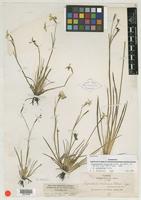
Holotype of Sisyrinchium violaceum E. P. Bicknell [family IRIDACEAE]
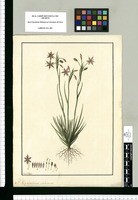
Sisyrinchium violaceum / Fran[cis]co Pulgar. Original drawing from Ruiz & Pavón's Expedition (1777-1816)
Previous
Next

Name

Identification
Sisyrinchium violaceum E. P. Bicknell [family IRIDACEAE ] (stored under name); Verified by Not on sheet,
Related name
  • Sisyrinchium violaceum

Flora

Entry for Sisyrinchium atlanticum E. P. Bicknell [family IRIDACEAE]
Herbarium
Flora of North America (FNA)
Collection
Flora of North America
Resource Type
Reference Sources
Entry From
Flora of North America, Vol 26,
Names
Sisyrinchium atlanticum E. P. Bicknell [family IRIDACEAE], Bull. Torrey Bot. Club, 23: 134. 1896
Sisyrinchium apiculatum E. P. Bicknell [family IRIDACEAE]
Sisyrinchium apiculatum var. mesochorum Nieuwland [family IRIDACEAE]
Sisyrinchium corymbosum E. P. Bicknell [family IRIDACEAE]
Sisyrinchium flexile E. P. Bicknell [family IRIDACEAE]
Sisyrinchium mucronatum Michaux var. atlanticum (E. P. Bicknell) H. E. Ahles [family IRIDACEAE]
Sisyrinchium scoparium E. P. Bicknell [family IRIDACEAE]
Sisyrinchium tracyi E. P. Bicknell [family IRIDACEAE]
Sisyrinchium violaceum E. P. Bicknell [family IRIDACEAE]
Treatment Author(s)
Anita F. Cholewa
Douglass M. Henderson†
Information
Herbs, perennial, cespitose, yellowish to light olive when dry, to 5.7 dm, not glaucous. Stems branched, with 1 or 2 nodes, 0.8–1.9 mm wide, usually glabrous, margins entire, similar in color and texture to stem body; first internode 11–36 cm, longer than leaves; distalmost node with 2–3 branches. Leaf blades usually glabrous, bases occasionally becoming fibrous, but not persistent in tufts. Inflorescences borne singly; spathes green or occasionally with purplish tinge on margins, obviously wider than supporting branch, glabrous or slightly scabrous, keels entire; outer 12–16.1 mm, 1.4 mm shorter to 1.5 mm longer than inner, tapering evenly towards apex, margins basally connate 3–5.2 mm; inner with keel evenly curved or straight, hyaline margins 0.2–0.6 mm wide, apex broadly rounded to truncate, usually erose, ending 0–0.5 mm proximal to green apex or, occasionally, exceeding it by up to 0.5 mm. Flowers: tepals light blue or bluish violet to purple or occasionally white, bases yellow; outer tepals 6.3–11 mm, apex emarginate to truncate, aristate; filaments connate ± entirely, stipitate-glandular basally; ovary blackish, in contrast with much lighter foliage. Capsules dark brown to black or purplish black, ± globose to obovoid, 2–4.1 mm; pedicel ascending to erect. Seeds globose to obconic, lacking obvious depression, 0.5–1.2 mm, rugulose or occasionally granular. 2n = 16, 32.
Phenology
mar-may (spring), jun-aug (summer)
Altitude range
0–300 m;
Distribution
USA Ala.USA Ark.USA Conn.USA Del.USA D.C.USA Fla.USA Ga.USA Ill.USA Ind.USA Ky.USA La.USA MaineUSA Md.USA Mass.USA Mich.USA Miss.USA Mo.USA N.H.USA N.J.USA N.Y.USA N.C.USA OhioUSA Pa.USA R.I.USA S.C.USA Tenn.USA Vt.USA Va.USA W.Va.USA Wis.Canada N.S.

Related Materials

  • Terms and Conditions
  • Privacy Policy
  • Cookie Policy
  • Cookie Settings
  • Accessibility
  • Help
  • Contact Us
  • Facebook
  • Twitter
ITHAKA

JSTOR is part of ITHAKA, a not-for-profit organization helping the academic community use digital technologies to preserve the scholarly record and to advance research and teaching in sustainable ways.

©2000-2026 ITHAKA. All Rights Reserved. JSTOR®, the JSTOR logo, JPASS®, Aluka®, and ITHAKA® are registered trademarks of ITHAKA.

╳